
- Home
- Celtic Trees
- Celtic Tree Calendar

What is the Celtic Tree Calendar?
By Lotti Brown
Learn about the Celtic Tree Calendar - what it is, where the idea came from, how it relates to Celtic tradition, and why it still captures the imagination today.
This page is part of my Celtic Tree project, where I explored the myth, meaning, symbolism, history, and folklore of the thirteen trees of the tree calendar while creating a year-long series of artworks inspired by them.
The Celtic Tree Calendar is a beautiful idea: a way of moving through the year by turning our attention to trees, seasons, and the old stories woven around them. Although the version most people know today is not an ancient historical Celtic calendar in itself, it does grow out of older traditions and associations with trees, ogham, and our long relationship with the natural world.
Many people search for the Celtic Tree Calendar as a way of finding “their” tree, understanding the tree months, or exploring the meanings connected with each one.
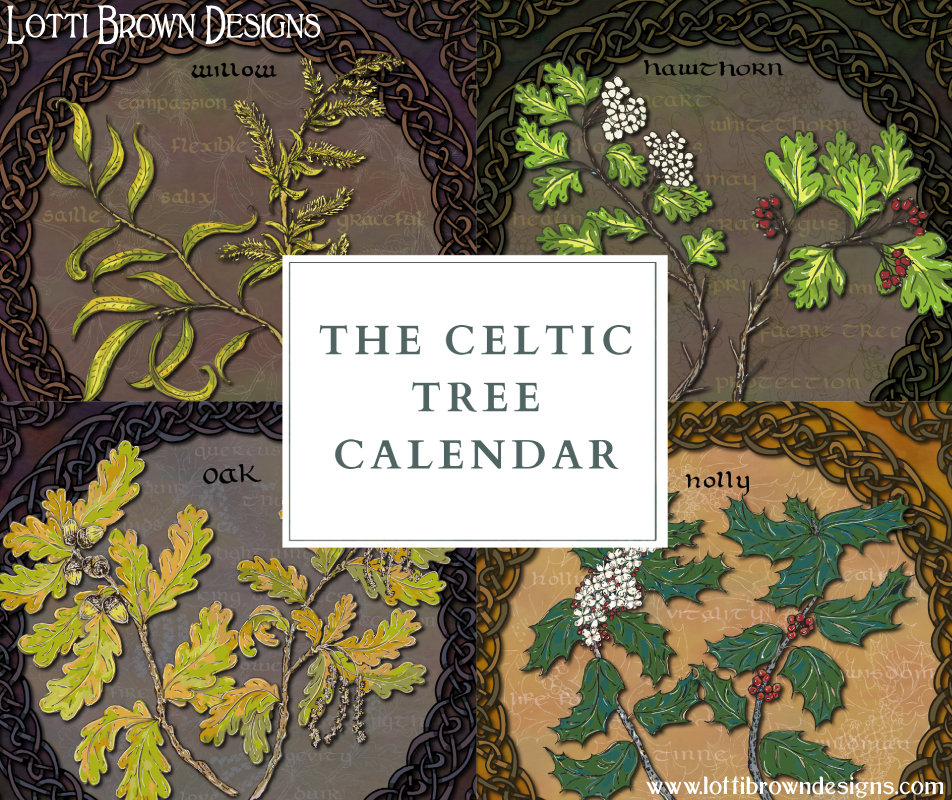 Celtic Tree Calendar art by Lotti Brown
What I love about the Celtic Tree Calendar is not just the mythology around it, but the way it encourages us to notice trees as part of the rhythm of the year...
What is the Celtic Tree Calendar?
The Celtic Tree Calendar is a calendar idea that assigns a tree to each month or period of the year, a little like a tree-based zodiac.
In the most widely used version, the months are based on lunar months of 28 days, which creates 13 tree months rather than 12.
The form of the Celtic Tree Calendar most people know today comes from Robert Graves’ interpretation in The White Goddess.
It’s a compelling and beautiful idea, inviting us to appreciate trees not just for their natural beauty, but also for their symbolism, folklore, and the roles they have played in our cultural history.
I love the idea of the Celtic Tree Calendar and based my own Celtic Tree Project around these thirteen tree months. For me, it offers a gentle way of feeling more connected to nature and the turning of the seasons - and I even made a nature journaling course inspired by it - A Year of Trees.
Celtic Tree Calendar Dates
- December 24th to January 20th – Birch
- January 21st to February 17th – Rowan
- February 18th to March 17th – Ash
- March 18th to April 14th – Alder
- April 15th to May 12th – Willow
- May 13th to June 9th – Hawthorn
- June 10th to July 7th – Oak
- July 8th to August 4th – Holly
- August 5th to September 1st – Hazel
- September 2nd to September 29th – Vine
- September 30th to October 27th – Ivy
- October 28th to November 23rd – Reed
- November 24th to December 23rd - Elder
Although the Celtic Tree Calendar is a beautiful and compelling idea, the version most widely used today is a relatively modern concept rather than a directly preserved historical Celtic calendar.
It does have its origins in what's often called a 'Celtic Tree Alphabet' though.
Let’s see if we can decipher what’s going on…
Where does the Celtic Tree Calendar come from?
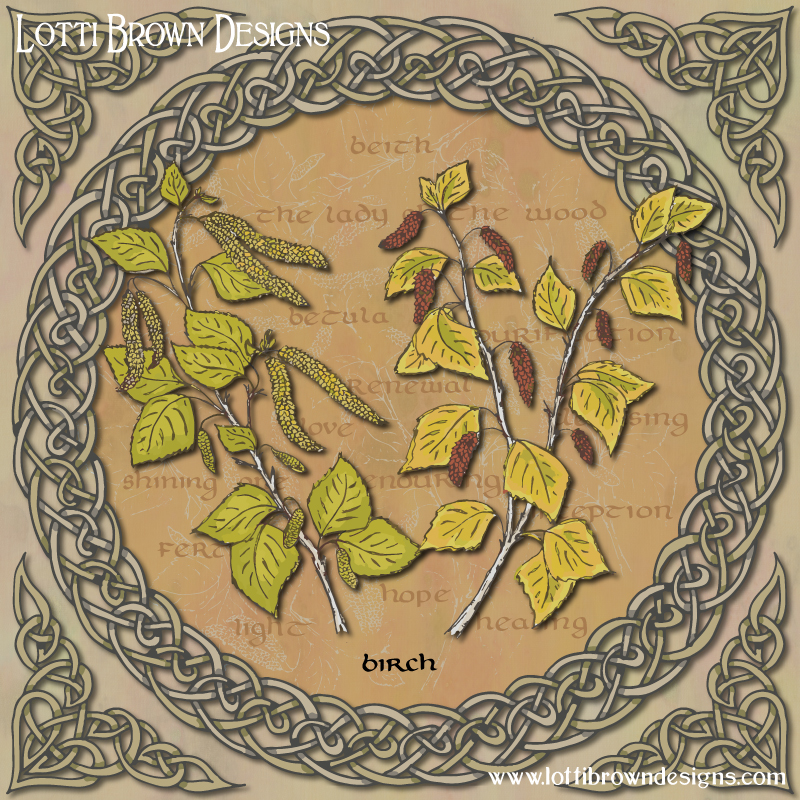 Celtic birch tree art by Lotti Brown
Robert Graves and The White Goddess
Novelist and poet Robert graves wrote his study on Celtic mythology ‘The White Goddess’ in 1946 and it was published in 1948.
In it, Graves took the idea of the early-medieval Irish ogham alphabet, which was believed to be based on trees, and re-arranged it to suit his idea, naming 13 months after trees.
Ogham and the “tree alphabet”
The ogham alphabet itself, which looks rather rune-like with branching lines (like trees) dates from the 5th and 6th centuries. It’s a form of lettering that’s nearly always found carved on monumental stones (stones used for personal monuments).
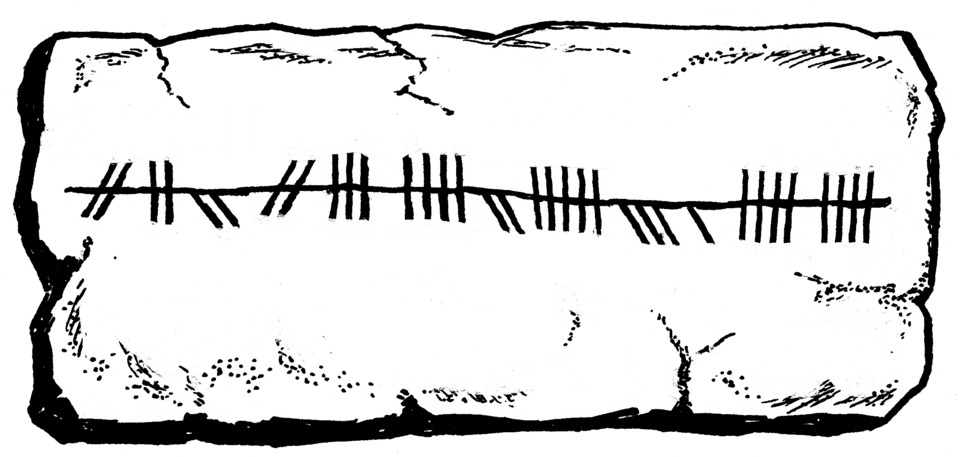 Drawing of an ogham, written on a stone tablet - Pearson Scott Foresman, Public domain, via Wikimedia Commons
Most of the ogham inscriptions we have are from stones in Ireland and Wales but there are a few stones in Scotland, the Isle of Man, and England as well.
We do have some reference to ogham letters being written on wood, as well as stone, and later writings which help us to decipher these mysterious letters or symbols.
The ogham alphabet is known as the ‘Beith-luis-nin’ – thought to be named after the order of the first couple of letters of the alphabet – so it means the ‘Beith-luis alphabet’.
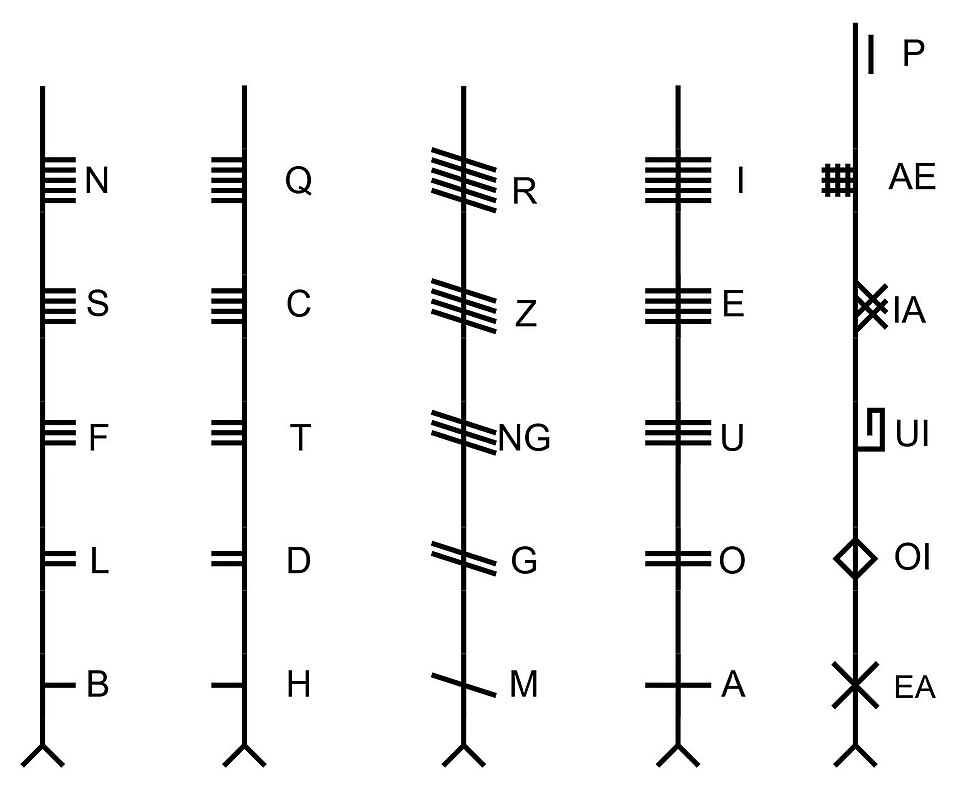 Ogham Letters, image by Runologe, CC BY-SA 4.0 , via Wikimedia Commons
Interestingly, the ogham letters are often said to be named after trees and shrubs, although in reality the picture is more complex and some of these associations are still debated…
We do have a couple of books that describe the ogham letters and help us to understand them.
- In Lebor Ogaim (‘The Book of Ogams’) known as The Ogam Tract – the earliest copy dates from the late 14th century
- Auraicept na n-Eces (‘The Scholars’ Primer’) – the earliest copy dates from the 12th century with text purporting to be from the mid 7th century written by the scholar Longarad
In The Ogam Tract, the god Ogma/Ogmios is said to have created the ogham lettering system and named all the letters after trees.
The Scholars’ Primer also suggests that the ogham letters are based on trees…
“Now all these are wood names such as are found in the Ogham Book of Woods, and are not derived from men …. Some of these trees are not known today.”
The Scholars’ Primer also gives an explanatory phrase for each letter, called a ‘Briatharogam’.
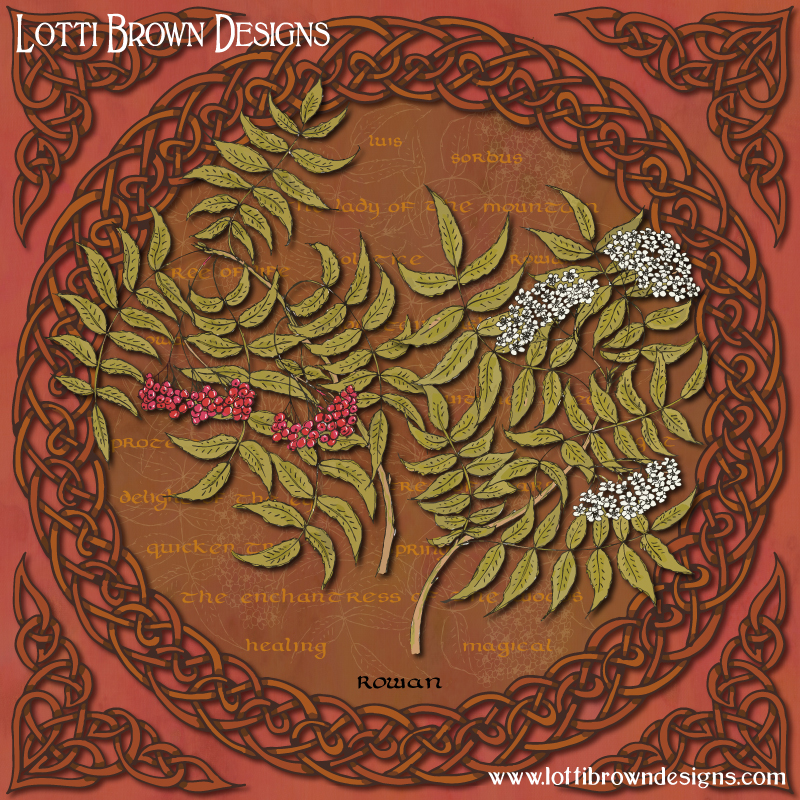 Celtic Rowan art by Lotti Brown
We discover that, actually, only 5 of the 20 primary letters relate directly to known trees:
- Beith – birch
- Fearn – alder
- Saille – willow
- Duir – oak
- Coll – hazel
The other trees suggested there are actually interpretations or ‘glosses’ - explanations which are often contested, and it’s entirely possible that the tree alphabet ogham letters were not named after trees at all.
The Scholars’ Primer itself also suggests (alongside the tree theory in the Ogam Tract) that ogham may have been created along with the Gaelic language by the legendary king of Scythia, Fenius Farsa, who studied the languages of the Tower of Babel and created the Goidelic/Gaelic language with the ‘Beith-luis-nin’ (ogham letters) as the written form of the language and the 25 letters were named after his best scholars.
The Ogam Tract also shows us that other forms of ogham were used and contains lists of:
- Bird-ogam (enogam)
- Colour-ogam (dathogam)
- Dog-ogam (conogam)
- Cow-ogam (bo-ogam)
- Water-ogam (ogam visceach)
- Boy-ogam (macogam)
And many more…!
So it seems that although Graves’ Celtic Tree Calendar does have a basis in the historic ogham, often known as the tree alphabet, the monthly ascribing of trees was his own invention and not the genuinely historical Celtic calendar.
So while the modern Celtic Tree Calendar is not itself the original historical Celtic calendar, it still does draw some of its imaginative power from older traditions of ogham, sacred trees, and seasonal timekeeping.
The Historical Celtic Calendar
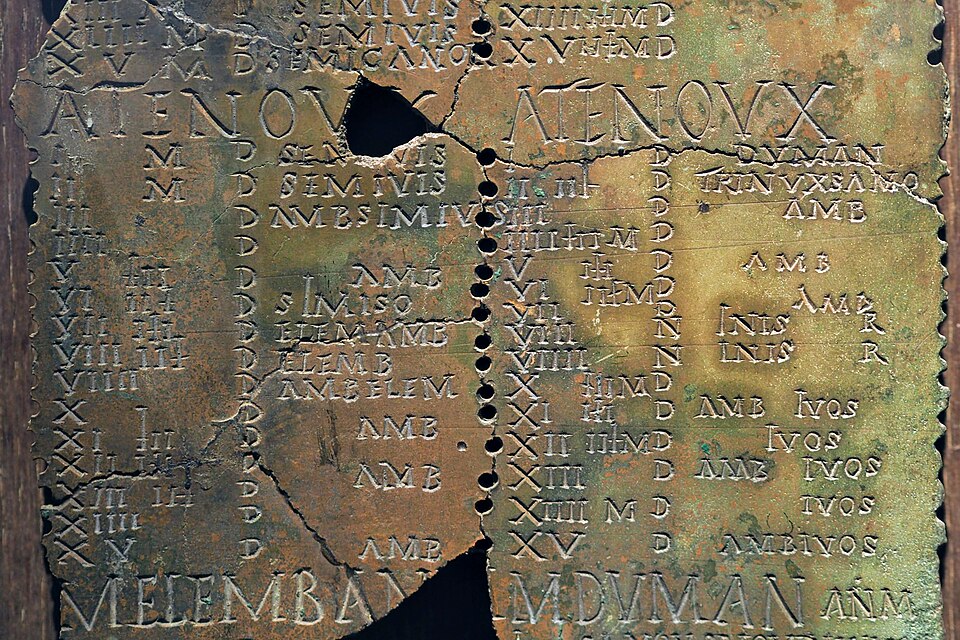 Coligny Calendar, image by Gozitano, CC BY-SA 4.0, via Wikimedia Commons
In fact, we do know something of the original historical Celtic calendar. The original Celtic calendar is known as the Coligny Calendar. It was discovered at Coligny in France and dates from the end of the 2nd century AD but is thought to relate to concepts that may date to around 800BC.
It is a ‘lunisolar’ calendar, which means that it is an attempt to reconcile lunar months with the solar year (which we work our modern calendar to.)
Each month begins with the dark part of the lunar cycle (when the moon is dark in the sky). And the calendar consists of 62 lunar months across 5 solar years – including an extra ‘intercalary’ month every 2-and-a-half years which keeps the whole lunar calendar in sync with the solar year.
Each lunar month started with a dark fortnight of 15 days, relating to the dark part of the lunar cycle – followed by a bright fortnight of 14 or 15 days – so each month was 29 or 30 days long.
In line with each month starting with darkness (and the Celts’ practice of beginning each full day at sunset (doing the dark part of the day first) it is likely that the calendar year began with the dark part of the year, probably around Halloween/Samhain (1st November).
We have the names and order of the months, but we don’t know where they fit with our modern-day calendar – and the names are still open to some interpretation and suggestion as to meaning and position.
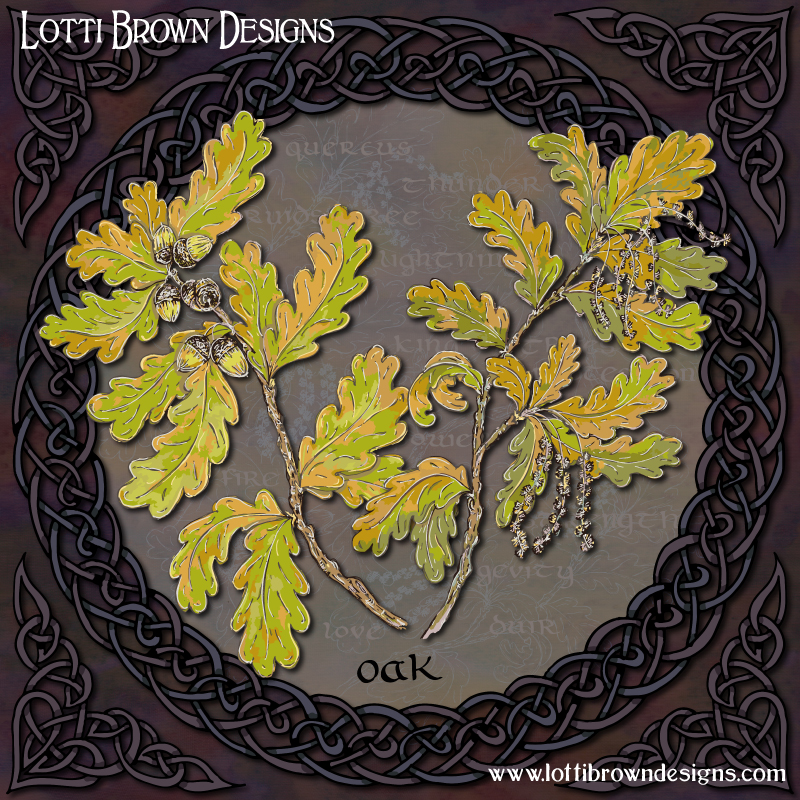 Celtic Oak art by Lotti Brown
Coligny Calendar Months
1) Samonios – 'summer’s month'
2) Dumannios – ('smoke' ? )
3) Riuros – ('stout'/'fat' ? )
4) Anagantio – ('non-travelling' ? )
5) Ogronnios – 'cold month'
6) Qutios - (unknown)
Rantaranos (intercalary month – every 3rd year)
7) Giamonios – 'winter’s month'
8) Semiuisonns - (unknown)
9) Equos - (unknown)
10) Elembiuios – ('deer' ? )
11) Aedrinios – ('fire' or 'heat' ? )
12) Cantlos – ('song' ? )
The historical Coligny Calendar is fascinating in its own right - but it’s easy to see why the idea of a Celtic Tree Calendar has captured people’s imagination so strongly. There is something deeply appealing about moving through the year with trees as companions and symbols, and about marking time through the living rhythms of the natural world.
And for centuries, if not millennia, trees were revered as our healers and protectors, the axis around which our lives turn…
So it seems only natural to use to turn to our tree protectors for comfort and inspiration as we mark the months of our own lives.
That’s what my Celtic Tree Calendar project is about – our historical, spiritual, and mythological relationship with trees…
You can see all my Celtic Tree Calendar artworks on this page....
Tree Meanings, Myths & Symbolism
I've added extra sections with a detailed look at the myths, meanings and symbolism for each of the trees across the tree calendar year. This is a project I did across 2020-21 and published originally on my blog at the time and now replicated here...
Explore the Trees of the Celtic Tree Calendar
Below you can explore the symbolism, mythology, and meanings of each tree in the Celtic Tree Calendar, along with the artwork I created for each one...
- December 24th to January 20th – Birch - read about the myths and meanings of Birch here...
- January 21st to February 17th – Rowan - read about the myths and meanings of Rowan here...
- February 18th to March 17th – Ash - read about the myths and meanings of Ash here...
- March 18th to April 14th – Alder - read about the myths and meanings of Alder here...
- April 15th to May 12th – Willow - read about the myths and meanings of Willow here...
- May 13th to June 9th – Hawthorn - read about the myths and meanings of Hawthorn here...
- June 10th to July 7th – Oak - read about the myths and meanings of Oak here...
- July 8th to August 4th – Holly - read about the myths and meanings of Holly here...
- August 5th to September 1st – Hazel - read about the myths and meanings of Hazel here...
- September 2nd to September 29th – Vine - read more about the myths and meanings of Vine (Bramble) here...
- September 30th to October 27th – Ivy - read more about the myths and meanings of Ivy here...
- October 28th to November 23rd – Reed - read about the myths and meanings of Reed/Fern here...
- November 24th to December 23rd - Elder - read about the myths and meanings of Elder here...
Journal the Trees
 A Year of Trees - nature journaling inspired by the Celtic Tree Calendar
If you'd like to explore the meanings of the trees further, through nature observation and personal reflection in your nature journal, I created the Year of Trees nature journaling guide inspired by the Celtic Tree Calendar.
You can choose to follow the whole year, or just an individual tree that you feel drawn to...
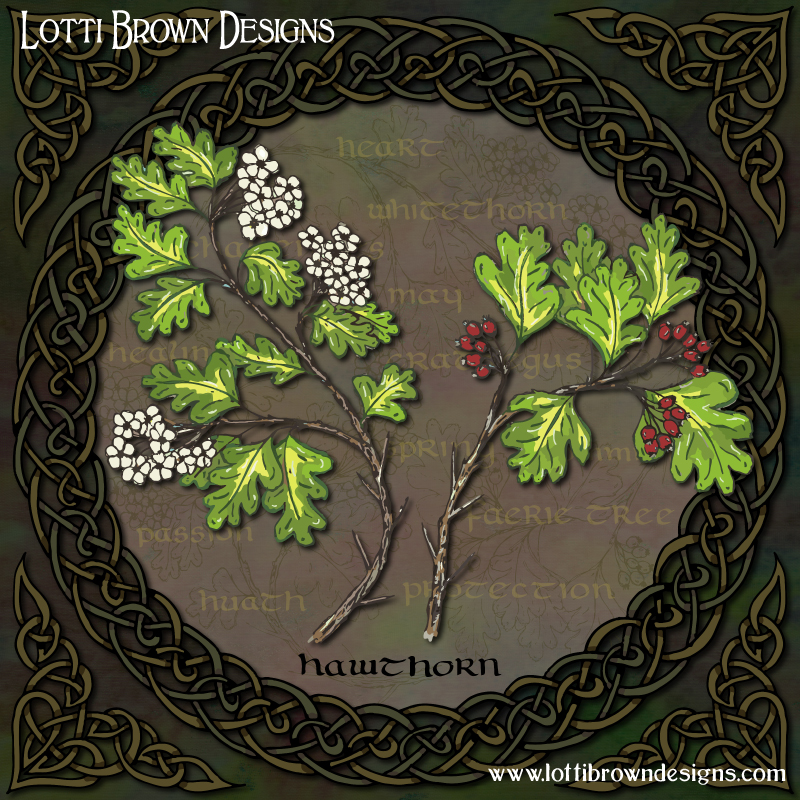 Celtic Hawthorn art by Lotti Brown
Where to go next...
If you’d like to explore further, you might enjoy:
- all my Celtic Tree Calendar artworks
- my Folklore Hub for more nature-focused folklore
- nature journaling, if you’d like to deepen your own connection with nature through observation and creativity
- visit my Celtic Trees Hub here...
I also have other Celtic artworks here and lots of other nature artworks here...
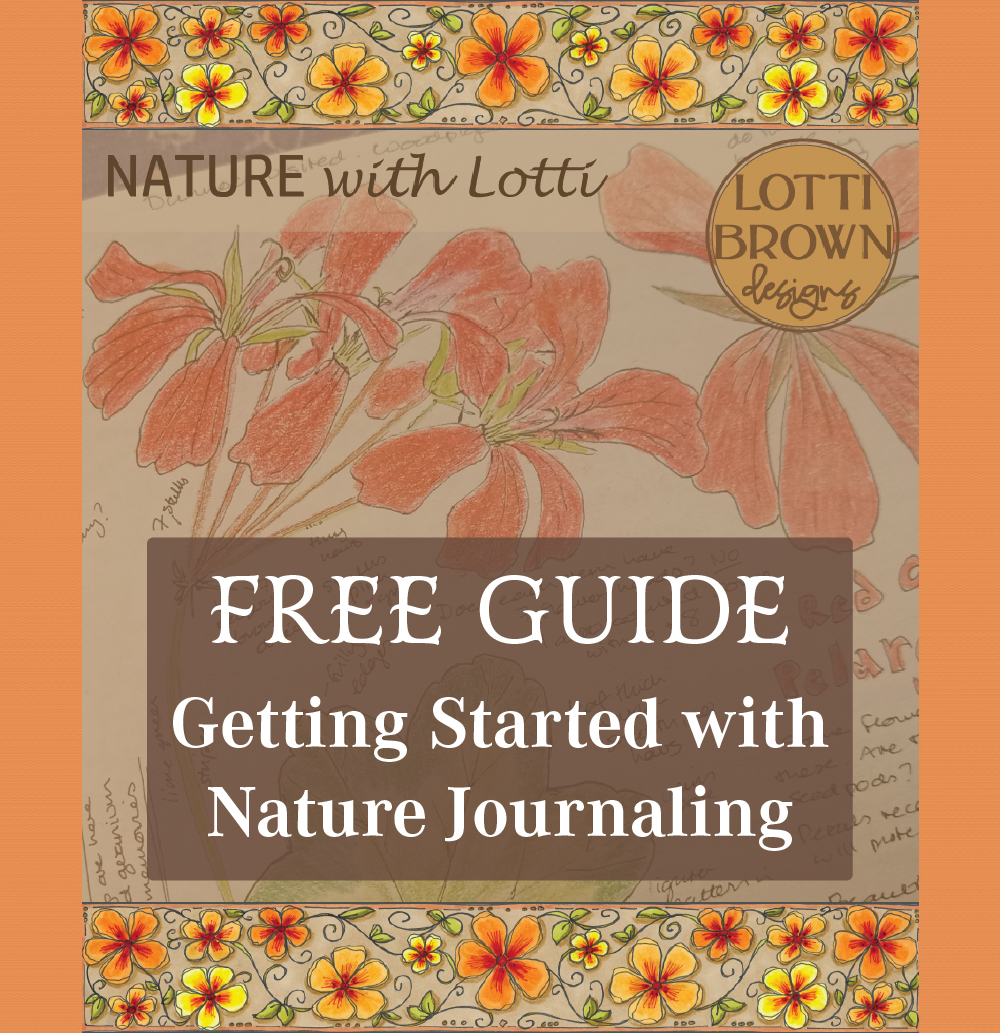
If you like the idea of feeling more connected to nature, you might also like to learn about what nature journaling is - it's easy to get into and here we like to nature journal 'imperfectly' for enjoyment, well-being and connection to nature, so there's no need to worry about not being able to draw or anything like that! See my free guide to getting started with your first nature journal, here...
You might also enjoy a book I read, 'The Oak Papers' all about our relationship with the oak tree.
 Celtic knotwork unisex sweatshirt
You might also like to take a look at my Celtic knotwork designs (see above)- there's fabrics, wallpapers and other products including T-shirts and sweatshirts, cushions, shower curtains, throw blankets, mugs, bags, notebooks and much more - all in lots of different colour options - check it out here!
Visit my Little Art Shop for my newest art prints & products...
Have you ever thought about nature journaling..?
If you like nature, you might like to start your own nature journal!
Find out all about nature journaling here...
You can get started with my free guide here.
Or explore my gentle self-paced nature journaling course with nature journaling exercises to get you confident with nature journaling - take a look here...

Shall we stay in touch..?
Each month, I share stories from my own nature journal, new art from my studio, and simple seasonal inspiration to help you feel more connected with the turning year - if you'd like to stay updated, please sign up with your email address below...
Recent Articles


-
Meaning and Symbolism of Ivy in the Celtic Tree Calendar
Sep 29, 26 05:05 AM
 Explore the meaning and symbolism of ivy as part of the Celtic Tree Calendar...
 -
Nature Journaling in Scotland - Wildlife, Sketches & Memories
Sep 24, 26 04:37 AM
 Explore nature journaling in Scotland through wildlife encounters, sketches and found treasures, with gentle ideas for recording holiday memories your own way.
 -
Barn Owl Folklore & Meaning - Symbolism of the Barn Owl
Sep 15, 26 03:34 AM
 Explore barn owl folklore, symbolism and meaning, from ancient myths to British traditions. Discover the quiet wisdom and mystery of this ghostly bird.
Shop My Current Artwork Collections

My art is available as sustainable art prints, notebooks, greetings cards, tote bags and clothing in my Teemill shop.
Find my stockists for all my earlier artworks here...

Lotti Brown is a self-taught nature artist and nature journaling educator whose hand-drawn work is inspired by wildlife, folklore, and close observation. With 18 years in creative fields and 10 years creating nature art, she brings deep practical experience to her work. Trained by the Wild Wonder Foundation, she shares nature journaling courses and guides online. Her artwork has been licensed internationally and exhibited at Goole Museum and Bridlington Spa in the East Riding of Yorkshire, UK.
Follow me:
Share this page: