
- Home
- Celtic Trees
- Celtic Tree Art
- Celtic Willow

Willow Tree Symbolism
Celtic Willow Art
By Lotti Brown
Explore willow tree symbolism and meaning with me as part of my Celtic Tree Calendar art project, where I share the myths, folklore, and quiet magic of each tree alongside my own Celtic willow artwork.
The willow is such a distinctive and beautiful tree. As she sweeps her elegant branches down towards both earth and water, you can almost feel her gentle essence and begin to understand why she has long been associated with healing, protection, renewal, and emotional wisdom.
Below, we’ll explore the symbolism, folklore, and meanings of the willow tree together as we get to know this beautiful tree a little better...
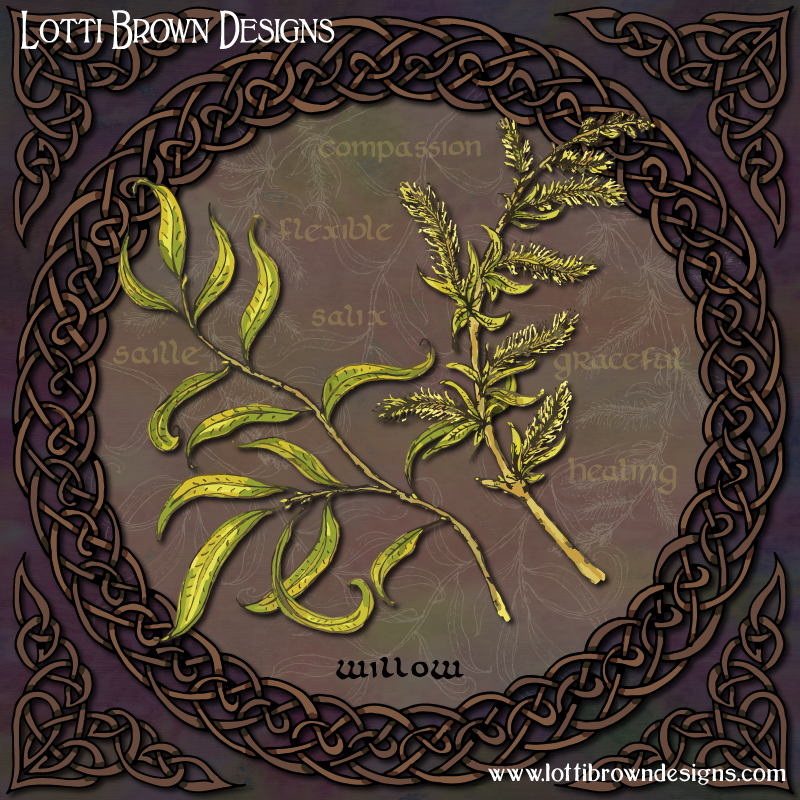 Celtic Willow art by Lotti Brown
This is part of my Celtic Tree Calendar art series - a project I did through 2020-2021 exploring the trees of the Celtic Tree Calendar year and our cultural and spiritual connection with them.
If you want to find out more about what the Celtic Tree Calendar is, I explain it on this page...
 Celtic tree calendar Willow art print
Willow has always felt to me like a tree of gentleness and quiet strength - one that bends, heals, protects, and helps us move through change...
Explore willow tree symbolism and meaning with me...
Willow Tree Symbolism, Myth and Meaning
The mystical willow tree is one of our ancient native British trees (White willow, Salix alba) and is a favourite in countryside and gardens.
I, myself, grew up with a willow tree in our family back garden and I lived for many years with two enormous willow trees at the front of the house (in the neighbour’s garden).
The willow tree is beautiful – an elegantly-shaped tree that dances in the wind and grows in atmospheric, watery places – so it’s no wonder that people have always taken the willow to their hearts.
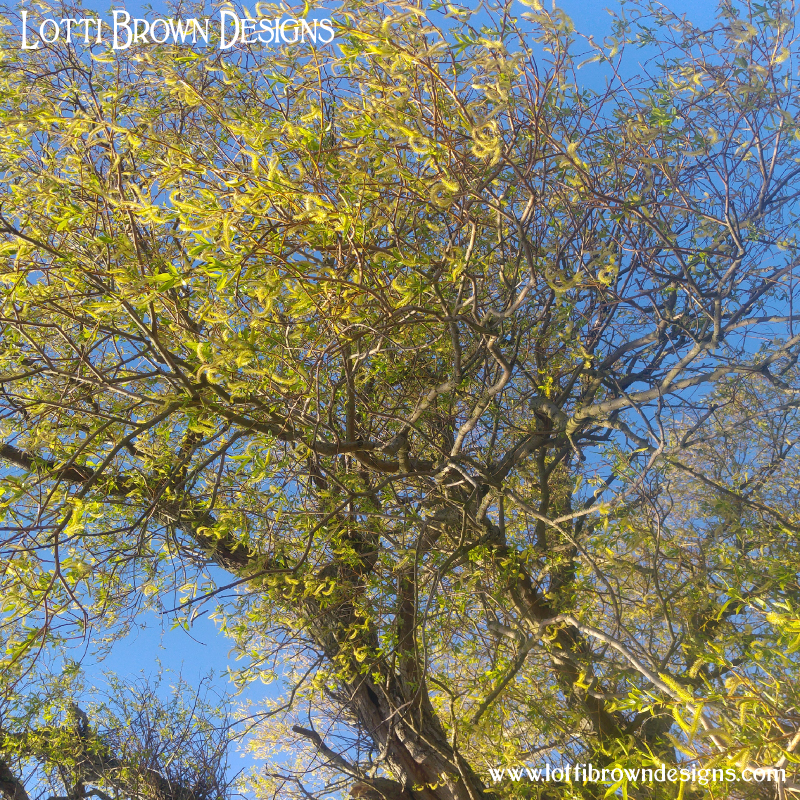 Willow tree
In ancient Tibet, the willow was revered as the ‘world tree’ or ‘tree of life’.
Our modern name for the willow comes from the Anglo-Saxon ‘wileg’.
Willow
- Latin name: Salix
- Irish/Gaelic name: Saille
- Common names: Sally tree, saugh tree, withy, withe, osier
- Celtic tree calendar: 15th April to 12th May
- Qualities: healing, flexibility, graceful, compassion
- Associations: moon, water, healing, inspiration, protection, harmony
Willow tree symbolism is closely tied to healing, protection, intuition, emotional flow, and the gentle power of renewal.
We have a long relationship with the willow tree - we’ve long recognised its usefulness, its special qualities, and its inherent beauty, so it’s no surprise that the folklore, myths, and symbolism surrounding willow are so rich and evocative.
Let's explore...
Willow symbolism branches into several beautiful themes - healing, protection, inspiration, the otherworld, rebirth, and the moon...
The Healing Tree
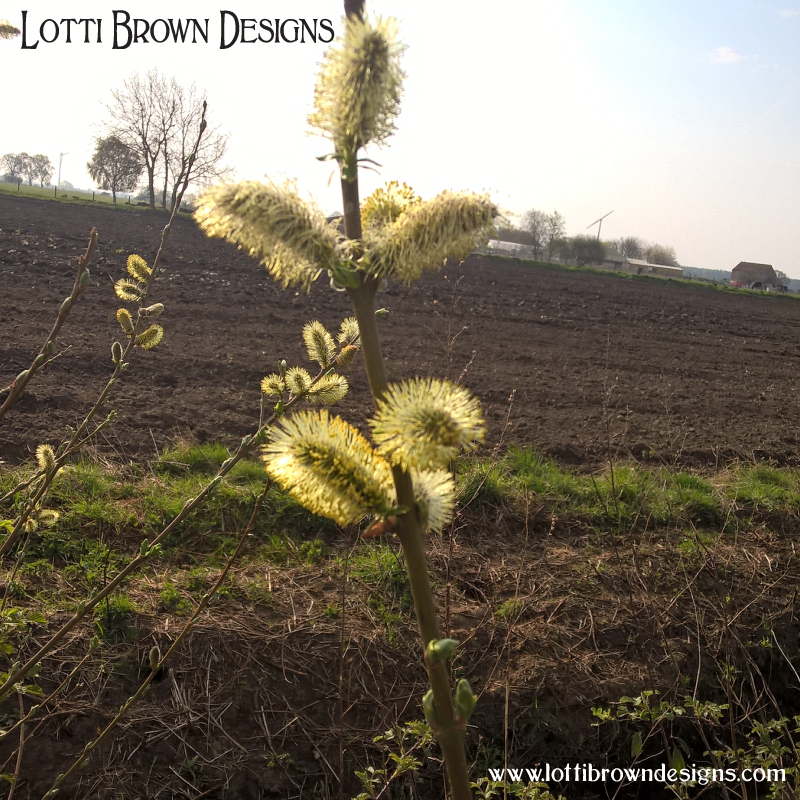 Buds of pussy willow
We know that as early as the first century AD, the Ancient Greek physician, pharmacologist, and botanist, Pedanius Dioscorides, wrote about the healing qualities of willow in his extensive book De Materia Medica, (On Medical Material).
He was also employed in the Roman army for his medical knowledge. He used willow bark for pain relief and to lower fevers, and its been used traditionally, now, for these purposes for hundreds if not thousands of years.
Culpeper’s Herbal, a 17th century guide of herbal medicine, notes the use of willow for pain relief, catarrh, sore throats, to lower fevers, stop bleeding, for mouth ulcers and as a disinfectant.
Culpeper links willow to the moon, saying “the moon owns it” – and indeed, as we shall see, the willow has long had a mythical association with the moon.
Wise women and healers would frequently take advantage of the healing qualities of willow…
Under the idea of the ‘Doctrine of Signatures’, the physical characteristics of a plant were thought to denote their healing powers. So willow was known to grow in damp, watery places and was used to heal damp-weather complaints – especially to ease the aches and pain of rheumatism and arthritis.
Because of its healing use by the wise women, the willow became known as the ‘witch’s tree’ and later as ‘witch’s aspirin’.
The willow is often linked to the Celtic ‘Morrigan’ or Morgana le Fay of Arthurian legend. In early tales of Morgana le Fay (also known as Morgan le Fay) in Geoffrey of Monmouth’s ‘Life of Merlin’, Morgana is a beautiful shape-shifter princess of watery Avalon and her special skill is healing, like the willow…
In later tellings of the Morgana le Fay tales, she takes on a ‘witch’ aspect, just as the healing willow tree also began to be associated with ‘witches’.
The chemical in willow, salicylic acid, which gives the tree its healing qualities, is now echoed in our modern pain-relieving and fever-soothing aspirin, after work by Edward Stone in the 18th century to heal patients suffering from fever with willow bark.
Even today in herbal medicine, willow is still used for fever, neuralgia, rheumatism, arthritis, cuts, burns and ulcers.
Willow was also thought to have healing properties for emotional difficulties, too, with traditional use for emotional distress, bitterness, and resentment – being able to restore emotional balance and allow emotions to flow more freely in order to bring harmony.
Today, Bach Flower Remedies advise willow for feelings of negativity and resentment. Bach Flower Remedies call the herb ‘forgive and forget’.
If you feel drawn to the willow - her soft strength and compassionate presence - you might enjoy spending a little more time with her in your journal.
I’ve created a gentle journaling guide to help you do just that.
The Protective Tree
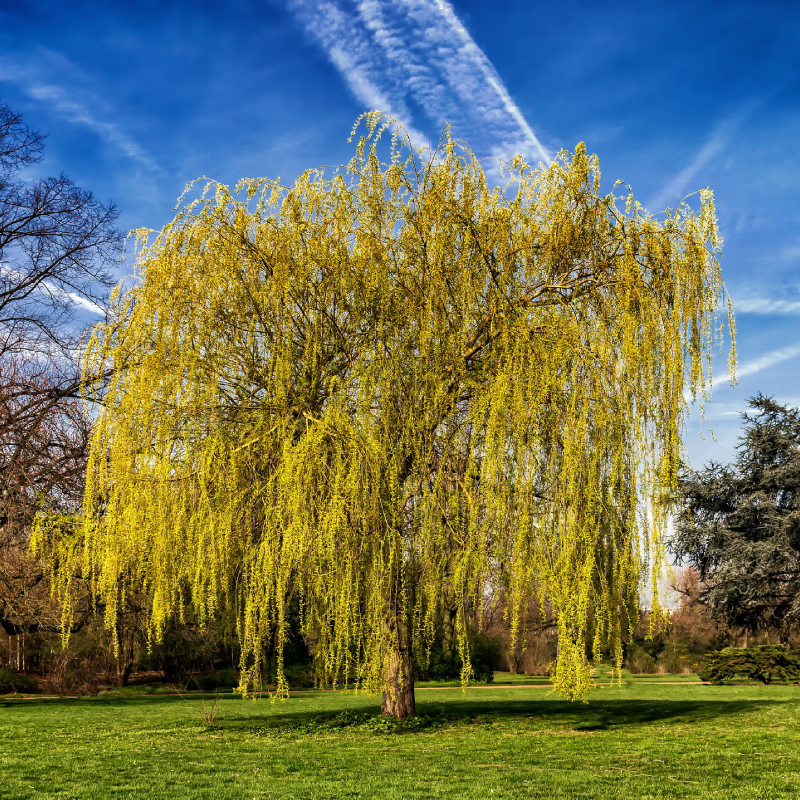 Weeping willow
As well as healing, willow traditionally protects.
Although it has been traditionally viewed as unlucky to cut willow, it was seen as safe to do so for Palm Sunday…
Goat willow (Pussy willow) was known as Palm Willow and was commonly cut for Palm Sunday celebrations and carried to church.
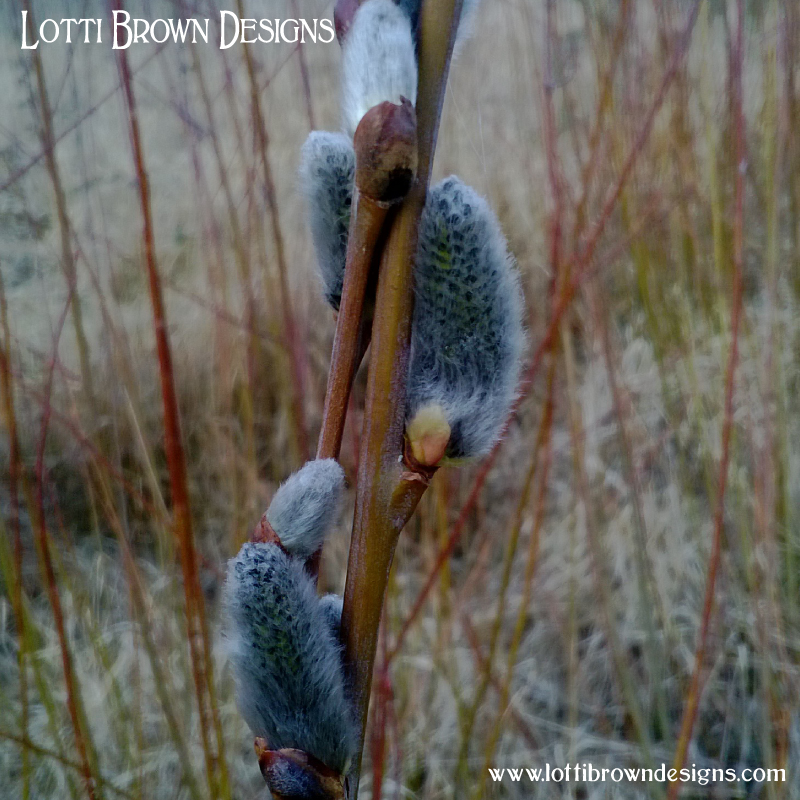 Pussy willow
The Palm Willow was then kept through the year to protect the home against thunder, lightning, disease and other dangers.
Willow twigs would be placed around the hearth of the home and around crops or animals in garden and fields to protect these for the coming year.
It is thought that the ancient Celtic Druids would use goat willow to make wands to give protection against evil.
The saying “knock on wood” or “touch wood” may have come from ancient customs of knocking on or touching a willow tree to bring good fortune and avoid bad fortune.
The Celts would use willow wood for coracles and boats and travellers and adventurers would set out with the protection of being in willow boats ‘over the ninth wave’ to seek their destiny.
In Romania, people celebrate St. George on 23 April – ‘Sfantul Gheorghe’ – and in certain regions, including Bucovina, people will still plant cut willow branches in freshly cut earth and place them at the entrances to their homes.
Traditionally, on 23/24 April, in areas of Eastern Europe including Romania and Slovenia, people would celebrate ‘Green George’ (also known as ‘Zeleni Jurij’) where a young man would be covered in greenery, often birch and sometimes willow, to recognise the springing of new life.
Celebrations would traditionally often centre around a willow tree from which blessings, healings and protections were invoked.
Tree of Eloquence and Inspiration
The willow is seen as the tree of inspiration and eloquence for poets, bards, and musicians.
Celtic harps were traditionally made from willow, such as the Trinity College harp, built in the 14th or 15th century and linked to the High King of Ireland, Brian Boru.
In Ancient Greek mythology, Orpheus is said to have carried willow branches into the Underworld and acquired the gift of eloquent communication from willow, and he was given a lyre by the god Apollo.
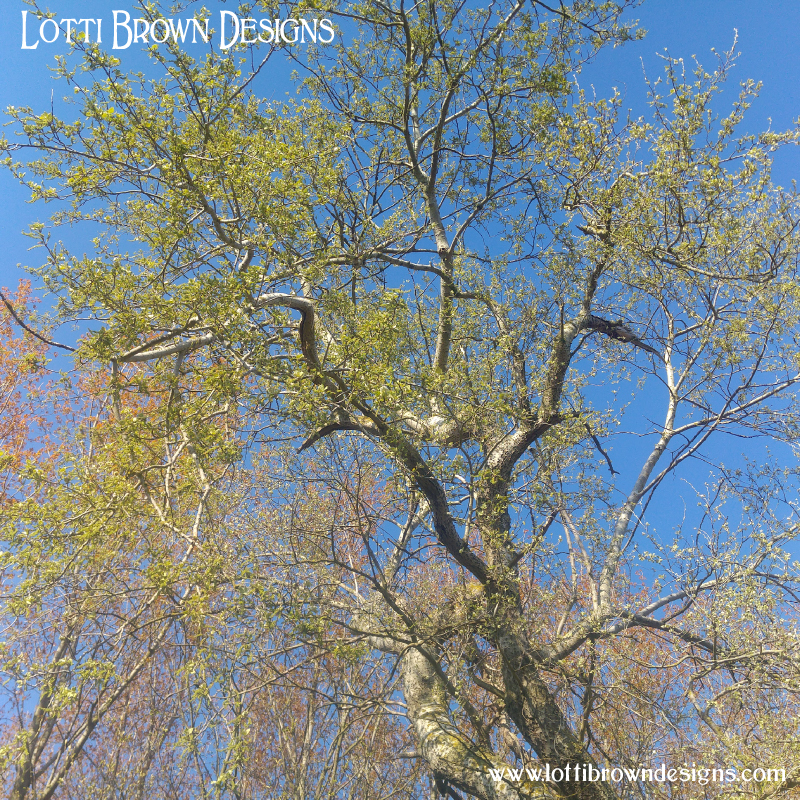 Willow tree in Spring
The Greek goddess Helice was a willow nymph – the name means ‘willow’. Associated with Helice, the ‘willow-muse’ Heliconian was the inspirational muse sacred to poets and gifted inspiration from the sounds of wind in the willow trees.
Tree of the Otherworld
Willows are often seen as gateway or boundary trees – the trees of the ‘in-between’ liminal places – on the banks of rivers and streams, between water and dry land…
And remember that in ancient Celtic times, watery places were seen as sacred places – so willow trees were viewed as able to connect the world of humans with the mystical Otherworld.
Bees are very attracted to all kinds of willow trees for the pollen and were seen as messengers from the Otherworld.
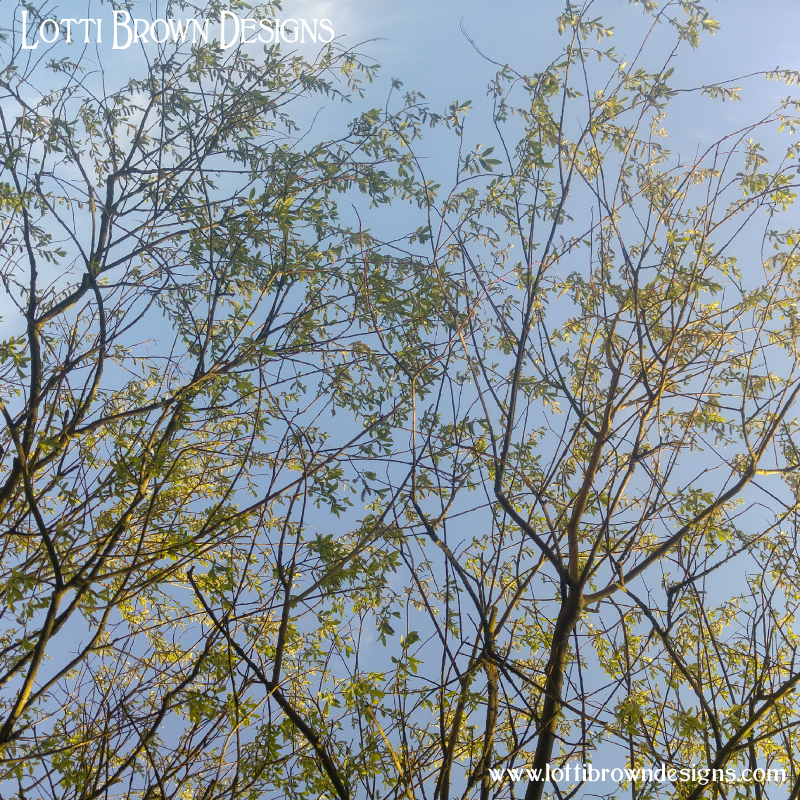 Willow tree branches
Druids would sleep beneath willow trees to involve dreams of divination and Celtic priests would use cut willow for the same purpose. In Celtic tales of Manannan mac Lir, willow rods were used for divination.
Persephone, Queen of the Greek Underworld, had a grove of ancient willows in the underworld of Tartarus. And the Greek sorceress Circe had a grove of willows dedicated to Hecate and the magic of the moon.
Flints shaped as willow leaves have been found in megalithic tombs. In Britain, burial mounds were often planted with willows thought to be for protection of the spirits.
Traditionally, willow was put into coffins and young willow saplings were planted on graves as in the Celtic way, which respected the tree as representing the spirit of the deceased.
Folk traditions say to “plant a willow and allow it to grow, to ease the passage of your soul at death.”
And mourning garlands would be made from willow – and those in mourning were said to ‘wear the willow’.
In truth, the role of willow in death and mourning ritual is likely only half the story, as willow is also seen as the tree of rebirth…
The Tree of Rebirth of Spring
Willows grow vigorously in spring and even a small twig or cut branch of willow, stuck into the ground, will quickly take root and grow into a young sapling.
As such, the willow is seen to represent rebirth, new life, and vigour – including fertility.
In fact, ancient Chinese tradition sees the willow as a tree of immortality for this very special ability.
In Celtic times, the willow was a special tree for spring time – but equally, it had symbolic resonance going into winter – the twin themes of death and rebirth.
In early Spring, the Celtic goddess Brigid/Brighid was celebrated on February 2nd, the feast of Imbolc. Brigid brought Spring from Winter and was said to carry a wand of willow with an acorn tip to control the weather.
Willow has a further connection to the Celtic late-spring celebrations of Beltane/Beltaine (May 1st)…
Folklore tells us that the ancient Sumerian goddess of the moon, water and willow was Belili – and her consort was the sun and willow god Bel/Belin. Bel gradually became more widely recognised as a sun-god than his moon-goddess willowy wife…
Bel was celebrated at his own feast of Beltane – which became known as a sun festival marking the birth of summer over winter.
The Tree of the Moon
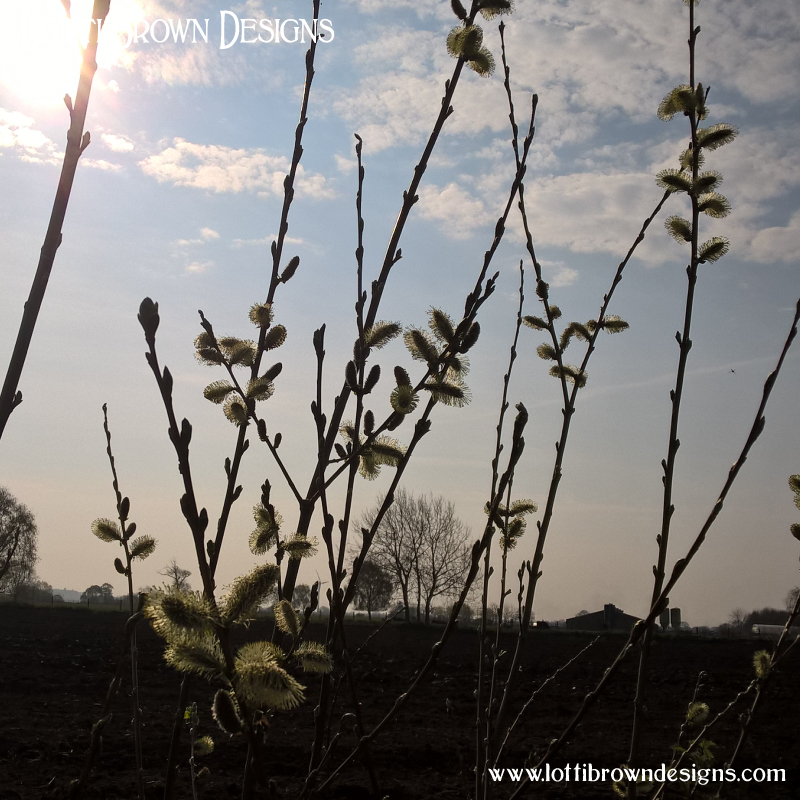 Branches of Pussy Willow in Spring
The ancient willow-goddess of Belili is not the only association of the willow tree with the moon…
The Welsh Celtic enchantress and goddess of the moon is Ceridwen and her tree is the willow. In the story of Ceridwen, her cauldron is seen as the font of poetic inspiration and divination – so linking the willow with clairvoyance and magic.
The goddess Artemis is also associated with the moon and was said to have been discovered amongst the willows.
The goddess Hecate, too, associated with the goddess Helice, links the moon and willow tree together.
Linked with the energy of the moon, the willow takes on a feminine-type energy of flow, flexibility and balance as well as gentle compassion and emotional sensitivity.
The Wandering Tree
Folklore tells of willow trees walking in the night!
In Somerset, it was said that:
“Willow do walk if you travels late”
And in Exmoor, travellers reported hearing muttering and being followed by willow trees.
A magical tree of spirit, indeed!
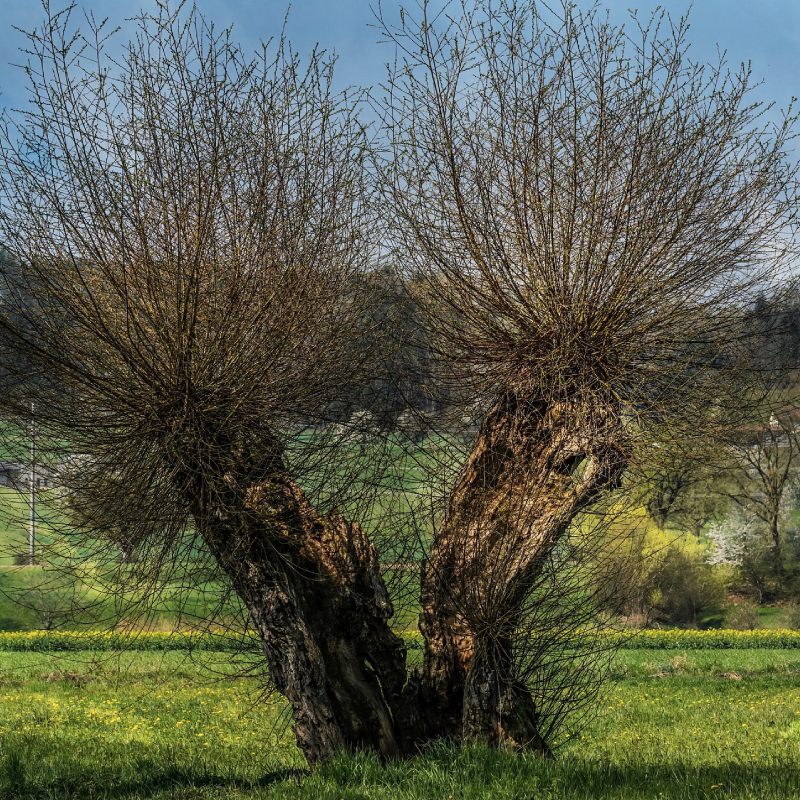 Do willow trees walk in the night..?
Willow Tree Symbolism and Meaning
There’s no doubt that the willow is a tree that’s always been special to us and that we hold dear to our hearts - often feeling a personal and very spiritual connection with the tree.
Willow tree symbolism is deeply connected with healing, protection, moon energy, renewal, and emotional balance...
When I think of willow, I think of a tree that teaches softness without weakness - a tree that bends, flows, protects, and endures.
The symbolism of the willow tree is for the feminine and the cycles of the moon.
She is the tree for Spring and renewal, but also links to times of sorrow and loss, death and immortality - bringing balance and rhythm to the cycles of life.
Willow is the gentle tree of healing, protection and compassionate wisdom.
Willow is a tree that can support us in the in-between times, the ends that bring new beginning - bringing eloquence, inspiration and flexibility to restore balance and harmony to our lives.
Journal with Willow
 Willow nature journaling inspired by the Celtic Tree Calendar
If the symbolism and folklore of the Willow has inspired you, you might enjoy exploring it more deeply through nature journaling. My gentle Willow journaling course invites you to notice the tree through its season, observe its details, and record your own encounters and personal reflections at your own pace.
Explore the Willow Nature Journaling Course
If you’d like to follow this journey through the seasons, I’ve created a full course, 'A Year of Trees', exploring all thirteen trees of the Celtic Tree Calendar.
Celtic Willow Art
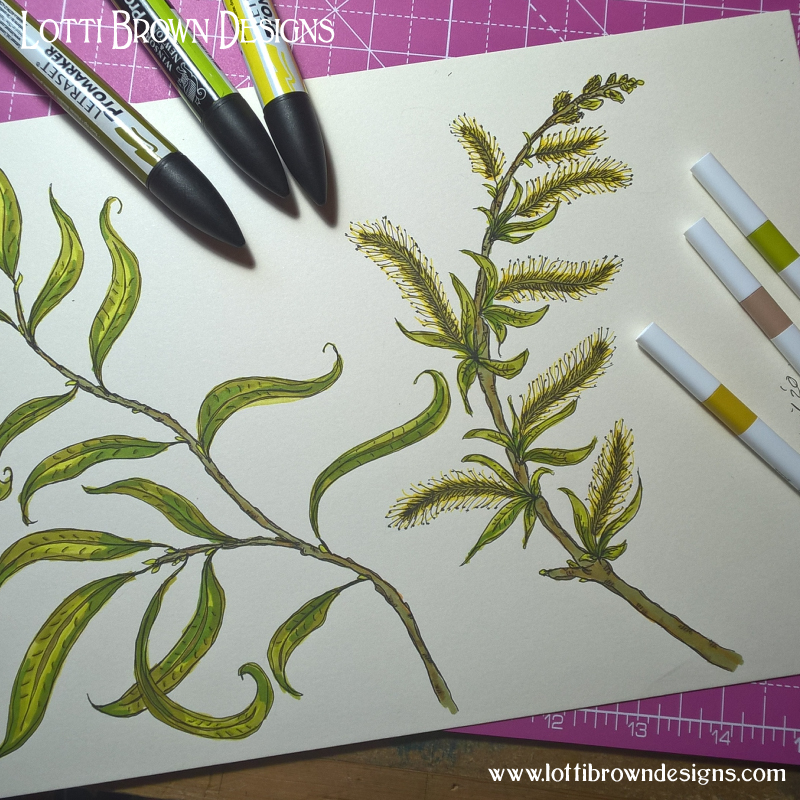 Willow drawings
Learning about willow tree symbolism, myth and folklore felt very meaningful - learning to understand more about why this beautiful tree has always felt so gentle, compassionate and full of hope made me want to capture something of that gentle, hopeful, protective energy in my own artwork...
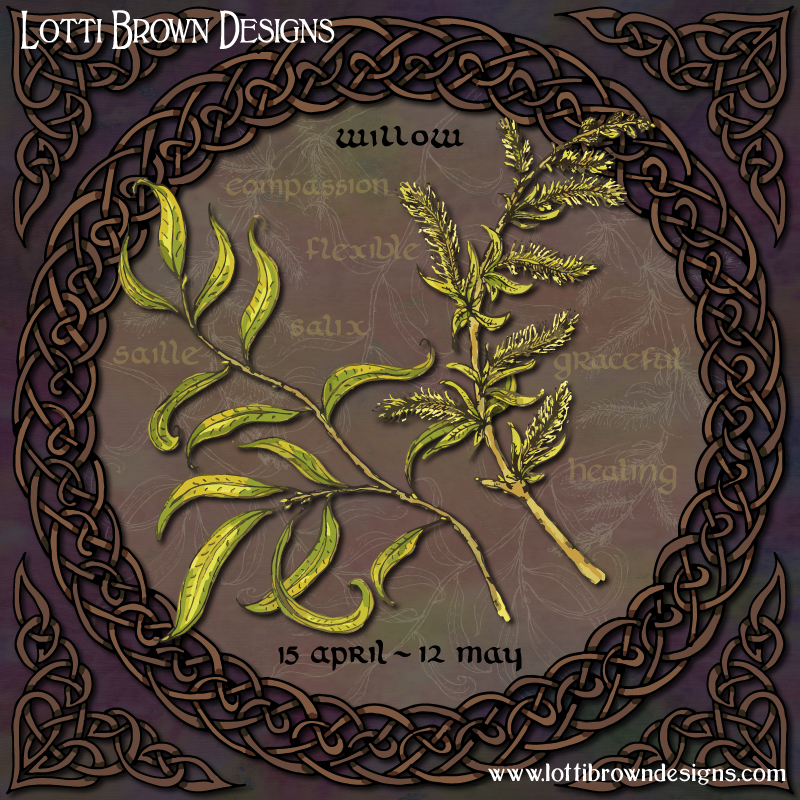 Celtic Tree Calendar Willow - 15th April to 12th May
Willow (Healing, Emotion, Feminine Energy)
If the symbolism of the willow has resonated with you - that sense of healing, softness, and emotional depth - this piece was created as a reflection of that gentle energy.
Inspired by the willow’s long association with restoration and intuition, the drawing captures something of its flowing, nurturing presence.
Take a closer look at the willow artworks and see available prints & products below...
It’s a piece that brings a sense of calm and quiet comfort to a space.
I created two versions of my Celtic Willow art - with and without the Celtic Tree Calendar dates (15th April to 12th May):
- standard version (no dates)
- dated version (with Celtic Tree Calendar dates 15th April to 12th May) - a lovely idea if you know a nature lover with a birthday, anniversary or other special occasion within these dates.
Available from my Redbubble store with worldwide delivery from your nearest manufacturing location and customs refunds (if required) - see the links above & below for more...
Here are a few ideas for the sorts of products that are available - please remember there are two versions, so check whether you're looking at the dated or undated version - if you want the other version than that pictured, click on the relevant button just above (or at the bottom of this section) to see everything available in that particular design...
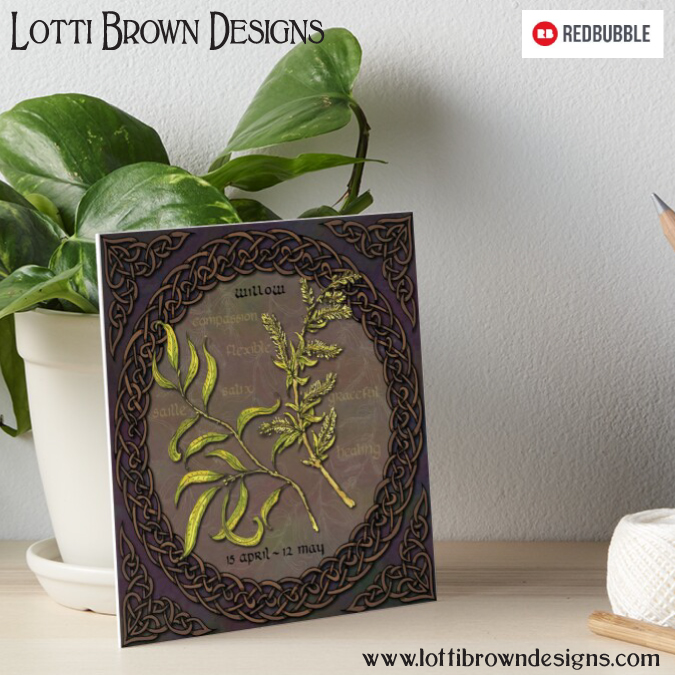


Please remember there are two versions of my Celtic Willow artwork - the standard version (no dates) and the Celtic Tree Calendar version with the dates for the Celtic Tree Calendar month of Willow (15th April to 12th May) - use the links here or just below to find the print or product you want...
If you’d like to explore the Willow’s place in the Celtic Tree Calendar, you might also enjoy the trees that come just before and after it:
- March 18th to April 14th – Alder
- April 15th to May 12th – Willow (current tree)
- May 13th to June 9th – Hawthorn
If you’d like to begin your own quiet journaling practice with the willow, you can find my gentle journaling guide for willow and other individual trees here - or explore all the trees in one guide here (A Year of Trees).
You can also explore all thirteen trees of the Celtic Tree Calendar together on my main Celtic Tree Calendar art page - or learn more about what the Celtic Tree Calendar is and how it came about here...
Visit my Celtic Trees Hub here...
You might also enjoy my other Celtic nature artworks and my nature and wildlife art here... Or explore all my art here...
Or if you love trees, you may enjoy nature journaling - find out here...
Visit my Little Art Shop for my newest art prints & products...
Have you ever thought about nature journaling..?
If you like nature, you might like to start your own nature journal!
Find out all about nature journaling here...
You can get started with my free guide here.
Or explore my gentle self-paced nature journaling course with nature journaling exercises to get you confident with nature journaling - take a look here...
Further Reading
- Tree Wisdom – J. M. Paterson
- Plant Lore and Legend – R. Binney
- Celtic Tree Magic – D. Forest
- Folklore of Plants – M. Baker
- RHS Encyclopedia of Herbs – D. Brown
- Illustrated Encyclopedia of Herbs – Chancellor Press
- Penguin Dictionary of Symbols
- https://traditionsacrosseurope.wordpress.com/2008/04/26/23-april-in-romania-sfantul-gheorghe-st-george-day/ Accessed 24 April 2020

Shall we stay in touch..?
Each month, I share stories from my own nature journal, new art from my studio, and simple seasonal inspiration to help you feel more connected with the turning year - if you'd like to stay updated, please sign up with your email address below...
Recent Articles


-
Magpie Folklore and Meaning - Symbolism & Superstitions - Magpie Art
Oct 06, 26 05:02 AM
 Discover magpie folklore, symbolism, and superstitions from around the world. Explore the meaning of this intelligent and mysterious bird.
 -
Nature Journal Prompts
Oct 05, 26 04:42 AM
 Easy nature journal prompts to inspire and encourage you - one per week...
 -
Meaning and Symbolism of Ivy in the Celtic Tree Calendar
Sep 29, 26 05:05 AM
 Explore the meaning and symbolism of ivy as part of the Celtic Tree Calendar...
Shop My Current Artwork Collections

My art is available as sustainable art prints, notebooks, greetings cards, tote bags and clothing in my Teemill shop.
Find my stockists for all my earlier artworks here...

Lotti Brown is a self-taught nature artist and nature journaling educator whose hand-drawn work is inspired by wildlife, folklore, and close observation. With 18 years in creative fields and 10 years creating nature art, she brings deep practical experience to her work. Trained by the Wild Wonder Foundation, she shares nature journaling courses and guides online. Her artwork has been licensed internationally and exhibited at Goole Museum and Bridlington Spa in the East Riding of Yorkshire, UK.
Follow me:
Share this page: