
- Home
- Celtic Trees
- Celtic Tree Art
- Elder

Elder Tree Meaning & Myths
Celtic Tree Calendar Art
By Lotti Brown
Explore elder tree meaning, symbolism, and folklore as we uncover one of the most mysterious and powerful trees in the Celtic Tree Calendar.
The elder tree is a tree of endings and beginnings - deeply connected to the otherworld, transformation, protection, and the cycles of life and death. Long associated with wise women, spirits, and unseen realms, elder has been both respected and feared throughout history.
Below, we’ll explore the deeper meaning of the elder tree, and why this humble hedgerow tree has held such powerful significance across cultures and centuries...
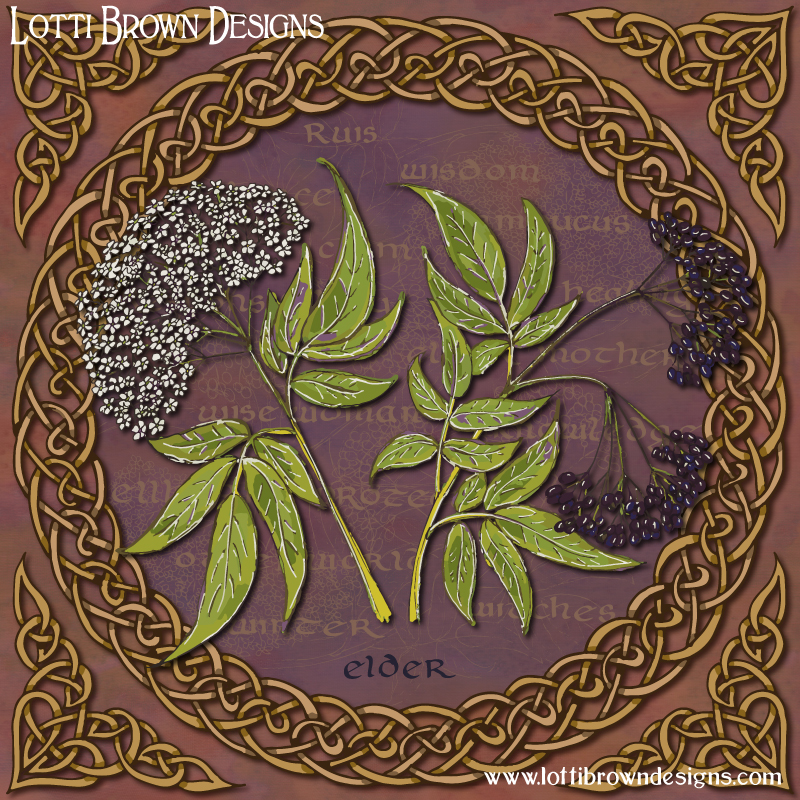 Elder
ElderThis is part of my Celtic Tree Calendar project which I did over 2020-2021. If you'd like to find out more about the Celtic Tree Calendar (what it is and where it came from), you can do that here...
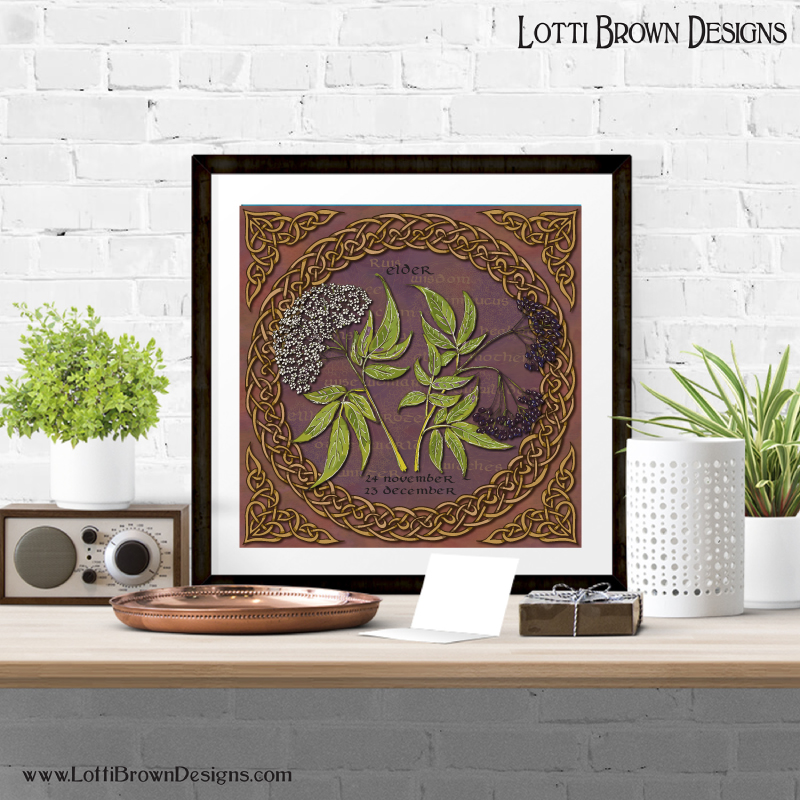 Elder tree art print
To me, elder feels like a threshold tree - one that stands quietly at the edge between worlds, holding both protection and mystery in equal measure...
Meet the Elder Tree
Elder is one of our smaller hedgerow trees, growing wild in many places and self-seeding often.
It’s a tree that humans have used for thousands of years - and has a lot of folklore and superstition attached to it…
It’s thought that the name ‘elder’ comes from the Anglo-Saxon words ‘ellaern’ meaning ‘hollow tree’ and/or ‘aeld’ meaning fire, as the hollow twigs were used to spark a fire into life by blowing air into it.
The Anglo-Saxons also used the words ‘eller’ and ‘kindler’ to refer to the wood of the elder, so we can see how the word ‘elder’ started to evolve (as well, perhaps as the word 'kindling').
Celtic Tree Calendar: 24 November to 23 December
- Latin name: Sambucus nigra
- Irish/Gaelic name: Ruis
- Common names: Ellhorn, Lady Ellhorn, Hylder, Alhuren, Eldrum, pipe tree, sweet elder
- Language of Flowers meaning: zealousness
- Qualities: regeneration, fertility, healing, otherworld, balance, wisdom, knowledge, calm, winter, witches, wise women, cooling, fairies, crone goddess,
- Associations: Elder Mother, Lady Elder, Lady Ellhorn, Holda, Cailleach
 Elder tree
Elder tree meaning centres around themes of transformation, death and rebirth, protection, wisdom, and connection to the otherworld...
Elder Tree Symbolism, Myth & Meaning
Elder has long been associated with the otherworld in our traditions, and also has an intriguing association with an elderly woman – the ‘elder’ perhaps?
In Scandinavian, Germanic and British folklore and beliefs, the elder tree was linked to the figure of the ‘Elder Mother’ also known as ‘Lady Elder’ or ‘Lady Ellhorn’ – she was the protector and guardian of the tree – so you should always ask permission of the Elder Mother before you touch or cut her tree.
In Denmark, the Elder Mother is called the ‘Hyldemoer’ and she was believed to live amongst the roots of the elder tree – she was mother to the elves.
The Elder Mother was once seen as a powerful and benign protector but as time went on, she started to become more feared as a witch and was associated with the tradition of the ‘old woman’ crone goddess and the wise woman of winter, the ‘Cailleach’, who guarded the gateways between the earthly world and the otherworld.
So the Elder Mother became linked to the roles of midwife and childbirth (which were seen as closer to death in earlier times), women and children, death and guardianship of souls.
Elder is also the tree of the Germanic goddess Holda (or Frau Holda) who brings unborn children to their mothers. She protects the children and rocks their cradles at night. She is the guardian of women’s crafts and helps those women who keep a clean and well-ordered home.
Holda is also the ‘old woman of winter’ and leads the Wild Hunt to guide souls into the otherworld. She’s also known as Frau Woden or Frau Odin.
As well as being a ‘crone goddess’, Holda is a beautiful young seductress – a fairy woman and a forest spirit called a ‘huldra’ with a hollow back like a tree trunk and a cow’s tail. She’s seen as a kindly spirit and protects men of the forest, charcoal burners and woodsmen, as well as dairy maids – and sometimes appears in the form of a dairy maid.
 Elder tree
Elder trees were often seen growing at sites of sacred springs and pools – gateways to the otherworld – and were often planted outside homes where the inhabitants hoped to gain the protection of the Elder Mother.
Like other ‘wise women’ of the times, the Elder Mother was sorely needed for her protection and healing – but at the same time her power was feared and she was hated as a ‘witch’.
It was said that witches could transform into elder trees, and in Ireland, it was believed that witches rode elder sticks (rather than broomsticks). While in Denmark, it was said that the elder trees actually came to life and crept around at night peeping through people’s windows in a menacing manner.
It’s said that an elder witch turned a Danish king into stone as he sought the English crown – he and his men became the Rollright Stones on the Warwickshire/Oxfordshire border and the witch became their guardian elder tree…
“Though and thy men hoar stones shall be
And I myself an elder tree.”
People would dance around the stones with elder in their hair and seek out the elder witch at Midsummer’s Eve – but in later years, they came to cut the tree and ‘bleed’ the witch from fear at her power.
In areas of Europe, including Britain, elderly country folk would sometimes still doff their hat when they pass an elder tree to acknowledge and show respect to the Elder Mother.
This connection to the Elder Mother lies at the heart of elder tree meaning - a tree that protects, guides, and stands at the boundary between life and death.
 Elder
ElderIf you feel drawn to the elder - her quiet strength and transformational energy - you might enjoy spending a little more time with her in your journal.
I’ve created a gentle guide to help you do just that…
Fear of the Elder
At one time, elder was never used as firewood and it was believed that burning elder 'raised the Devil' and brought death and disaster.
Elder was also said to taint water in wells, and taint food which was prepared with implements made of elder, or that had been cooked over an elder fire.
Elder furniture was said to creak, warp and break and could spitefully splinter anyone unlucky (or foolish!) enough to be using it.
It was said that pregnant women should avoid stepping on elder leaves for fear of miscarriage – and a baby in a cradle of elder could be pinched and bruised by the Elder Mother.
Farmers would not use elder wood with their livestock – they would not even whip or drive their animals with elder. An animal or child whipped with an elder withy would, it was said, “fade away and never thrive.”
Romany gypsies called the elder tree the ‘Devil’s Eye’ (Yakori bengeskro). And it was said that witches would stir a bucket of water with an elder twig in order to call up storms or bad weather.
In the Irish Celtic tale of ‘The Headless Phantom’ the hero Fionn mac Cumhail faces monsters as he spends the night in an otherworldly house where elder logs are left burning through the night.
It was believed that you could slip into that otherworld by sleeping under an elder tree – perhaps stolen away by fairies! You should be particularly careful on Midsummer’s Eve when the fairy folk are about and the gateways to the otherworld are open!
These fears reflect the deeper symbolism of the elder tree - not as something purely negative, but as a tree that demands respect, marking the boundary between the known world and the unknown.
Elder Association with Death
Hearse drivers would make their whip handles from elder – due to the association with elder as being able to guide and protect the soul enroute to the otherworld.
Elders growing on graves were said to the signify that the dead were happy – and more importantly, would not walk abroad!
Elder was often seen as a symbol of death or the afterlife – and was linked to the wood of the crucifixion cross and also said to be the tree that Judas Iscariot hanged himself from.
In this way, elder becomes a guide - not just a symbol of death, but of transition, helping souls move safely between worlds.
 Elder tree
Tree of Protection
Elder tree meaning is often linked to transformation and the boundary between worlds...
And in this way elder was used for protection too – and specifically protection from witchcraft. People planted elder trees close to their home to protect them from evils, lightning and witchcraft – and with the link back to Holda and the Elder Mother, in order to bring fertility.
Elder crosses were hung over doorways and windows for protection. Elder leaves gathered on April 30th were said to protect from witches and also had healing properties. And elder berries were also gathered, especially on St John’s Eve, to protect from witchcraft.
While in Wales, women stencilled around elder leaves as they washed their floors, to give protection from witches.
This protective aspect balances the darker associations of elder, showing it not as something to fear, but as a powerful guardian when treated with respect.
 Elderberries
Tree of Healing
Elder was also used widely for healing – including for winter coughs, colds, fevers, and catarrh, as well as for toothache and rheumatism.
The leaves could be used to help heal wounds and the berries were useful both for constipation and diarrhoea.
Elderflower water could be used for fevers, flus, and rheumatism, and externally as a facial cleanser and skin conditioner and eye lotion.
 Elderflowers
A green elder stick could be rubbed on warts and then buried, and a similar remedy was also used for fevers – but take care if you ever dig up an elder stick as it could pass that same fever (or wart) to you!
It’s said that elder berries collected on St. John’s Day could cure baldness – but if you already have hair, you might prefer to use them as a black hair dye, as the Celts once did, or even to dye wool or other textiles.
Elder leaves were said to repel all kinds of pests, from mice, rats, flies and fleas – and crops would be whipped with elder leaves to avoid being lost to blight.
Elder in your pockets could save you from saddle sores and also remove temptation to adultery.
 Elderberries
Elder flowers were often used in weddings to bring good luck to the happy couple.
And the hollow elder sticks were made into musical wind instruments which give the elder its Latin name ‘Sambucus’ after the Italian musical pipes made of elder ‘sampognas’ or the stringed elder musical instrument ‘sackbut’.
As a flower essence, elder is used for balance between this earthly world and the otherworld and its meaning is connected to a balancing of energies, the otherworld, protection, wisdom (like the elder wise woman), healing, and responsibilities in society. Elder is cooling and brings calm thought along with the wisdom of years.
Here again, we see the dual nature of elder tree meaning - a plant that can both harm and heal, depending on how it is approached.
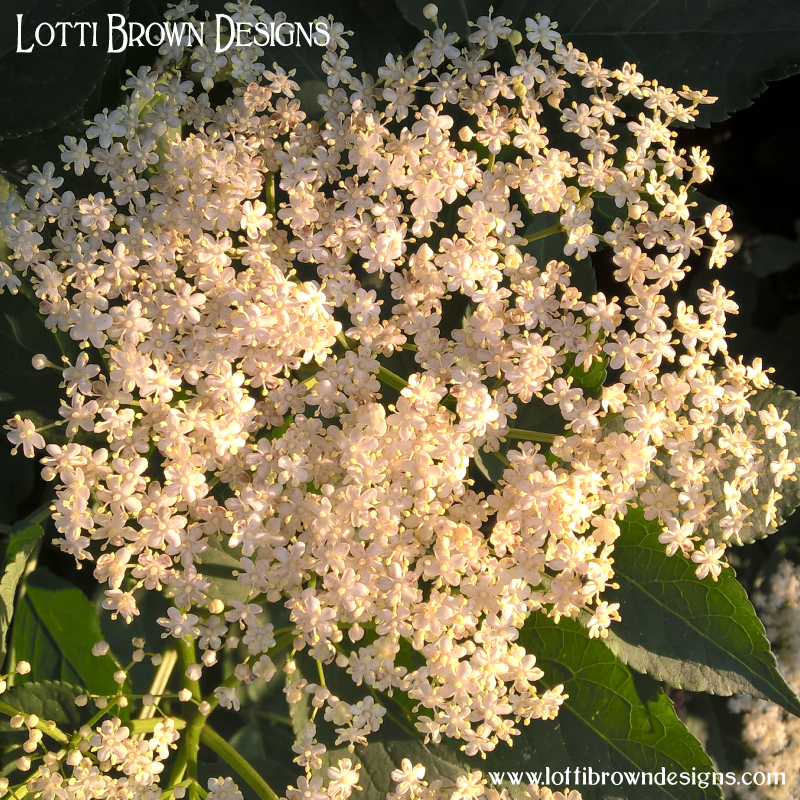 Elderflowers
Elder Tree Meaning
When we explore elder tree meaning, we find a tree deeply connected to transformation, protection, and the otherworld.
Elder is a tree of endings and beginnings - associated with death, rebirth, and the passage between worlds. It has long been linked to wise women, spirits, and guardians such as the Elder Mother.
At the same time, elder is a protective and healing tree, planted near homes to guard against harm and used in traditional remedies for centuries.
Elder symbolism reminds us of the balance between fear and respect, life and death, and the visible and invisible worlds - a tree that stands at the threshold, guiding and protecting those who honour it.
Journal with Elder
 Elder nature journal guide inspired by the Celtic Tree Calendar
If the symbolism and folklore of the Elder has inspired you, you might enjoy exploring it more deeply through nature journaling. My gentle Elder journaling course invites you to notice the tree through its season, observe its details, and record your own encounters and personal reflections at your own pace.
Explore the Elder Nature Journaling Course
If you’d like to follow this journey through the seasons, I’ve created a full course, 'A Year of Trees', exploring all thirteen trees of the Celtic Tree Calendar.
Celtic Elder Tree Art
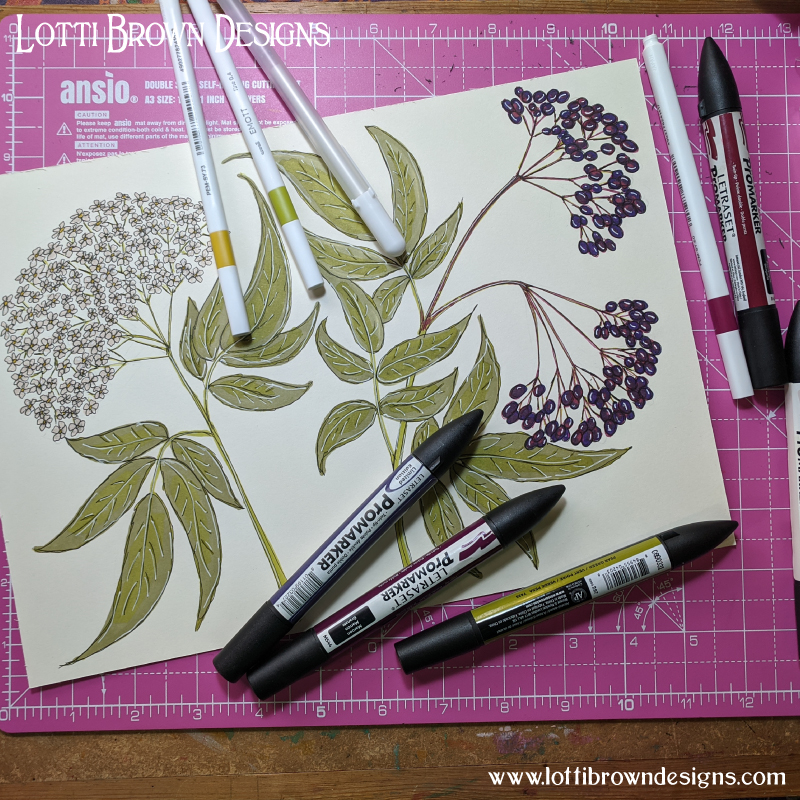 Elder tree drawings
Learning about the meaning of the elder tree - its connection to transformation, protection, and the otherworld - had a strong influence on how I approached this piece - I felt like the contrast between the white flowers and dark berries perfectly symbolised the dual nature of the tree and its qualities of balance...
While the ripening from young fresh flowers to rich ripe berries seemed to reflect the passage of time for the Elder Mother...
Elder (Endings, Renewal, Otherworld)
If the symbolism of the elder has resonated with you - that sense of endings, renewal, and connection to the otherworld - this piece was created to reflect that depth.
Inspired by the elder’s role as a threshold tree, the artwork explores that balance between life, death, and transformation.
Take a closer look at the elder artwork and see available prints & products below...
It’s a piece that brings a sense of quiet reflection and wisdom into a space.
I've actually created two versions of my Celtic Elder art:
- the standard version (no dates)
- a Celtic Tree Calendar version with dates added (24 November – 23 December) which correspond to the month for the elder - ideal for birthdays, anniversaries and other special occasions between these dates (learn about the Celtic Tree Calendar here...)
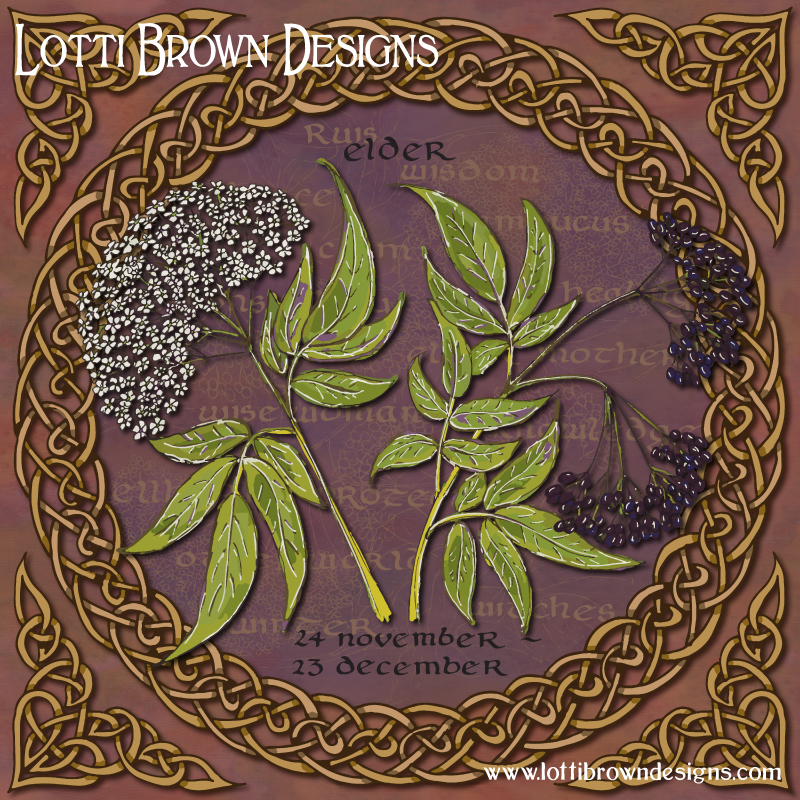
You can explore my Celtic Elder artwork in my Redbubble store:
- wide variety of products including T-shirts, cushions, throws, shower curtains, mugs, phone/tech cases, clocks, pouches, bags and much more...
- fast international delivery from your closest manufacturing location
- customs refund if you're charged
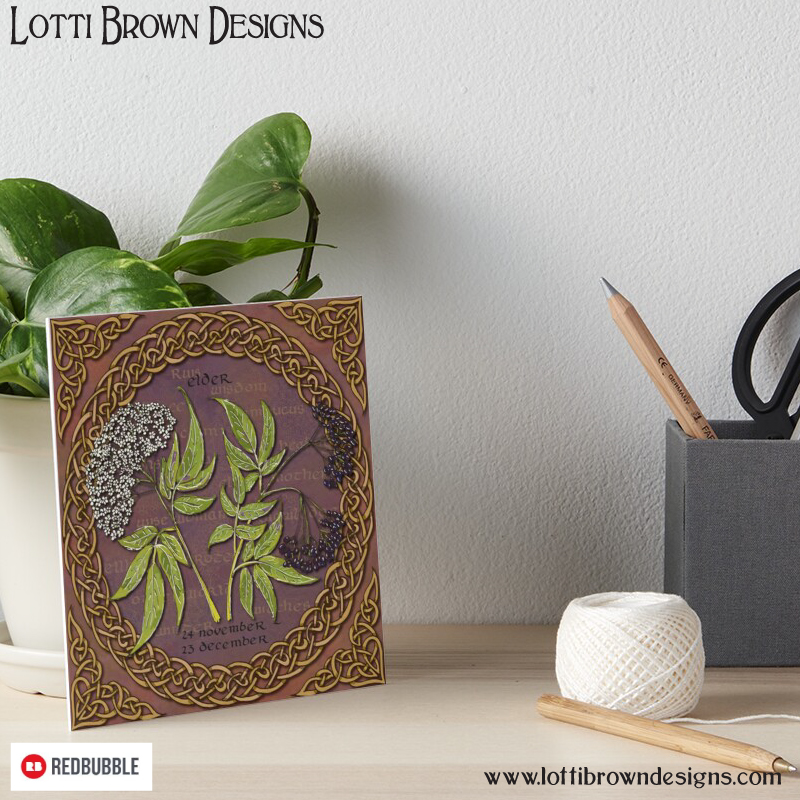
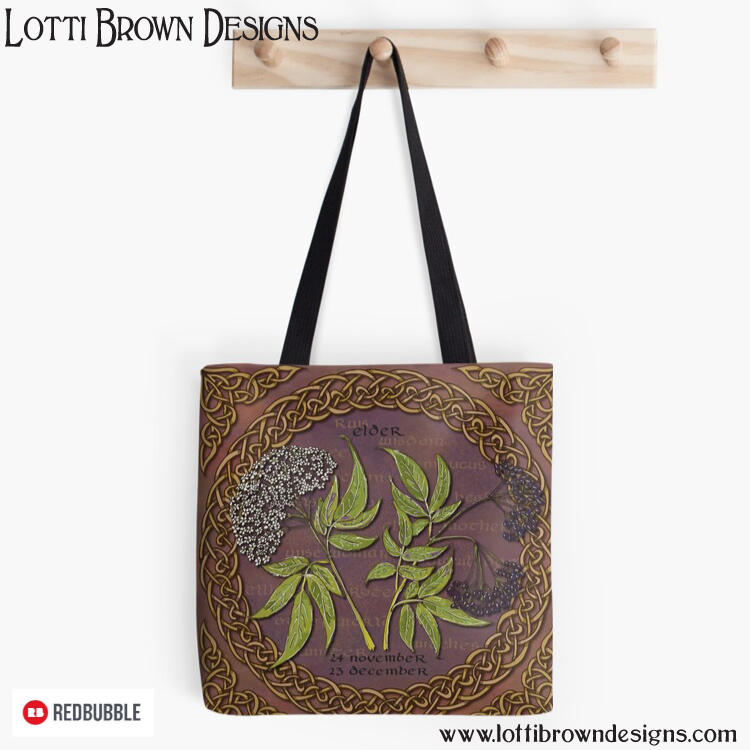
Here's a little taster below - you can click on each image below to be taken directly to the item, or browse everything available via the two links above (dated/undated), and also at the bottom of the page for your convenience...
Please be careful to select the correct version that you prefer - all items are available in both versions (with or without dates relating to the Celtic Tree Calendar month of the Elder), so if in doubt, please select from one of the main dated/undated links and browse individual products from there!

How to Buy
Please remember there are two versions of my Celtic Elder tree artwork - the standard version (no dates) and the Celtic Tree Calendar version with the dates for the Celtic Tree Calendar month of the Elder (24th November to 23rd December) - use the links here or just below to explore everything available in that version to find the print or product you want...
Elder in the Celtic Tree Calendar
If you’re exploring the Celtic Tree Calendar, you might also enjoy:
- Fern (28 Oct – 23 Nov) – mystery and hidden knowledge
- Elder (24 Nov – 23 Dec) – transformation and the otherworld
- Birch (24 Dec – 20 Jan) – renewal and new beginnings
If you’d like to begin your own quiet journaling practice with the birch, you can find my gentle journaling guide for elder and other individual trees here - or explore all the trees in one guide here (A Year of Trees).
Explore more Celtic art here and
more Celtic tree art here..
Learn all about
the Celtic Tree Calendar and see my other trees here...
Visit my Celtic Trees Hub here...
Discover more British nature folklore in my Folklore Hub here...
Explore all my art here...
Visit my Little Art Shop for my newest art prints & products...
Have you ever thought about nature journaling..?
If you like nature, you might like to start your own nature journal!
Find out all about nature journaling here...
You can get started with my free guide here.
Or explore my gentle self-paced nature journaling course with nature journaling exercises to get you confident with nature journaling - take a look here...
Further Reading
- Celtic Tree Magic – book by D. Forest
- Tree Wisdom – book by J.M. Paterson
- Vickery’s Folk Flora – book by R. Vickery
- Discovering the Folklore of Plants –book by M. Baker
- Plant Lore and Legend – book by R. Binney
Please note that the information in this piece is for entertainment only and should not be used to diagnose or prescribe for health purposes.

Shall we stay in touch..?
Each month, I share stories from my own nature journal, new art from my studio, and simple seasonal inspiration to help you feel more connected with the turning year - if you'd like to stay updated, please sign up with your email address below...
Recent Articles


-
Barn Owl Folklore & Meaning - Symbolism of the Barn Owl
Sep 15, 26 03:34 AM
 Explore barn owl folklore, symbolism and meaning, from ancient myths to British traditions. Discover the quiet wisdom and mystery of this ghostly bird.
 -
Bramble Meaning, Myth & Symbolism - Celtic Tree Calendar Art
Sep 02, 26 11:32 AM
 A look at bramble meaning, myth and symbolism as I share my bramble Celtic Tree Calendar art for the month of 'Vine'...
 -
Nature Journal Prompts
Aug 26, 26 04:05 AM
 Easy nature journal prompts to inspire and encourage you - one per week...
Shop My Current Artwork Collections

My art is available as sustainable art prints, notebooks, greetings cards, tote bags and clothing in my Teemill shop.
Find my stockists for all my earlier artworks here...

Lotti Brown is a self-taught nature artist and nature journaling educator whose hand-drawn work is inspired by wildlife, folklore, and close observation. With 18 years in creative fields and 10 years creating nature art, she brings deep practical experience to her work. Trained by the Wild Wonder Foundation, she shares nature journaling courses and guides online. Her artwork has been licensed internationally and exhibited at Goole Museum and Bridlington Spa in the East Riding of Yorkshire, UK.
Follow me:
Share this page: