
- Home
- Nature Journaling
- Seasonal Nature Journaling
- May Nature Journal

Nature Journaling in May
Birds, Wildflowers & Seasonal Change
By Lotti Brown
 Beautiful May walks in nature
Discover gentle May nature journaling ideas inspired by birdsong, hedgerow flowers, folklore and slow seasonal noticing as spring turns towards summer.
Nature journaling in May feels completely different from the quieter early days of spring - one of the things I love most is the sheer abundance of life.
As the spring days of April slip into May, the world is green now, and full…
Walking in the fields, the air feels soft and filled with birdsong – trees are lush and carry their leaves proudly, fresh and green, like something new and cherished.
As the world warms, I try to slow my step so as not to rush through nature and miss her treasures – tiny flowers filling the hedgerows with colour and pattern.
The season feels in full abundance now…

Birds & Birdsong in May
Summer migrants continue to arrive through May…
I pick up a Garden Warbler on a nearby rail trail walk and the full, throaty song of the Reed Warbler in my favourite little field close to home – the first I’ve heard so it must be newly arrived from Africa or still journeying to its home.
 Reed warbler
In the garden, a wren surprises me by perching on the patio chair just outside the kitchen window – a visitor to the nearby bird bath I suspect. She darts low into the rhododendron bush just nearby so I wonder if there’s a nest there?
 Wren - visiting my garden - perhaps there's a nest..?
Bird behaviour has seemed to subtly change – although I haven’t seen any nests this year (unlike my goldfinch nest last year). I notice many birds seeming to perch and pose – singing with vigour as they defend their territories with their beautiful voices while standing guard over their precious family in the nest.
 Birds are busy singing
This lovely chaffinch was agreeable enough to stop and pose while we took photos so I could draw him afterwards (below).
 Chaffinch posed nicely for his 'portrait'
And as our evening walks in the fields slip a little later to take advantage of these summer evenings, we catch sight of a beautiful barn owl as he quarters the field, hunting for small prey – pausing in the sky for a long moment before dramatically diving down into the grasses. We think he must have a small family to feed to take advantage of the still light hours before dusk.
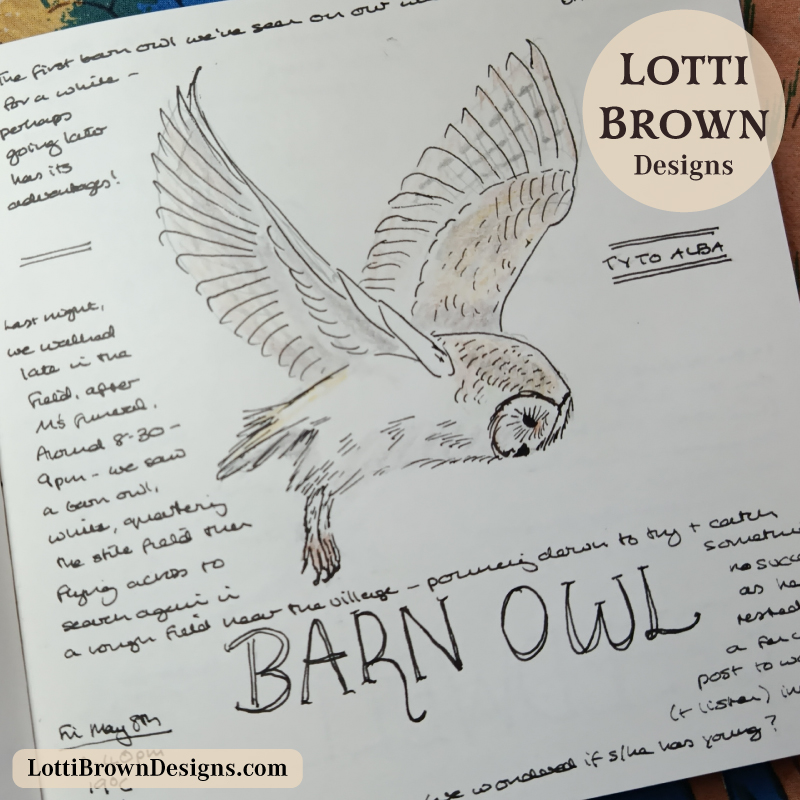 Barn owl hunting before dusk
These are the weeks when the birds’ attention seems wholly turned towards nesting and raising young - even when we can’t see the nests themselves.
Paying attention and noticing these seemingly insignificant changes can tell us so much.
Fields, Flowers & Seasonal Changes in May
Out in the fields, the green is all-encompassing…
The trees start to fill with leaves – I love the fresh green oak leaves which are one of the later trees to leaf, but so welcome with their gentle rustle filling the air…
 Oak leaves - fresh and green in May
The delicate white blossoms of hawthorn – the may blossom which has been traditionally used in garlands and decorations to celebrate May Day and Beltane at the start of the month (1st May) - the true sign that we’re now well into spring and edging towards summer.
 May blossom (hawthorn)
And to see the frothy white rowan blossom, it really feels like the start of summer is approaching.
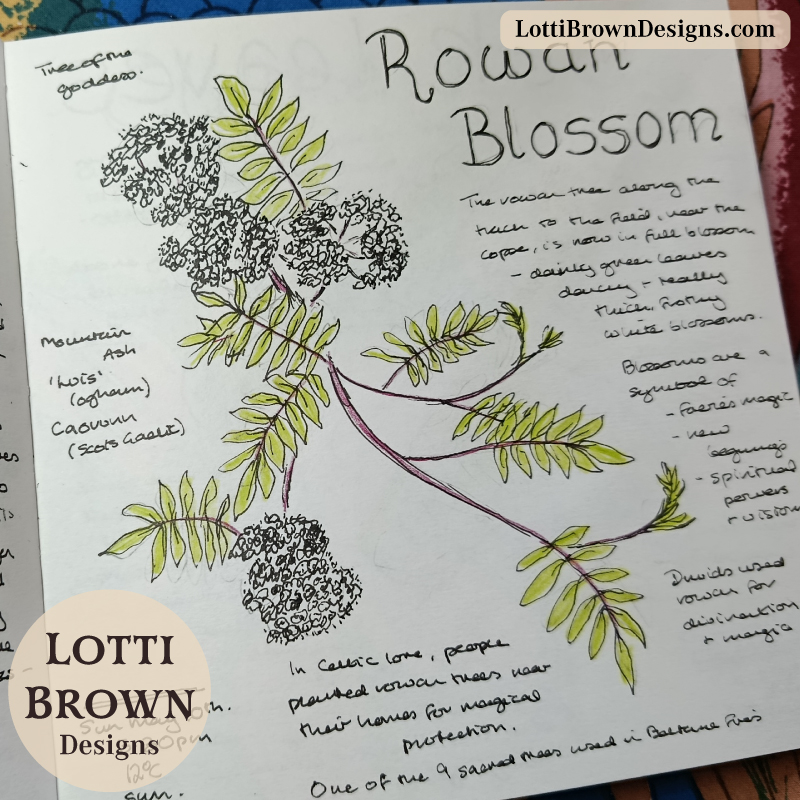 Rowan blossom
In the hedgerows and verges, a plethora of wildflowers blooms. First, the delicate blue petals of the speedwell...
 Beautiful soft blue of the speedwell
And then the vibrant pops of pink of the Red Campion.
At first, we notice only small flashes of pink beneath the hedges - but then suddenly an entire nearby field bursts into colour…
 Red and pink campion wildflowers - the pink flowers are formed as hybrids of red and white campion flowers
And another with brilliant Crimson Clover – its long red flower heads nodding joyfully in the breeze and bringing us a huge splash of colour as we wander past.
 Crimson clover - loved by bees
I think these must have been planted for the bees – excellent for pollinators and good for the land, too.
As May progresses, we notice the tiny white stars of Greater Stitchwort brightening up the verges. This wildflower is traditionally associated with Spring, often woven into May Day garlands - and was believed to contain the power of the pixies causing children who picked then to become 'pixy-led' - as well as being used traditionally to heal side stitches.
 Greater Stitchwort sometimes known as 'Star of Bethlehem', 'Milkmaids' or 'Wedding Cakes'
Greater Stitchwort is also one of folklore’s Thunder Flowers – when picked it causes thunderstorms! We have had a few lately so perhaps someone has been picking them?
I also see the pretty yellow flowers of the Crosswort nearby – also known as Smooth Bedstraw. It’s honey-scented so was traditionally used as a strewing herb to freshen rooms – and because of its unusual cross-shaped leaf pattern was considered a holy flower with sacred powers of protection.
 Crosswort - also known as 'Maywort', 'Maiden's Hair' or 'Smooth Bedstraw'
In the verges, cow parsley grows tall – its delicate white flowers earning it the common name of Queen Anne’s Lace or Lady’s Lace.
These are another traditional symbol of spring and were often believed to provide protection from evil spirits – but much of the folklore around this wildflower discourages from picking or bringing into the home due to its similarities with other poisonous lookalikes.
 Cow Parsley or 'Queen Anne's Lace'
I love how so many of these flowers carry old stories with them - as though the hedgerows themselves still remember the beliefs and traditions of earlier generations.
In the woodlands, the bluebells continue to bloom – their vibrancy gradually fading even while the ferns grow to cover them. And along the track, we catch sight of a large hare – running towards us at first, until he stops and notices us…
 A precious moment with a hare - and bluebells in the woodlands
A precious moment as our eyes meet – a long pause – and then he lopes away into the nearby fields.
These same fields offer, at dusk, several roe deer, grazing quietly amongst the green – another moment to connect with the life that nature shows us as the world quietens.
 Deer grazing quietly at dusk
A May Garden Journal
My tiny back garden, too, is filled with flowers…
The tiny woodruff, a wildflower which I planted 20 years ago – a fragrant strewing herb traditionally used for May Day garlands and strewn in church for St. Barnabas’ Day (June 11th).
 Woodruff - sometimes known as 'Mary's Bedstraw'
In Germany, woodruff is used to flavour the May wine.
It was also often used as a talisman for its protection against witchcraft or misfortune.
I also have cranesbill (hardy geranium) which has self-seeded and fills every nook and cranny with pretty pink flowers each May. The wild meadow cranesbill is another thunder flower – so I must take care not to pick too much of my garden flower, just in case!
 Cranesbill (hardy geranium)
Pink and white clematis climb up the trellises, so that flowers seem to fill my every viewpoint…
 Clematis flowers - 'Josephine' (pink) and 'White Abundance' (white)
And a deep pink rhododendron blooms beautifully, the delicate flowers reminding me of woodland trails as a child when my brother and I collected the abundance of fallen rhododendron petals on sticks, like colourful flower garlands celebrating the joy of Spring.
 Pink rhododendron in my May garden
The red valerian in my front garden is in full flower. I love this flower as it reminds me of my childhood in Wales, where the red valerian sprouts in every wall crevice.
My dad used to tell me the folk tale that they were brought to Britain by the Romans. They were actually introduced in the 16th century as a garden plant, and escaped into the wild. They grow profusely in ruins which may have inspired the tale.
 Red Valerian (Red False Valerian)
It’s thought the valerian known by the Romans and Anglo-Saxons in Britain was the true medicinal valerian plant instead.
And as May turns towards the hotter days of June, I notice the first fruits starting to form – tiny green strawberries alongside dainty white flowers in a pot on my patio table…
And a single small gooseberry amongst thick green leaves and prickles…
 The first tiny fruits start to form in my May garden (strawberry & gooseberry)
The new fruits, starting to ripen as the heat of summer starts to build show us that the season turns again – as the cold days of April at the start of the month change over these few weeks to heatwaves that signify that the season of summer proper is about to begin…
Nature Journaling in May
May is a month of abundance – filled with leaf, flower and birdsong as life grows and fills every available space with colour, energy and joy.
It feels like the world has fully awakened now.
The tentative beginnings of spring have softened into something richer and fuller - hedgerows frothing with flowers, trees heavy with leaves, birds singing from almost every corner of the landscape.
And yet, even amongst all this abundance, nature journaling in May reminds me that it’s often the smaller moments that stay with me most:
- a wren perched quietly by the bird bath
- the rustle of oak leaves overhead
- the sudden stillness before a hare turns and disappears into the grass
These moments feel fleeting - tiny fragments of the season that might easily pass unnoticed if we rush too quickly through them.
Nature journaling helps me slow down enough to hold onto them a little longer.
And perhaps that’s one of the loveliest things about May - the sense that life is overflowing everywhere we look, if only we pause long enough to notice it.
 Willow tit
May Nature Journaling Ideas and Prompts
May is one of the fullest months of the year - the hedgerows thick with flowers, birds singing constantly, and fresh green leaves filling the trees.
It can almost feel overwhelming trying to notice everything at once.
But nature journaling doesn’t need to capture the whole season - often, one small observation is enough.
Here are a few gentle prompts to inspire your own May nature journal pages and help you slow down and notice the season…
Listening to the Birds
- Pause for a few moments and simply listen. Can you hear different layers of birdsong nearby? You might try describing the sounds in your own words or noticing how the birds behave as they sing.
A Tree Fully in Leaf
- Choose one tree and spend a little time observing it closely. How do the leaves move in the breeze? What colours can you see in the fresh spring growth?
Hedgerow Flowers
- Look closely at the flowers growing in verges and hedgerows. What tiny details do you notice in their petals, leaves or patterns? You could sketch a single flower or simply record its colours and shape.
Signs of Nesting Season
- Watch how birds behave now. Are they carrying food or nesting materials? Perching high and singing? Disappearing quietly into hedges or shrubs?
One Quiet Encounter
- Record a small moment from your walks such as a bird, a flower, a sudden movement in the grass, or a change in the evening light - something simple, but worth remembering.
The Feeling of May
- How does May feel where you are? Abundant? Restless? Joyful? Peaceful? You might write a few reflective lines alongside your observations.
Colour Returning
- Notice where colour catches your eye this month. Wildflowers, blossom, fresh leaves, evening skies - what stands out against the green?
A Garden Corner
- Spend a few quiet minutes observing one small part of your garden or local green space. What changes are happening there this week?
You don’t need to record everything May has to offer - just a few small moments that help you feel connected to the season around you...
If you'd like to explore more May nature journal pages, you can see my pages from May 2025 here...
There's also more Spring journal inspiration in my recent April pages here...
Or you can step ahead to June, here...
You can read about my year of birdsong here…
You can also discover more weekly nature journal prompts and ideas here...
You might also enjoy more of my seasonal nature journaling, here - or take a look at my first year of nature journaling, here...
If you're just getting started with your first nature journal, this is a gentle place to begin...
If you love folklore, you might like to explore my folklore hub here… or discover the folklores and myths of the trees of the Celtic Tree Calendar, here...
Deepen Your Nature Journaling Practice
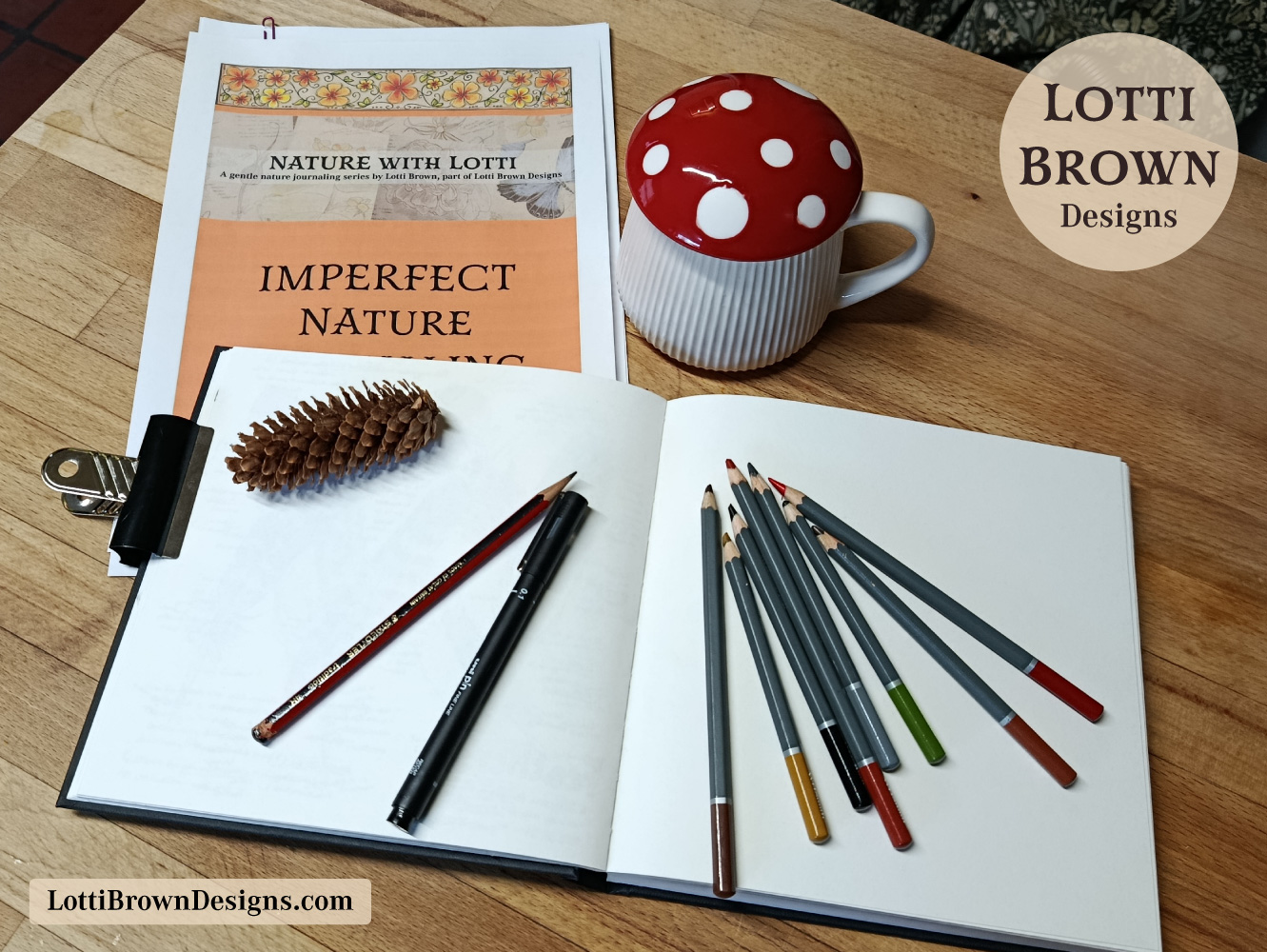 Deepen your nature journaling practice with me...
If you’ve enjoyed my nature journaling reflections, you might also like my 20-lesson course, Imperfect Nature Journaling.
It’s a gently structured, self-paced journey designed to help you:
• Slow down and notice more deeply
• Build confidence in drawing and observing
• Create a calming journaling ritual you can return to
• Feel more connected to the seasons and the natural world
No perfection required. Just curiosity and a notebook.
You can explore the course here whenever you’re ready...
P.S. If you’re just beginning - or would like something quieter and more simple to start with - you might first like to get started with my free 'Getting Started' guide or gain momentum with my 'Gentle Introduction' guide to help you through your first few pages - here...
Explore my main Nature Journaling Hub here...

Shall we stay in touch..?
Each month, I share stories from my own nature journal, new art from my studio, and simple seasonal inspiration to help you feel more connected with the turning year - if you'd like to stay updated, please sign up with your email address below...
Recent Articles


-
Barn Owl Folklore & Meaning - Symbolism of the Barn Owl
Sep 15, 26 03:34 AM
 Explore barn owl folklore, symbolism and meaning, from ancient myths to British traditions. Discover the quiet wisdom and mystery of this ghostly bird.
 -
Bramble Meaning, Myth & Symbolism - Celtic Tree Calendar Art
Sep 02, 26 11:32 AM
 A look at bramble meaning, myth and symbolism as I share my bramble Celtic Tree Calendar art for the month of 'Vine'...
 -
Nature Journal Prompts
Aug 26, 26 04:05 AM
 Easy nature journal prompts to inspire and encourage you - one per week...
Shop My Current Artwork Collections

My art is available as sustainable art prints, notebooks, greetings cards, tote bags and clothing in my Teemill shop.
Find my stockists for all my earlier artworks here...

Lotti Brown is a self-taught nature artist and nature journaling educator whose hand-drawn work is inspired by wildlife, folklore, and close observation. With 18 years in creative fields and 10 years creating nature art, she brings deep practical experience to her work. Trained by the Wild Wonder Foundation, she shares nature journaling courses and guides online. Her artwork has been licensed internationally and exhibited at Goole Museum and Bridlington Spa in the East Riding of Yorkshire, UK.
Follow me:
Share this page: