
- Home
- Celtic Trees
- Celtic Tree Art
- Alder Tree

Alder Tree Symbolism, Myth & Meaning
By Lotti Brown
Explore alder tree symbolism, myth and meaning with me as part of my Celtic Tree Calendar art project, where I explore each of the beautiful trees of this old and mysterious calendar...
The Alder is a tree which celebrates Spring, the 'dawn of the year', and it's connected with many of our ancient myths and traditions so it's a lovely tree to learn more about its many ancient myths, traditions, and practical uses. It is a tree of water, protection, courage, and quiet strength, and the more I learn about it, the more fascinating it becomes...
The Alder covers the period 18th March to 14th April in the Celtic Tree Calendar - you can find out all about what the Celtic Tree Calendar actually is here...
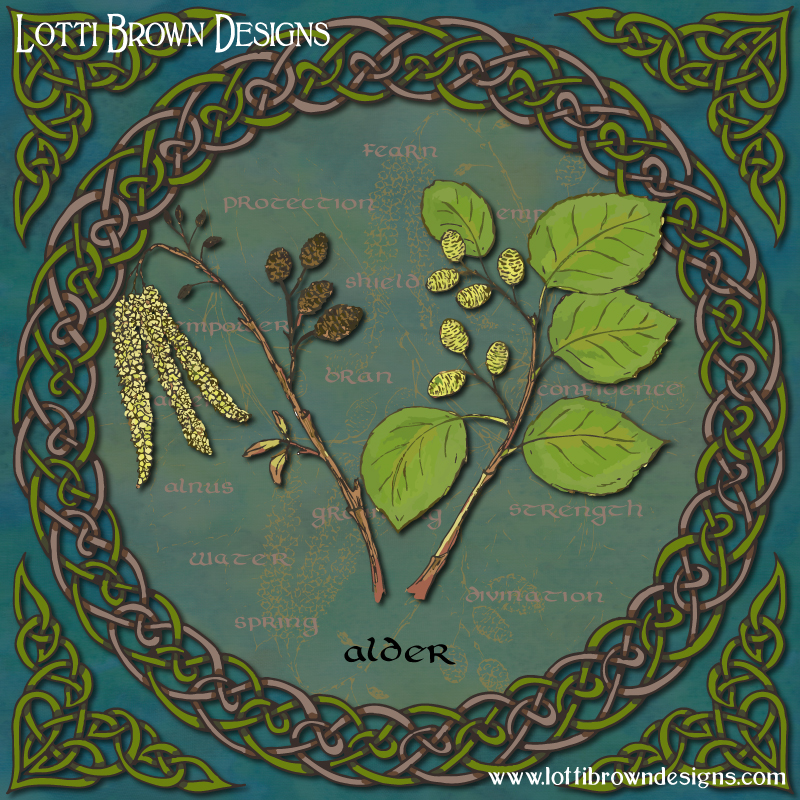 Celtic Tree Calendar Alder art by Lotti Brown
Celtic Tree Calendar - Alder Tree: 18 March -14 April
- Latin name: Alnus
- Irish/Gaelic name: Fearn
- Common names: allar, arl, aller, aller-tree, eller, ellers, aul, alls-bushes, orle, orrel, owler, gue, dog-tree
- Qualities: protection, defence, grounding, empowerment, divination, confidence, strength
- Associations: Bran, Cronus, Phoroneus, Fearinus, Gwydion, raven, shield, Venice, crannogs, foundations, dyes, water
Alder feels to me like one of those trees that holds both beauty and strength together - rooted in wet places, quietly useful, and full of old magic...
Alder Tree Symbolism, Myth & Meaning
Let's explore alder tree symbolism, myth and meaning together and get to know one of our most beautiful trees a little better...
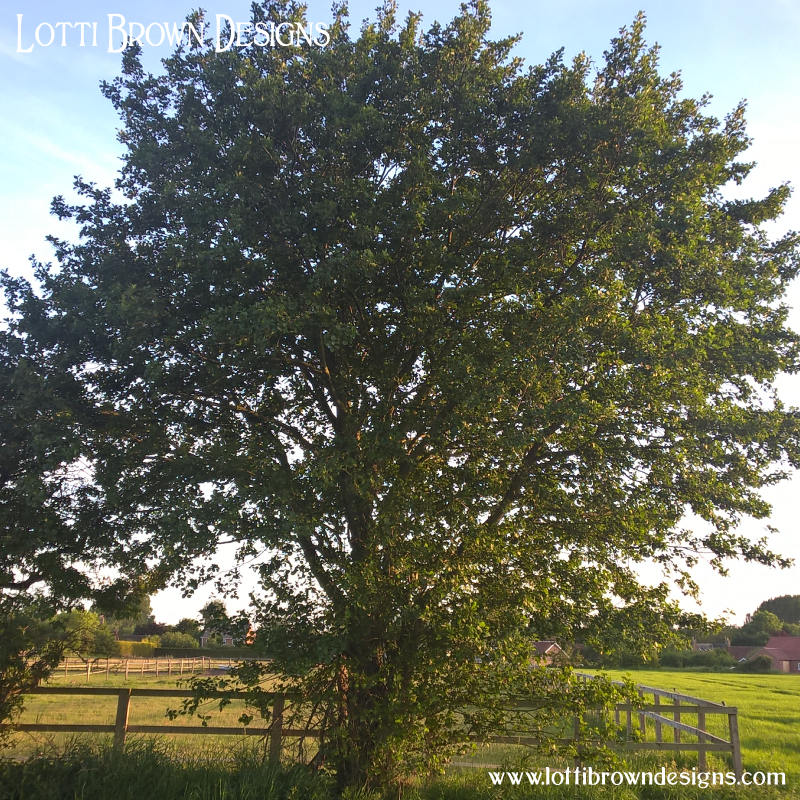 Alder tree
Tree of Blood
The red colour that the white wood inside the alder turns to when cut led to an ancient belief that the tree actually bled when cut. This implied that the tree was linked to our human ancestry and Irish mythology stated that the first man was born of an alder tree (and rowan, of the red berries, was the first woman).
In the Celtic world, red was a sacred colour. The colour of blood, fire, and the sun – the colour of life.
It’s said the Rollright Stones’ King Stone once had its own grove of alder trees – the trees were cut, to bleed, and when they were cut, legend has it that the King Stone moved in sympathy.
The fact that the tree bled when cut also led Celtic warriors to use alder wood to make shields. The wood was believed to be protective and would magically bleed instead of the human warrior. Shields were highly valued in Celtic culture – Celtic myths tell us of shields given names, set in halls of honour, and which had their own magical prowess and powers.
Tree of Bran
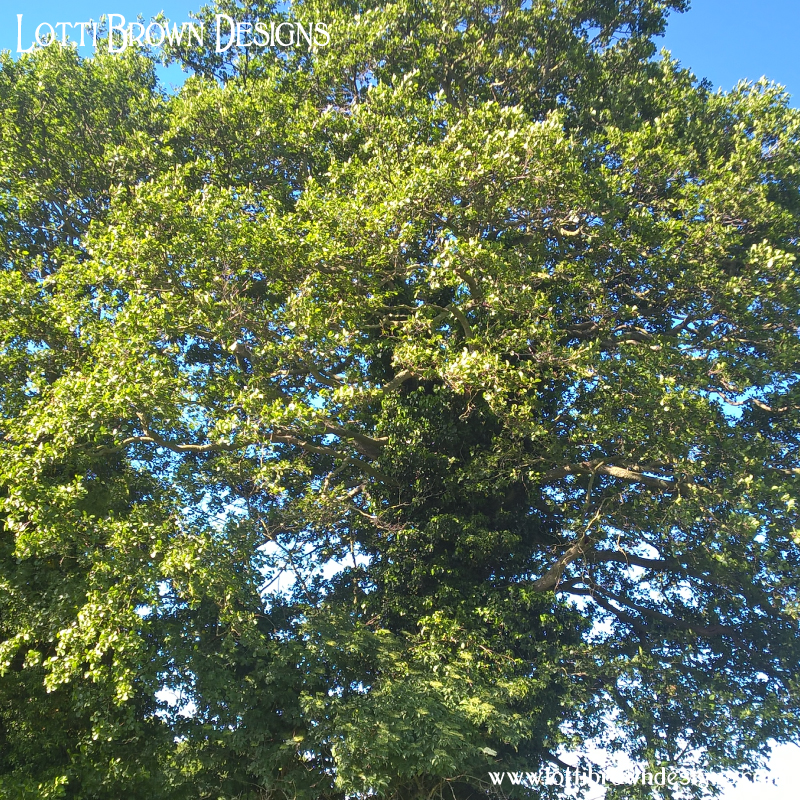 Alder tree
Alder is connected to the Celtic god Bran, a giant guardian of the land of Britain. The name Bran means ‘raven’. In a battle to invade Ireland and rescue his sister Branwen (‘white raven’), Bran is wounded and tells his men to sever his head from his body…
The head is taken to London (after spending 7 years in Harlech and a further 80 in Pembroke). Bran’s head is magical. It continues to talk, sing, offer advice, and make prophecies for his people. Bran’s head is installed at ‘White Hill’ London (what is now the Tower of London) in order to protect the land of Britain – in particular, against invasion from the French.
King Arthur removed the head of Bran, but Bran’s birds, the ravens, still guard the Tower of London and hold the fate of the island of Britain in their black feathers – for it’s said that if the ravens leave the Tower, Britain will fail.
The medieval Book of Taliesin also tells of the hero Bran, associating him with the alder tree. The legend of the ‘Battle of the Trees’ tells of the Welsh magician Gwydion who enchants the trees to fight as his army. The alder trees lead the attack.
Gwydion has to guess the name of a mystery warrior in order to vanquish him…
“The high sprigs of alder on thy shield,
Bran thou art called, of the glittering branches.
….
The high sprigs of alder in thy hand,
Bran thou art, by the branch thy bearest.”
In this tale, Bran is an ally of Arawn, the god of the Celtic underworld ‘Annwn’ – a land of rest and renewal.
Bran was seen as a protector or guardian of the people. The purple alder buds are called ‘royal purple’ from the connection with Bran. And this popular Celtic god was sainted by the Christian church as Saint Brons or ‘Bran the Blessed’.
The association of the talking head of Bran links alder with divination and prophecy. It’s thought that alder does have ancient links with prophecy and was believed to be a divination tree. The leaves high up in the tree rustle with the prophecies of otherworldly spirits in the heavens – and the alder’s watery location on riverbanks gives a further connection to the otherworld. Watery places were sacred places in the Celtic world.
Celtic druids used alder wood to make whistles and pipes. The music was thought to be the singing of the spirits of the wood which could tell prophecies. It’s thought the druids used alder pipes to ‘entice air elementals and whistle up the wind’.
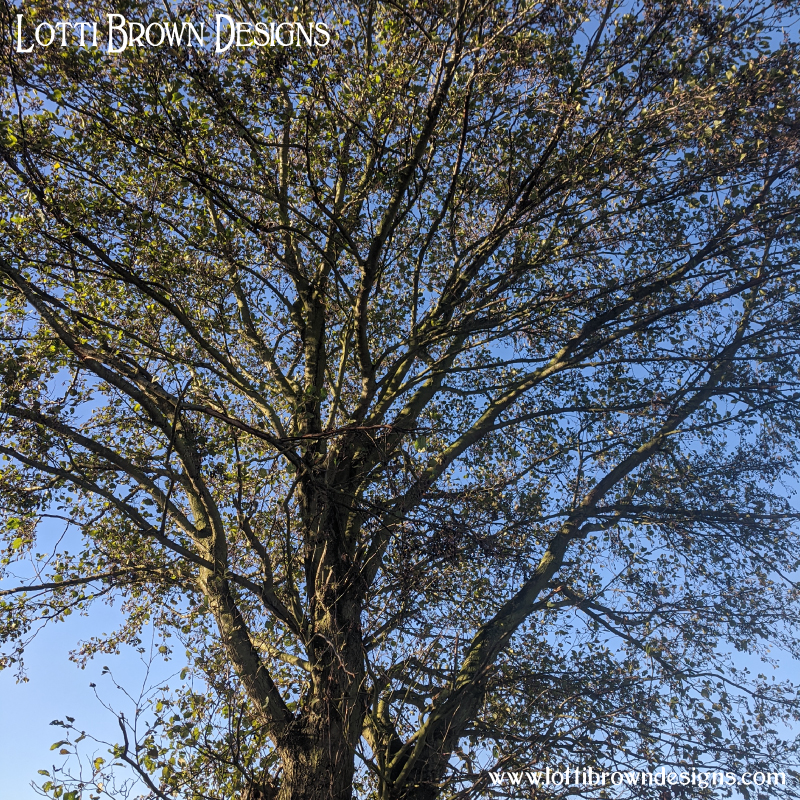 Alder tree
If you feel drawn to the alder - its sense of strength, intuition and quiet transition - you might enjoy spending a little more time with it in your journal.
I’ve created a gentle guide to help you do just that...
Tree of Spring
The Ancient Greek god Phoroneus is associated with the alder tree. Phoroneus is also known as ‘Fearinus’ which means ‘of the dawn of the year’ (Spring) which also relates to the Gaelic ogham name for alder ‘fearn’.
In Italy, alder is linked to the Spring fire festivals – and in Norse legends, the month of March was known as ‘the lengthening month of the waking alder’ – ‘Lenct’. This was a period of fasting as winter provisions were scarce – which became the Christian fasting period of Lent.
Tree of Faeries & Protection
Alder was seen as the tree of the faeries. It was thought to be a gateway to the faerie realms. In Somerset, travellers were warned never to enter a copse of alder trees by night or ‘they’ll keep ‘ee’.
Alder was a protective tree, too. An old Irish name for alder is ‘comet lachta’ which means ‘guarding of the milk’. Milk pails and other milking implements were made of alder to protect the milk.
In Ireland, it was warned against felling a sacred alder or your home would be consumed by fire!
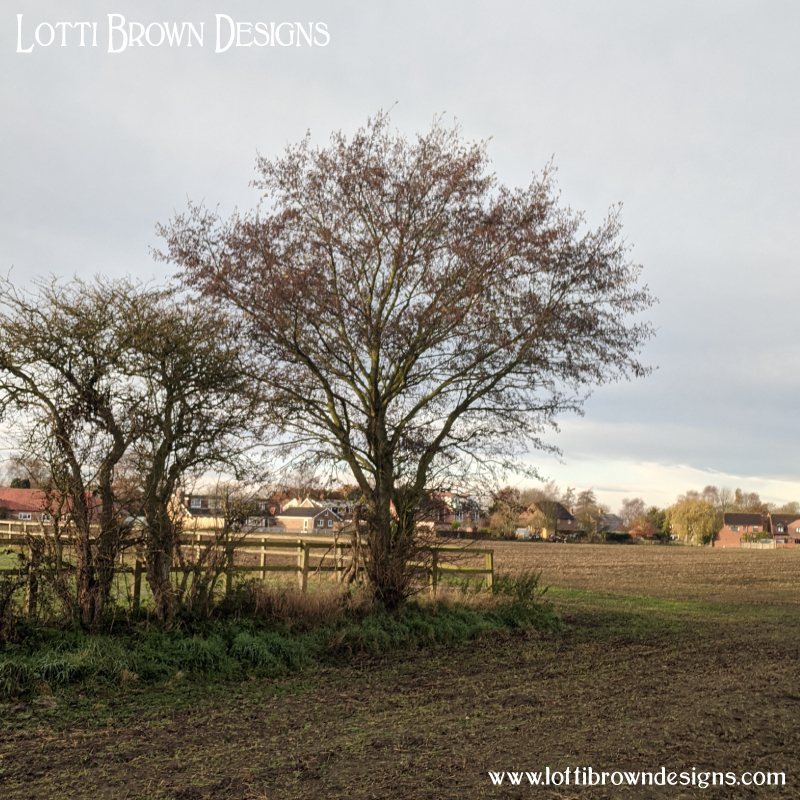 Alder tree
Tree of Fire & Water
Alder was a tree of fire. It did not burn that well, but as a charcoal, it did burn extremely hot and was often used by metalworkers and smithies.
It was a tree of water – growing nearly always near water, it was said that alder was the king of the waters, with willow the queen.
The dyes that could be obtained from alder also reflected this:
- The bark gave a dye of red – fire
- The flowers gave a dye of green – water and the faerie realm
- The twigs gave a dye of brown – earth
Yellow and black dyes could also be made, and the leaves were used for tanning leather.
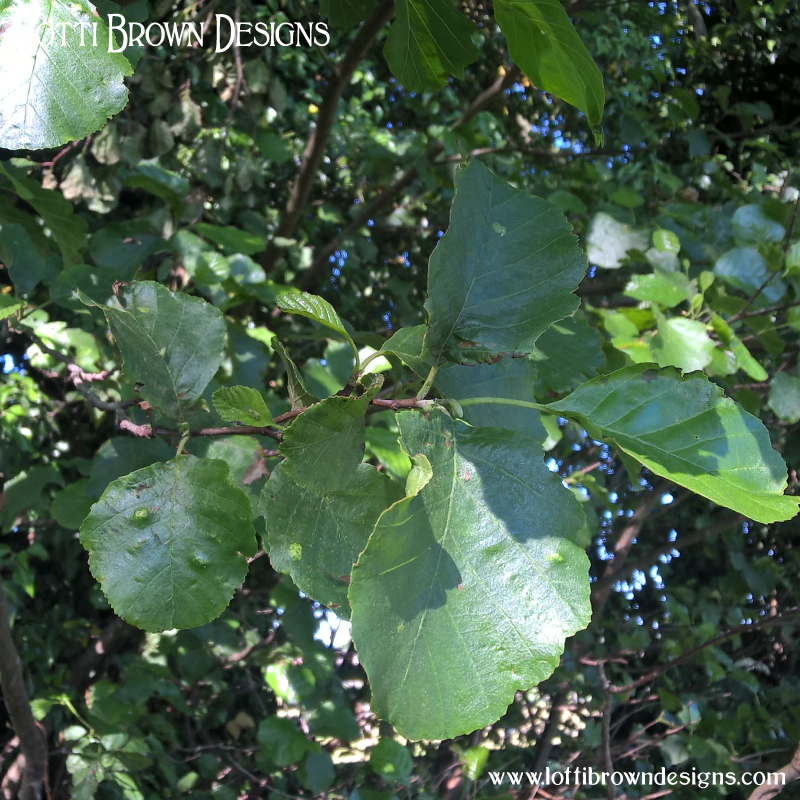 Alder leaves
Tree of Everyday Usefulness
The alder was also used for clogs, musical pipes, chairs, cart wheels and spinning wheels, also for boats, canal lock-gates, pumps, troughs, and sluices as alder does not rot in water like other woods are prone to. In the ancient world, alder was used for bridges across waterways and tracks across wetland areas.
Celtic lake houses or ‘crannogs’ were built on foundations of alder for its durable properties in wet conditions and also for its protective qualities.
16th century Venice was built on many alder piles, including the famous Rialto Bridge. Several European cathedrals from medieval times were also built on alder foundations and it continues to be popular in Holland and France for foundation piles.
Alder has anti-inflammatory properties and was used in folk remedies for swellings, burns, sore throats, and inflammations and to wash wounds.
Alder leaves were put on the soles of the feet or worn in shoes to refresh aching feet. Beds were made of dried alder leaves in order to give relief from aching rheumatic joints.
The sticky spring leaves were also used in homes to trap fleas and other insects.
As a healing vibrational essence, alder is used for grounding and steadying overpowering emotions. And to give the strength and endurance to move forward, even in difficult situations.
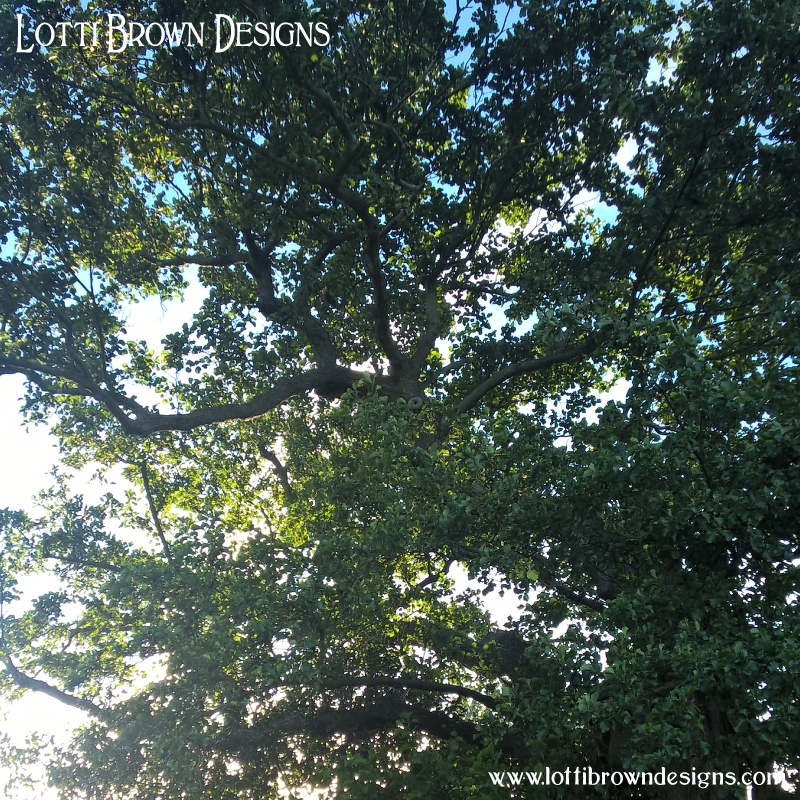 Alder tree
Alder Tree Meaning & Symbolism
Celtic Alder tree artWhen I think about alder, I think of a tree that feels both grounded and quietly powerful - a tree that stands close to water, holds its roots firmly, and carries an old sense of protection and endurance...
Alder is a tree of the earth – a grounded and courageous energy.
It’s a tree of water - of protection, preservation and empowerment – a shield.
It’s a tree of air – of inspiration and divination.
And a tree of fire, giving us the confidence to defend what’s most important to us and to step forward into new grounds.
Taken together, alder tree symbolism speaks of strength, grounding, resilience, and the courage to move forward.
Journal with the Alder
 Alder nature journaling inspired by the Celtic Tree Calendar
If the symbolism and folklore of the Alder has inspired you, you might enjoy exploring it more deeply through nature journaling. My gentle Alder journaling course invites you to notice the tree through its season, observe its details, and record your own encounters and personal reflections at your own pace.
Explore the Alder Nature Journaling Course
If you’d like to follow this journey through the seasons, I’ve created a full course, 'A Year of Trees', exploring all thirteen trees of the Celtic Tree Calendar.
My Celtic Alder Tree Artwork
Learning more about the alder’s old meanings - its links with protection, prophecy, strength, and spring - inspired me to create my own Celtic alder artwork as part of this Tree Calendar series...
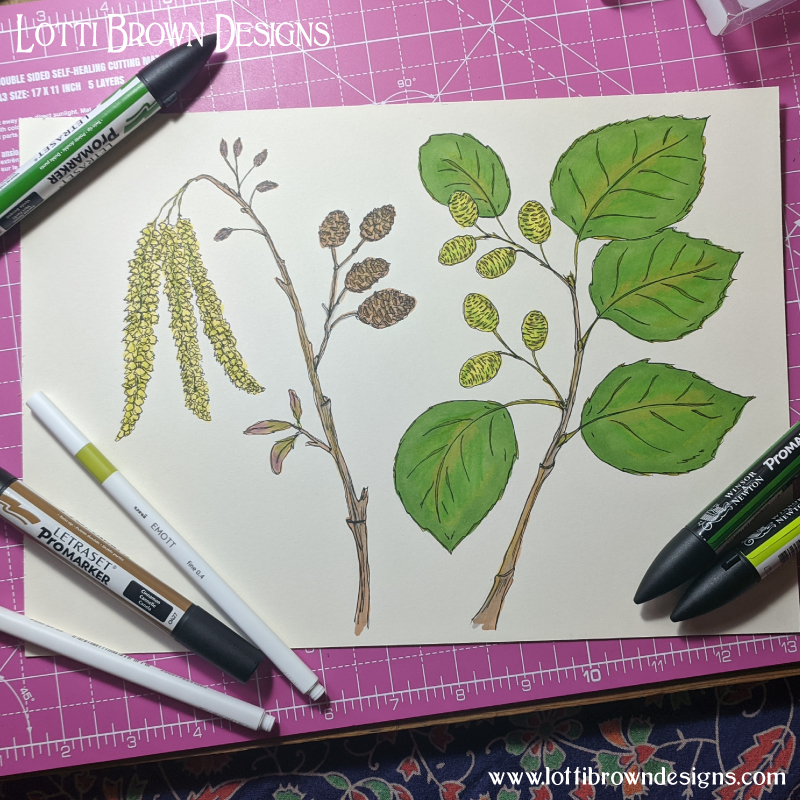 My alder drawings
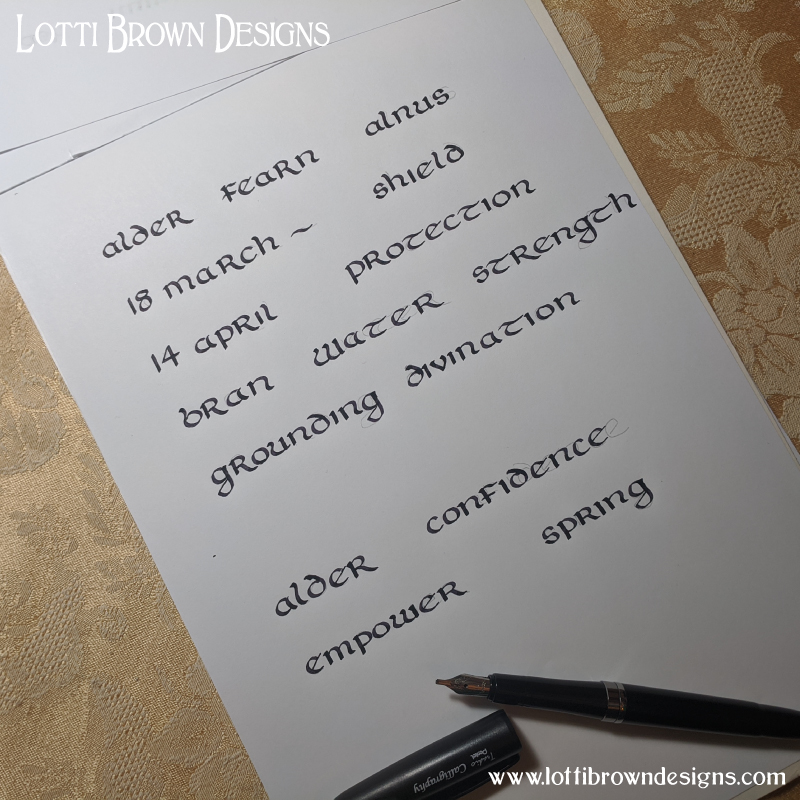 My alder calligraphy - created to become part of my alder artwork
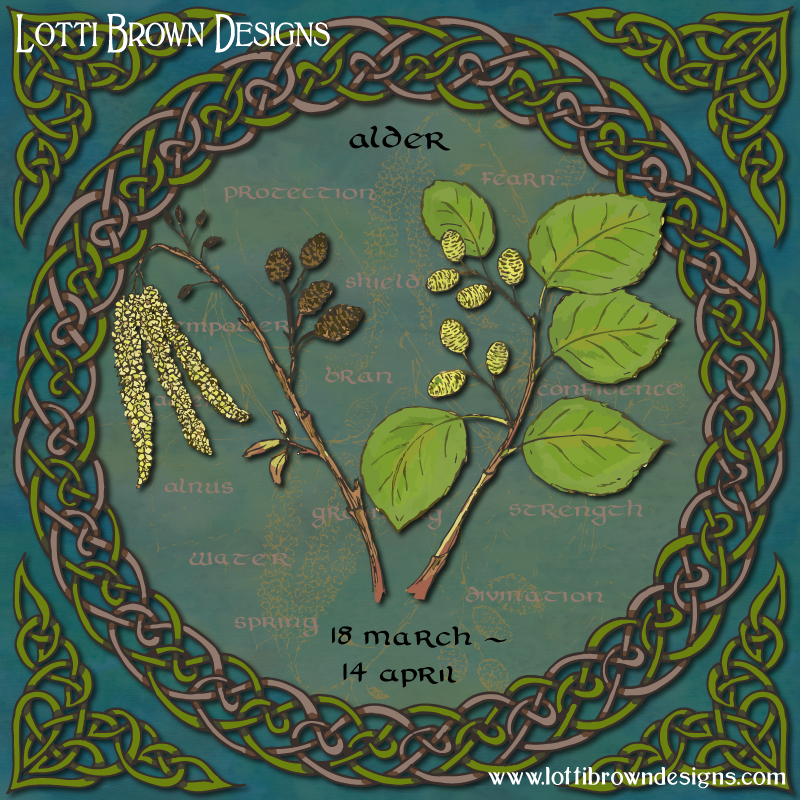 Alder - 18th March to 14th April
Alder (Intuition, Water, Transition)
If the meaning of the alder has stayed with you - that sense of intuition, quiet strength, and movement between worlds - this piece was created to reflect that feeling.
The alder’s connection to water and transformation inspired a sense of flow and subtle tonal change within the artwork.
Take a closer look at the alder artwork and see available prints & products below...
A piece like this carries a calm, reflective energy - something gentle but quietly powerful.
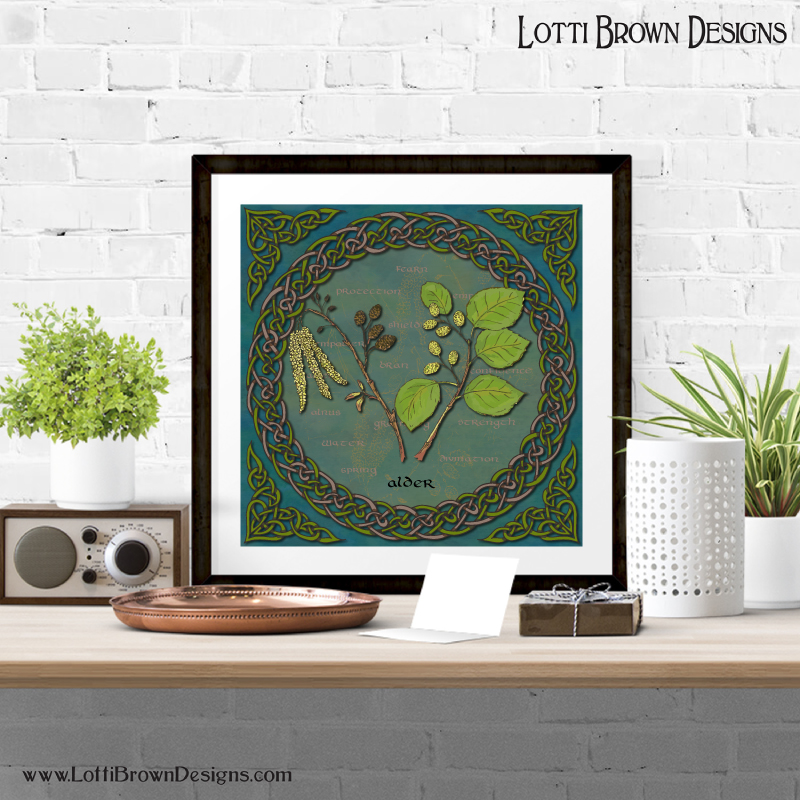
I've actually created two versions of my Celtic Alder art:
- the standard version (undated - see top of the page and below)
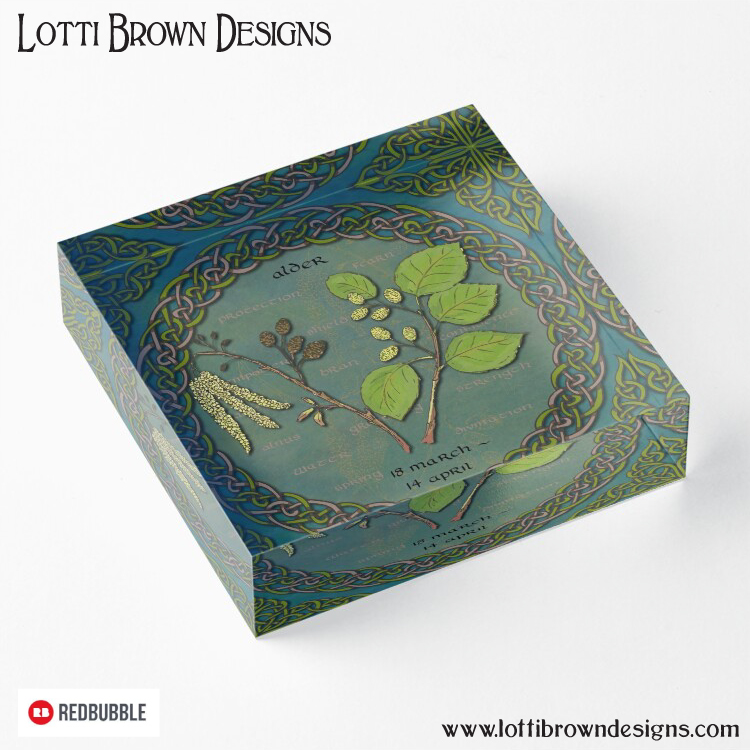
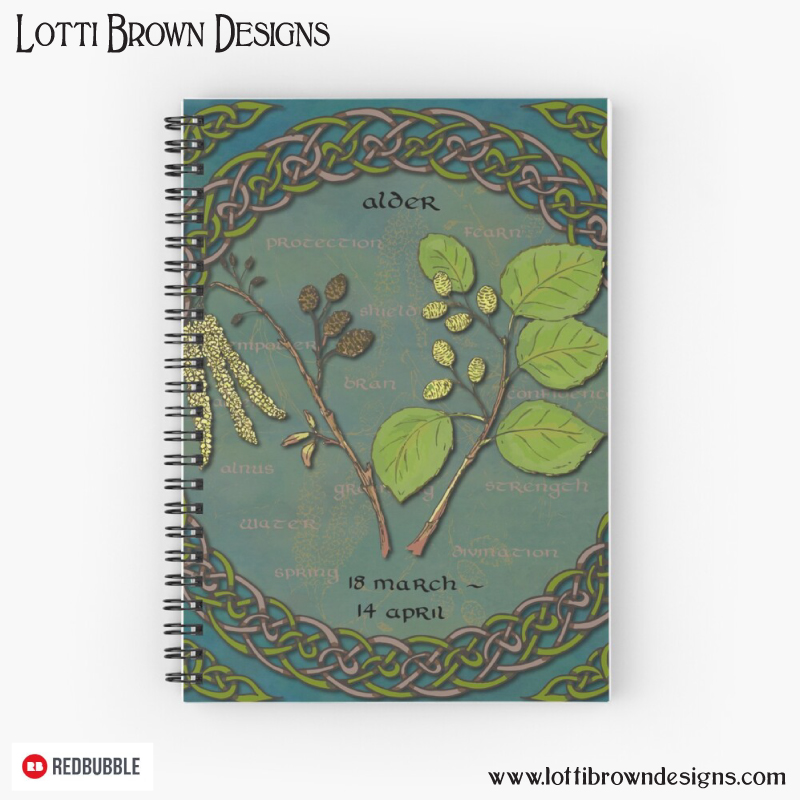
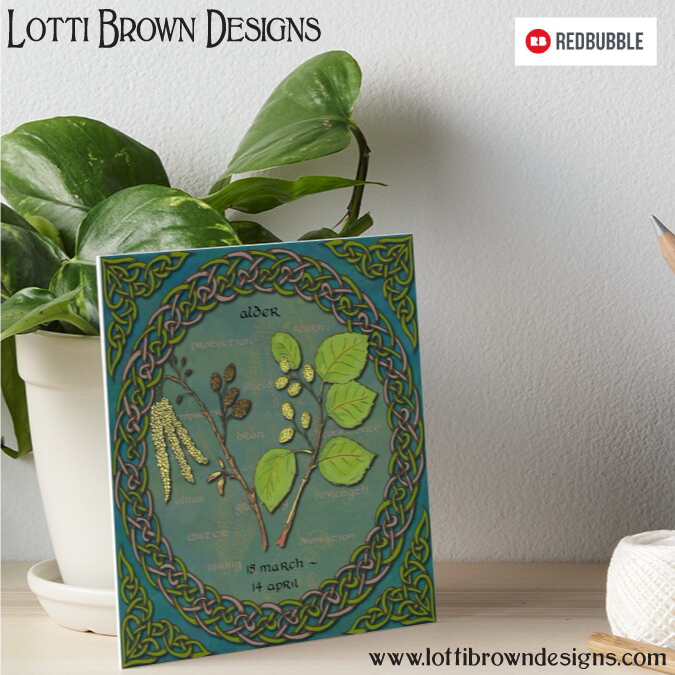
- a Celtic Tree Calendar version with dates added (18 March to 14 April) which correspond to the month for the alder - ideal for birthdays, anniversaries and other special occasions between these dates (see art just above) (learn about the Celtic Tree Calendar here...)
My Celtic Alder artwork is available as prints and gifts, including wall art and homewares, through my Redbubble shop:
- wide variety of products including T-shirts, cushions, throws, shower curtains, mugs, phone/tech cases, clocks, pouches, bags and much more...
- fast international delivery from your closest manufacturing location
Just a small selection of the products available is shown below...
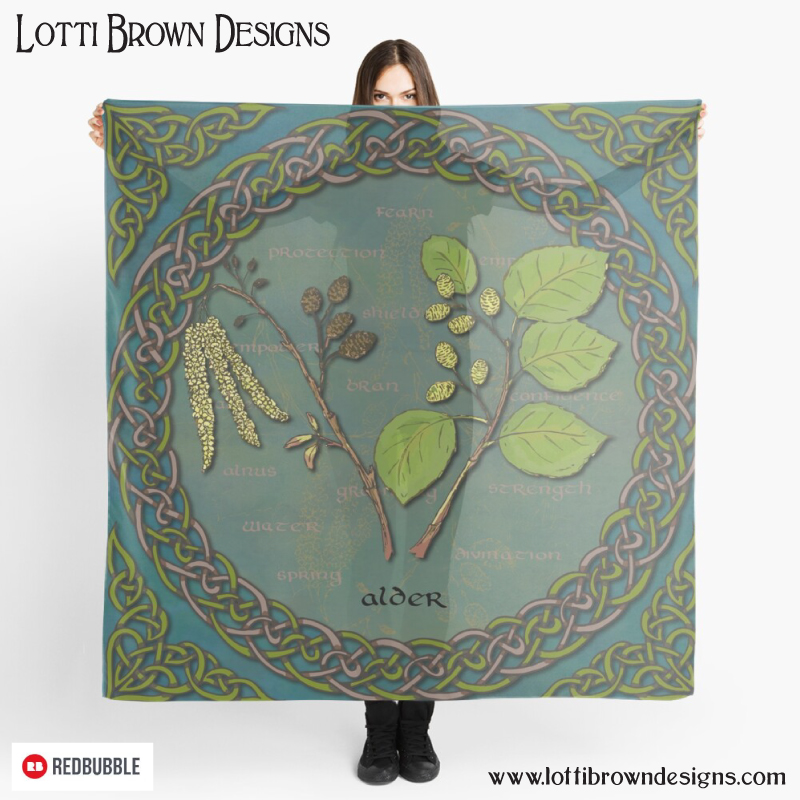
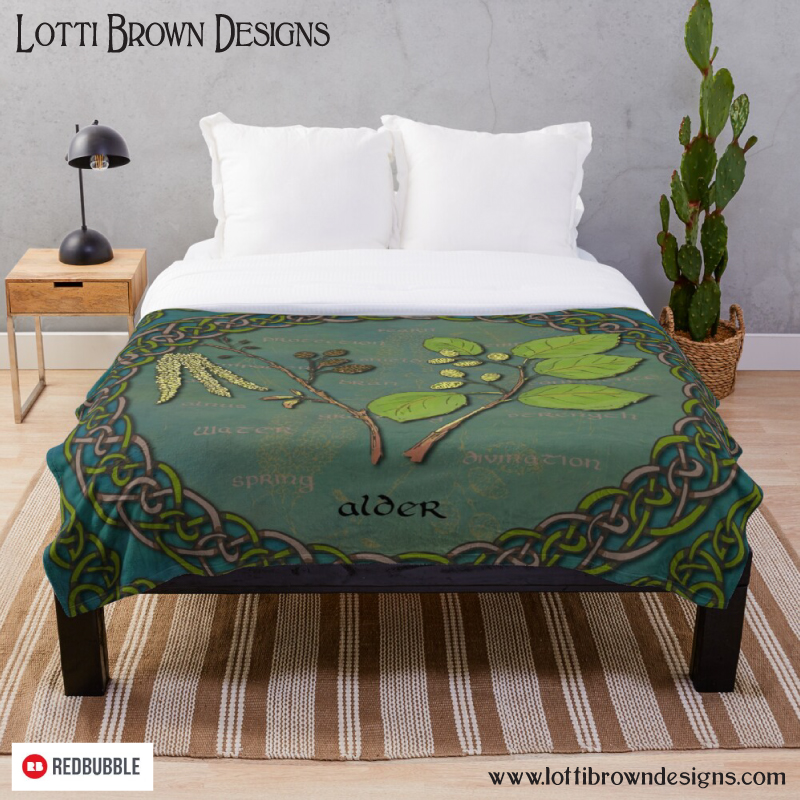
Browse all the prints and products for both versions using the buttons just below...
You might also be interested in the trees before and after the alder in the Celtic Tree Calendar:
If you’d like to begin your own quiet journaling practice with the alder, you can find my gentle journaling guide for alder and other individual trees here - or explore all the trees in one guide here (A Year of Trees).
You can also explore all my other Celtic Tree calendar artworks and tree symbolisms here...
Find out more about the Celtic Tree Calendar, what it is and how it was created, here...
And visit my Celtic Tree Hub here...
See all of my nature and wildlife art here...
You might also like my Celtic nature & wildlife art here
If you enjoy exploring the meanings of trees, birds, and plants in British folklore, you might also enjoy my Folklore Hub here...
Explore nature journaling here...
Visit my Little Art Shop for my newest art prints & products...
Have you ever thought about nature journaling..?
If you like nature, you might like to start your own nature journal!
Find out all about nature journaling here...
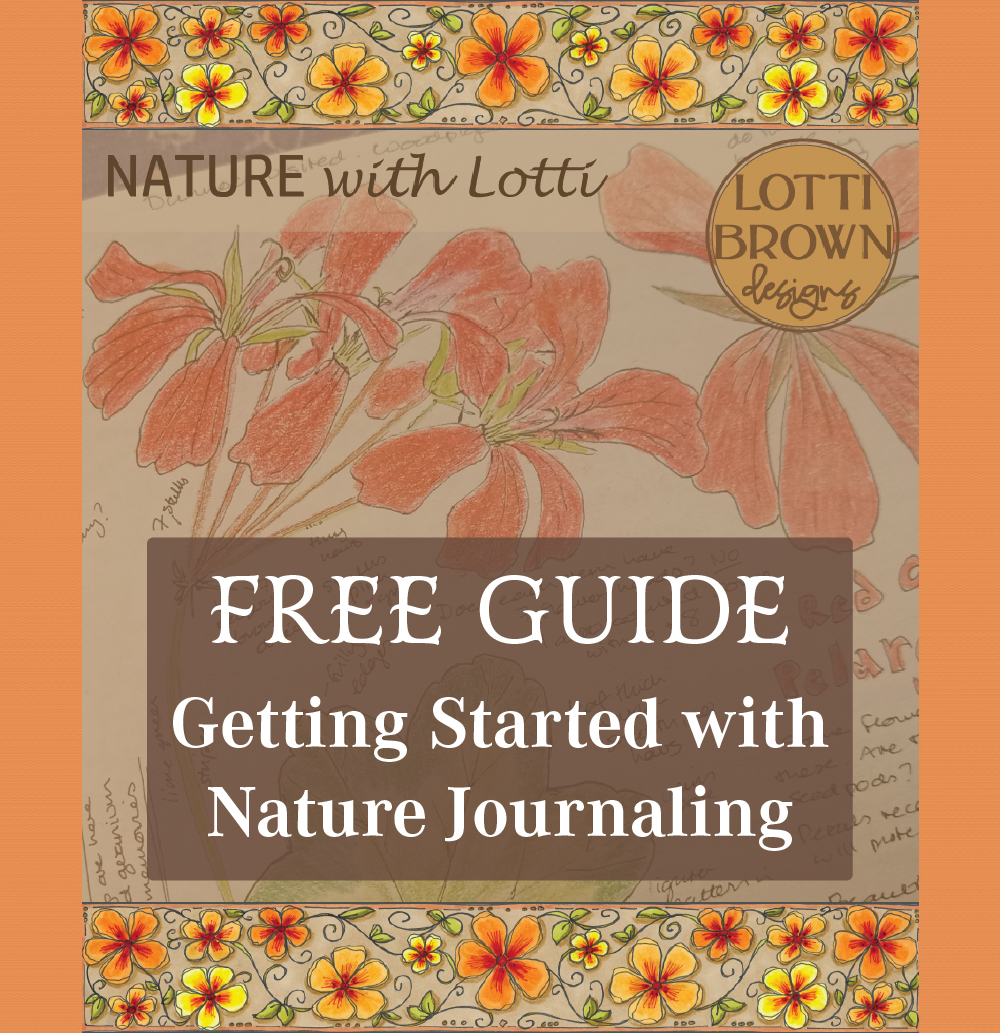
You can get started with my free guide here.
Or explore my gentle self-paced nature journaling course with nature journaling exercises to get you confident with nature journaling - take a look here...
Further Reading
- Celtic Tree Magic – D. Forest
- Tree Wisdom – J.M. Paterson
- Vickery’s Folk Flora – R. Vickery
- Discovering the Folklore of Plants – M. Baker
Please note that the information in this piece is for entertainment only and should not be used to diagnose or prescribe for health purposes.

Shall we stay in touch..?
Each month, I share stories from my own nature journal, new art from my studio, and simple seasonal inspiration to help you feel more connected with the turning year - if you'd like to stay updated, please sign up with your email address below...
Recent Articles


-
Barn Owl Folklore & Meaning - Symbolism of the Barn Owl
Sep 15, 26 03:34 AM
 Explore barn owl folklore, symbolism and meaning, from ancient myths to British traditions. Discover the quiet wisdom and mystery of this ghostly bird.
 -
Bramble Meaning, Myth & Symbolism - Celtic Tree Calendar Art
Sep 02, 26 11:32 AM
 A look at bramble meaning, myth and symbolism as I share my bramble Celtic Tree Calendar art for the month of 'Vine'...
 -
Nature Journal Prompts
Aug 26, 26 04:05 AM
 Easy nature journal prompts to inspire and encourage you - one per week...
Shop My Current Artwork Collections

My art is available as sustainable art prints, notebooks, greetings cards, tote bags and clothing in my Teemill shop.
Find my stockists for all my earlier artworks here...
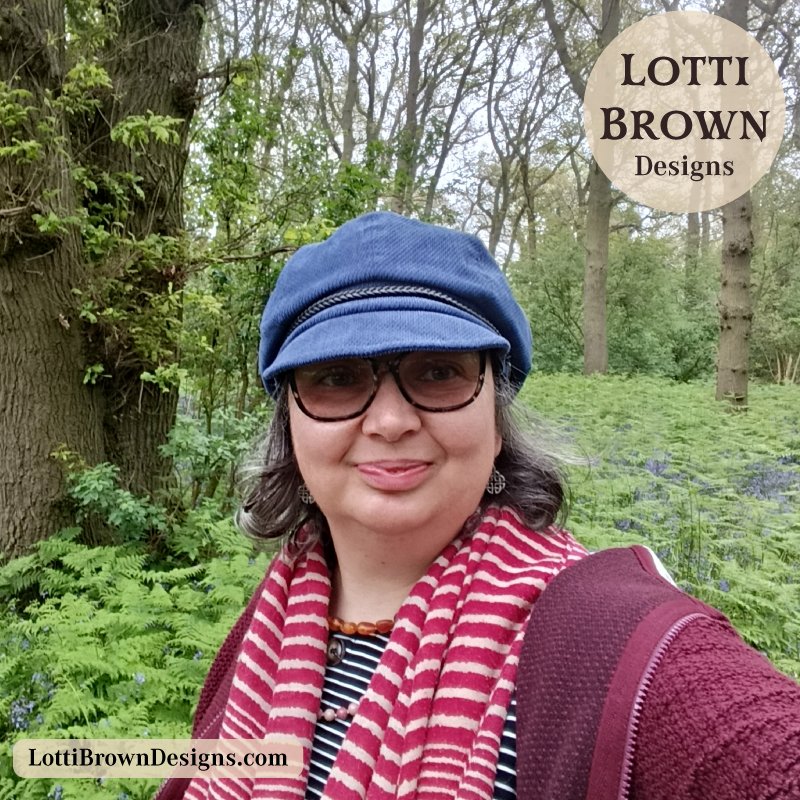
Lotti Brown is a self-taught nature artist and nature journaling educator whose hand-drawn work is inspired by wildlife, folklore, and close observation. With 18 years in creative fields and 10 years creating nature art, she brings deep practical experience to her work. Trained by the Wild Wonder Foundation, she shares nature journaling courses and guides online. Her artwork has been licensed internationally and exhibited at Goole Museum and Bridlington Spa in the East Riding of Yorkshire, UK.
Follow me:
Share this page: