
- Home
- Nature Journaling
- Seasonal Nature Journaling
- March Nature

Nature in March (UK) - A Seasonal Nature Journal
By Lotti Brown
Nature in March in the UK is a time of transition, where winter begins to loosen its hold and the first signs of spring emerge. From migrating birds and changing behaviour to early blossoms and lengthening days, March offers a quiet shift in the landscape...
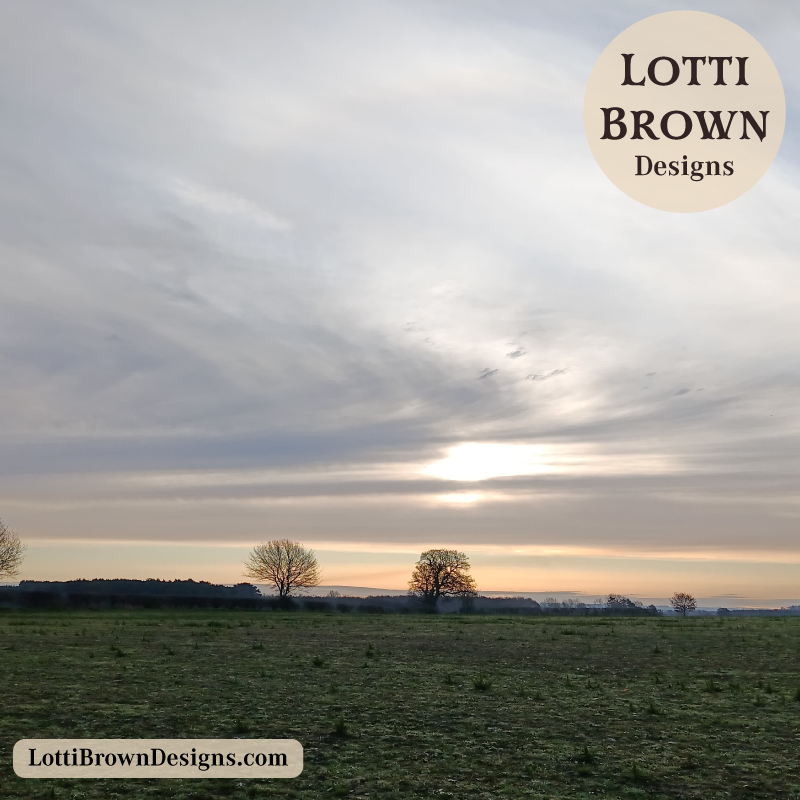 Soft March mornings - the days are slowly lightening and lengthening...
Nature in March - A Month of Transition
March has been a month of contrasts…
In the UK, nature in March sits between winter and spring - brilliant blue skies and the heat of a summer’s day, and dark days of wind, rain, ice and storm. Still moments of winter, but the promise of the warmer days of Spring and Summer to come.
A few green buds and pink blossoms start to appear on the bare branches of the trees and hedges. The mud starts to dry in the fields and the farmers turn the earth with the plough, preparing the ground of the March landscape for the seeds of Spring.
And something has changed in the air - something subtle, but unmistakable. A quiet shift you feel before you fully see it.
The birds seem to sing a little sweeter, a little louder. They must recognise that the season has changed – and perhaps we do too, even if only quietly…
What are the signs of spring in March?
In March, early signs of spring in the UK include bird migration, increased birdsong, budding trees, early blossoms such as blackthorn, and longer daylight hours.
Birds in March - Movement and Migration
Early Spring is a time of journeys for many of our migratory birds – some birds are leaving our shores after spending the winter with us, and some are just arriving home again.
Many birds move to different areas for winter and summer, too, so the birds I see and hear are starting to change now…
Some, such as the Redwing, Fieldfare, and Redpoll still remain, for now – they’re not quite ready to return to their summer grounds…
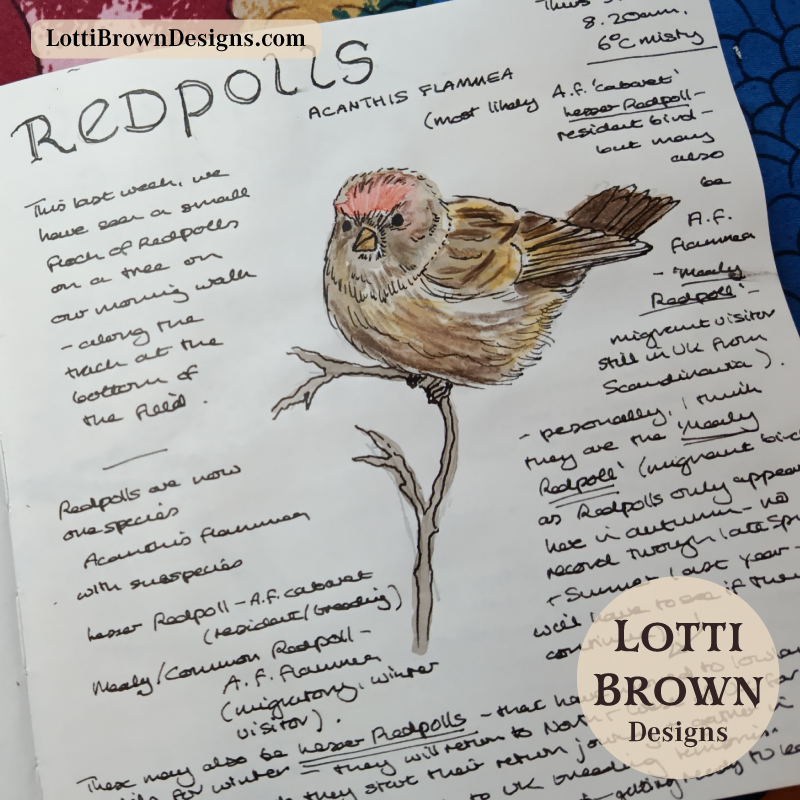 Redpolls
A tiny flock of redpolls fly, twittering, to and from a tree on our walk most mornings in March, feeding still on the seedheads that remain in the field – small movements of life held over from winter, not quite ready to let go.
Geese and swans are on the move too. We saw a flock of around 30 Whooper Swans flying across the centre of York. These are enroute from the Cambridgeshire Fens to Iceland.
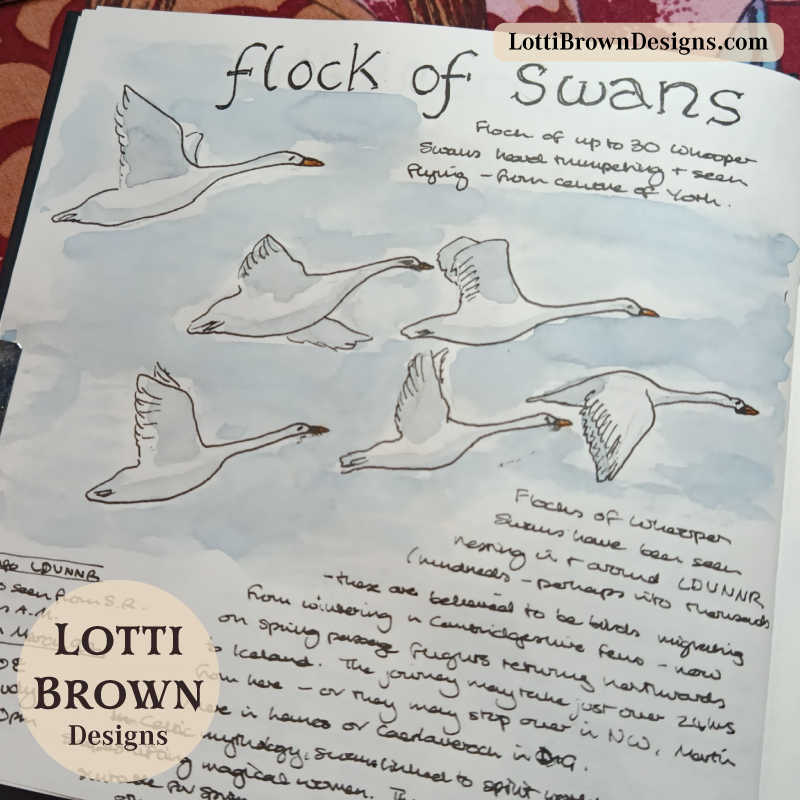 Whooper swans - a real treat to spot this flock flying over the centre of York one Sunday afternoon
There’s something about seeing them in flight that feels purposeful – as though they carry the season forward with them.
In Celtic mythology, swans were once linked to the spirit world and the magical, shape-shifting women of legend. They symbolise hope and renewal so seem perfect messengers for Spring.
Chiffchaffs are the first new arrivals of the Spring. It’s been a long time now since we’ve heard their familiar, repetitive ‘chiff-chaff’ call - and now the chiffchaff has returned, seemingly to the same spot we heard it last year, as though the landscape itself remembers.
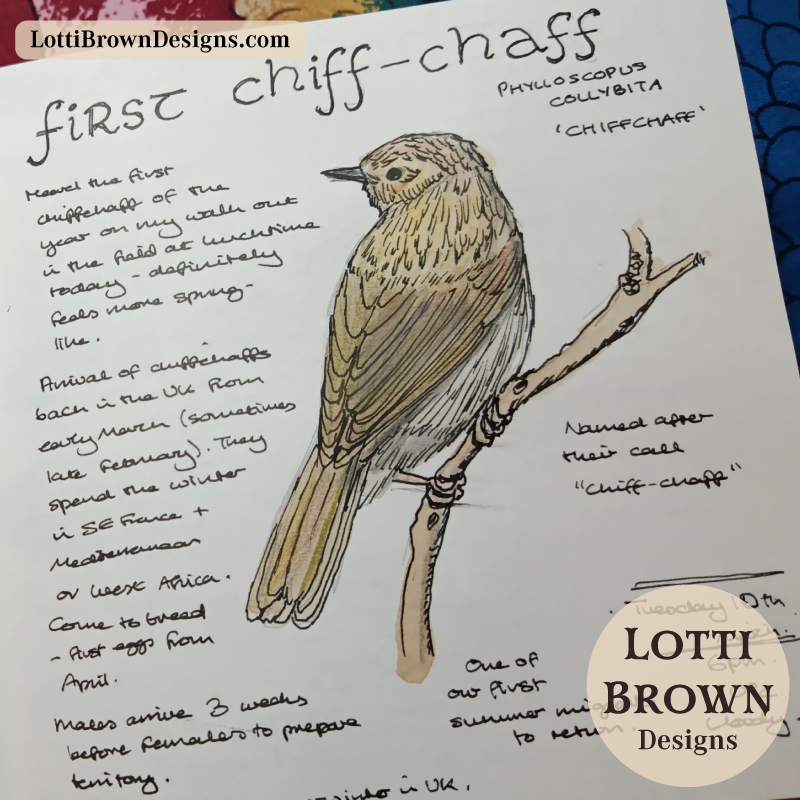 Recording the arrival of the first chiffchaff in Spring
Male chiffchaffs arrive up to 3 weeks earlier than the females to prepare the territory in readiness for breeding season…
Breeding Birds & Spring Behaviour
Even the birds who remain with us all year start to prepare for the Spring breeding season.
Out in the fields, the lapwings no longer huddle as a flock but have paired off - and take to the skies, calling out, and tumbling and looping with their black and white wings lapping distinctively.
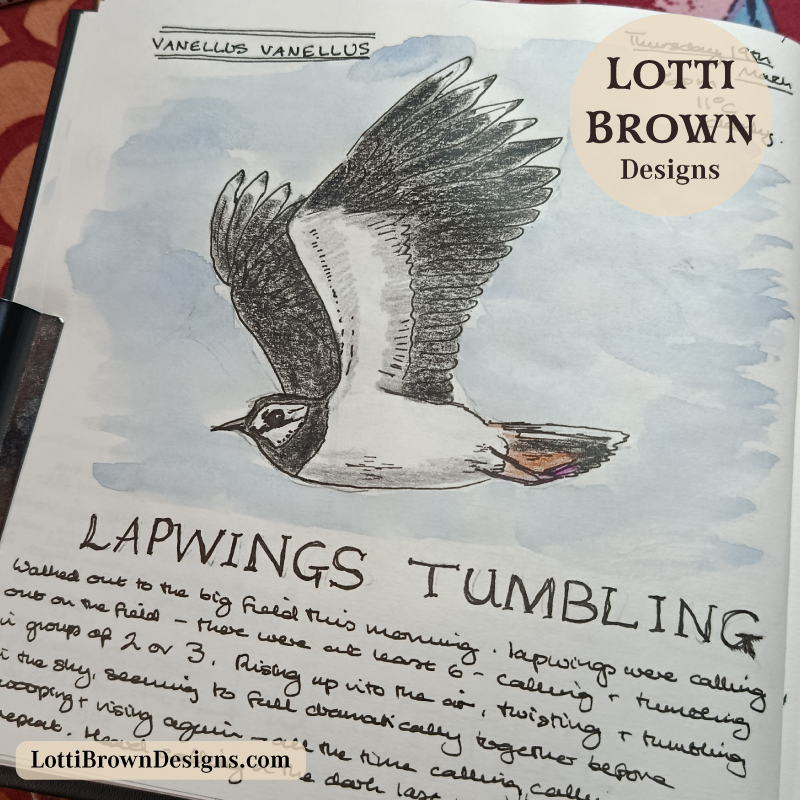 I love to see and hear the lapwings calling and displaying in the March skies
It’s lovely to walk out in the March fields and hear the lapwings call directly overhead as they swirl acrobatically – skylarks singing hard and sweet, all the while.
It feels like the fields are waking up – not suddenly, but in layers.
And across the village, there’s a drumming, drumming, drumming – a steady rhythm echoing through the trees, impossible to ignore once you hear it.
Merlin Bird App tells me it’s the Spring ‘song’ of the Greater Spotted Woodpecker – drumming hard to attract a mate and defend its breeding territory.
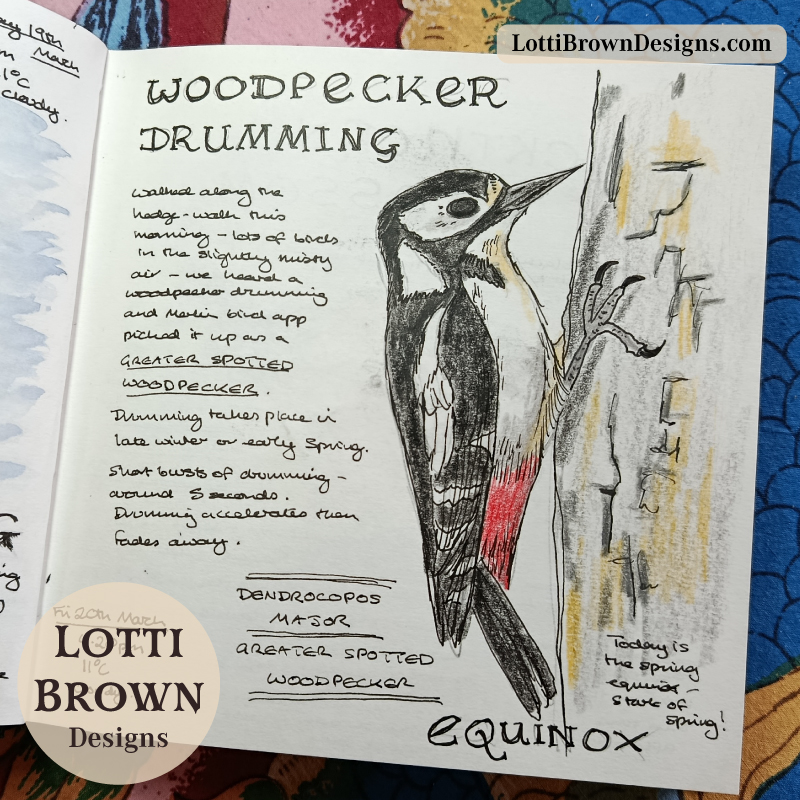 The Greater Spotted Woodpecker's drumming is its Spring territorial song
If you keep a nature journal, this is a lovely time to notice the changes in birds - who has arrived, who is leaving, and how their behaviour is shifting.
If you'd like to listen more deeply to the birdsong and identify birds from their calls and songs, you might enjoy reading about my year of birdsong here...
Trees & Hedgerows in Early Spring
The landscape begins to soften…
March begins with bare branches, but ends with the first signs of green amongst the trees and branches as well as early blossoms…
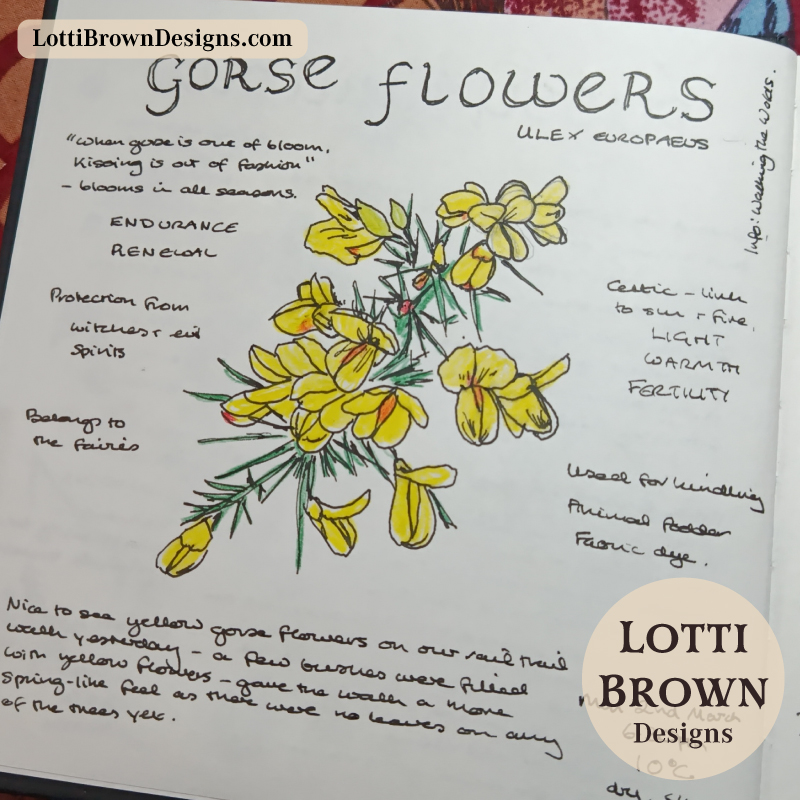 Yellow gorse flowers in my nature journal
One of the first flowers of the season is the fragrant flower of the gorse, its brilliant yellow flowers providing a welcome splash of colour against the dark green bushes. It’s no wonder that in Celtic folklore tradition, the gorse is linked to sun and light – a brightness that feels almost like a promise.
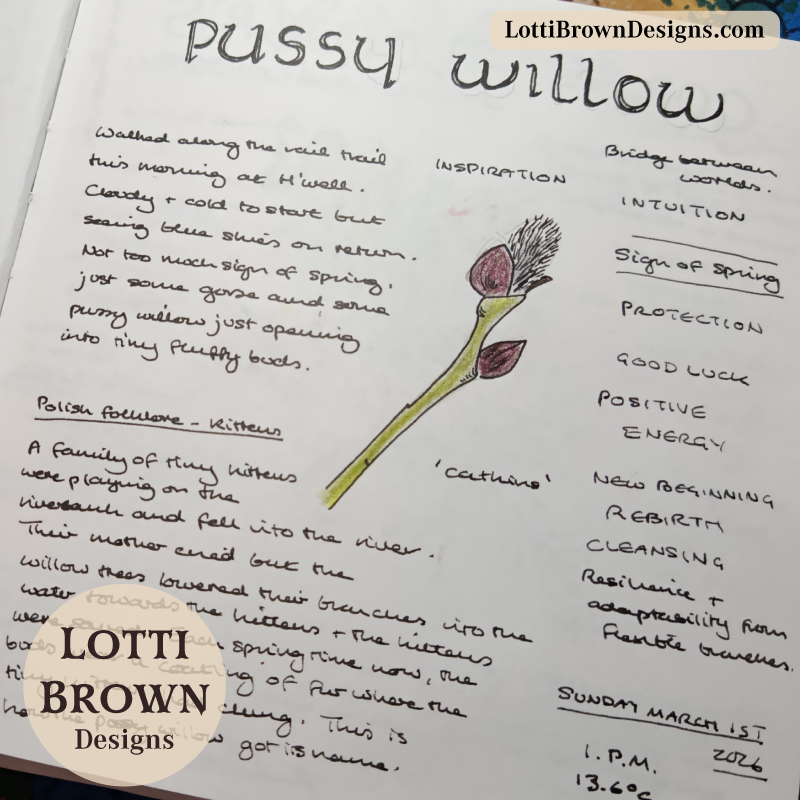 The first soft grey buds of the pussy willow start to appear in early March
I was able to record the same pussy willow tree three weeks apart – going from tiny soft grey buds, to beautiful yellow flowering catkins – a quiet unfolding, almost unnoticed unless you returned to look again.
These pussy willow branches were once often substituted for palms in church on Palm Sunday and were brought into the home to decorate for Easter and protect the household.
It’s said that resting your head against a pussy willow tree and listening to the thrum of the bees can ease a headache and relieve stress. (There's more willow folklore here...)
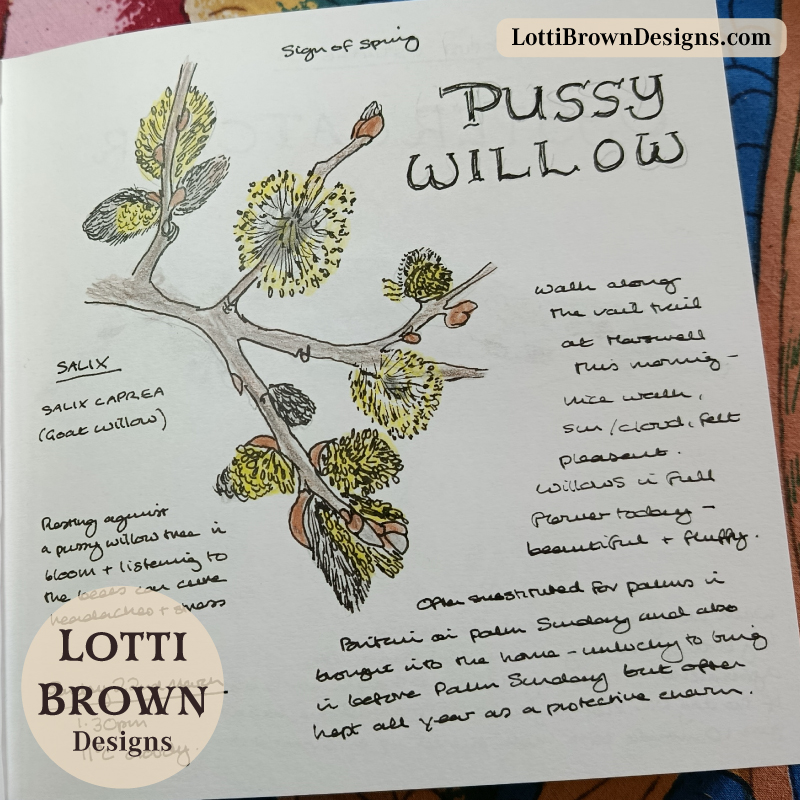 These fluffy yellow catkins are actually the flowers of the pussy willow tree
The tall poplar trees in the fields display brilliant red fluffy catkins. Poplars are a protective tree, associated with hope and renewal, so perfect for Spring.
The fallen red catkins are known as ‘Devil’s Fingers’ – and it’s supposed to be unlucky to pick them up – unfortunately I did before researching this, so fingers crossed!
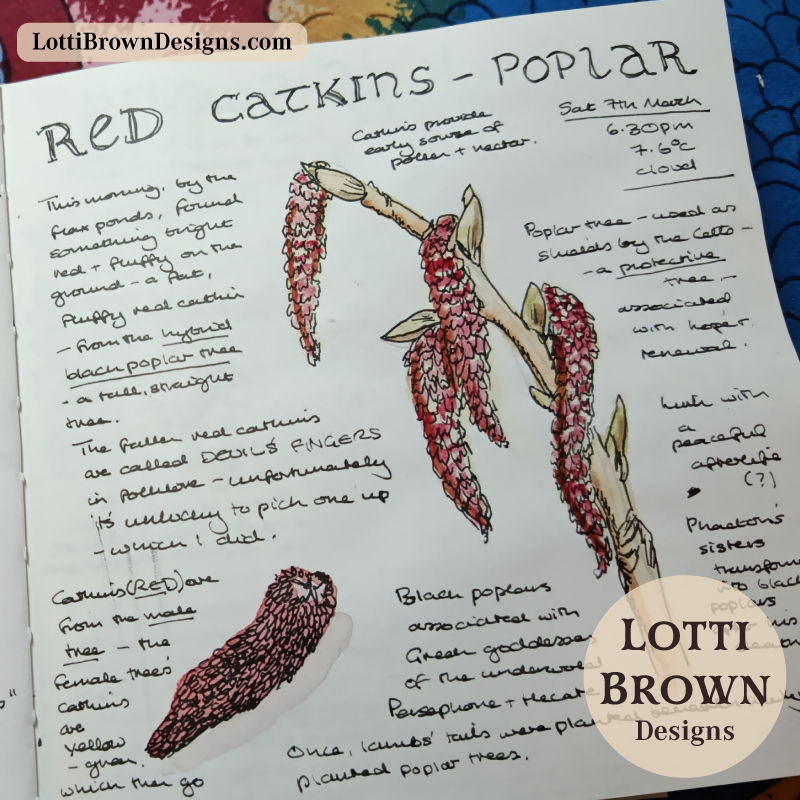 'Devil's Fingers' - the red catkins of the poplar tree
Luckily, the fulsome white blossom of the blackthorn is said to offer hope in folklore.
It’s an important herald of Spring, as the season turns the black branches white with blossom.
It was once said that the Cailleach, the Scottish Old Woman of Winter, struck her blackthorn staff on the ground to bring about winter, and when the blossoms begin to flower, winter’s grip starts to loosen – slowly, gently, without hurry...
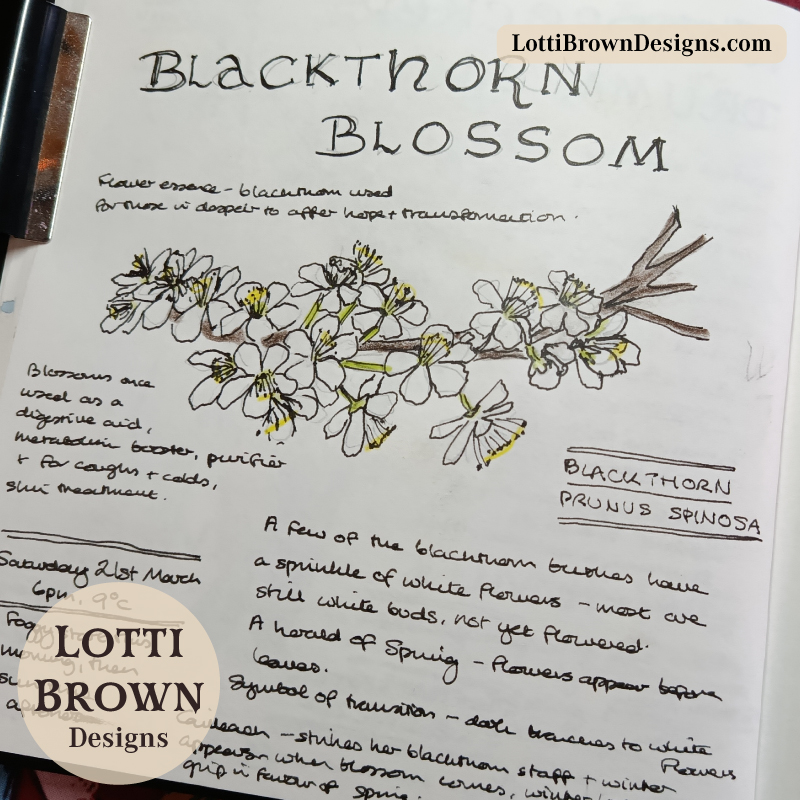 The white blossom of the blackthorn has started appearing in late March here in Yorkshire this year
The blossoms are just starting this year – in just a week or so, I think the hedgerows will be thick with these beautiful white blossoms.
The blackthorn blossoms on branches without leaves, which is how it can be distinguished from the similar blossoms of the hawthorn (which blossoms in May). In this season, the hawthorn itself is just starting to put out its leaves, always one of the first of Spring, to green the landscape – the first real signs of the season turning.
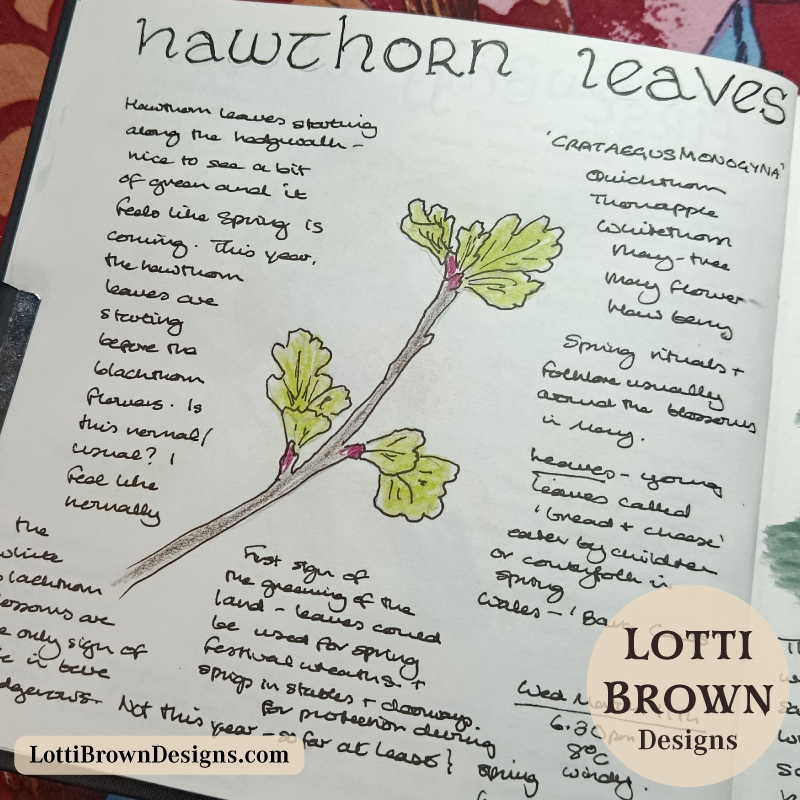 The first green in the hedgerows - the fresh leaves of the hawthorn
The fresh green hawthorn leaves were once eaten by the country folk as a snack, called ‘bread-and-cheese’ - or ‘Bara Caws’ in Wales. (Read more hawthorn folklore here...)
You might like to return to the same tree or hedgerow over a few weeks and note what changes - small shifts that are easy to miss unless you’re looking for them.
As the days warm, and the sun shines, the butterflies emerge. I spotted a beautiful yellow brimstone butterfly and several peacock butterflies in the sunshine of the Equilux – the day when we have 12 hours of daylight, from first sunrise to last sunset – 18th March this year in the north of England.
They feel like a brief glimpse of summer ahead…
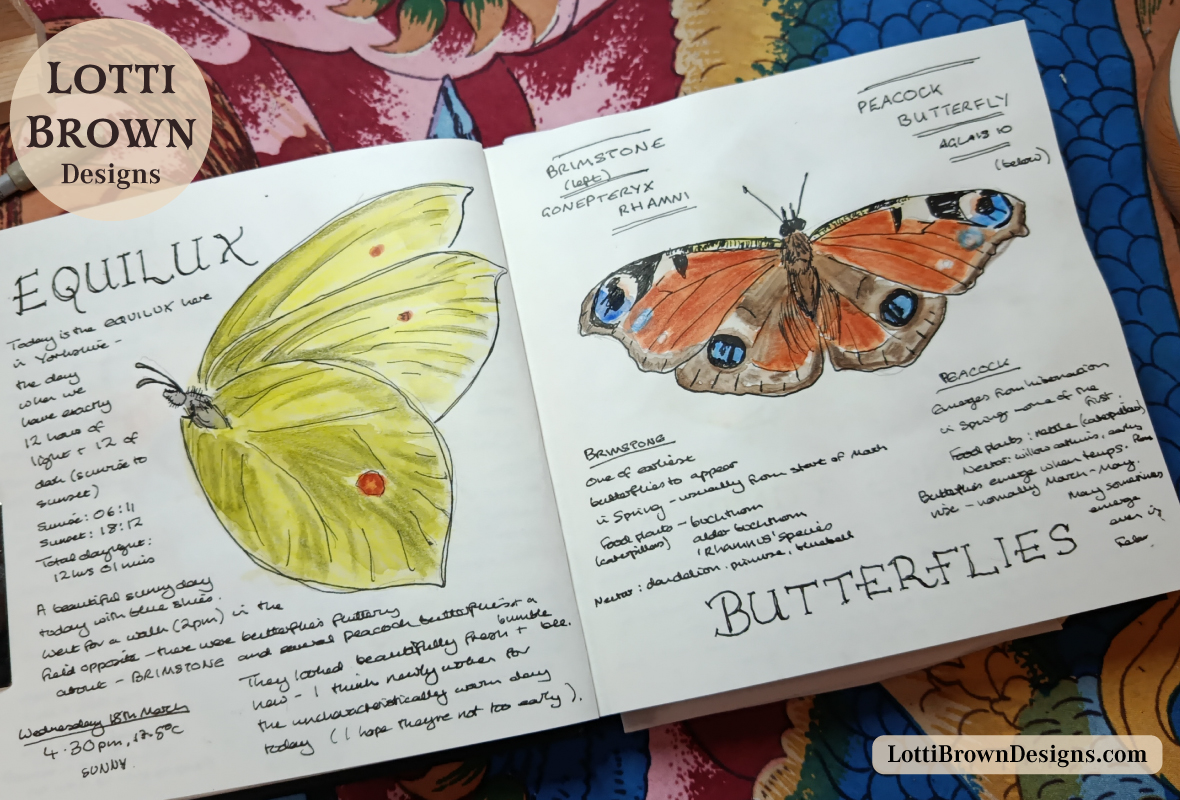 Spring butterflies spotted in the sunshine of the Equilux feels like our first taster for Summer
Wildlife in March Fields
Out in the fields, brown hares run across the large flat expanses, chasing one another and ‘fighting’ or ‘boxing’ – these Mad March Hares are the male and female readying for the breeding season – energy returning to the land. The female ‘boxes’ the male to repel his advances.
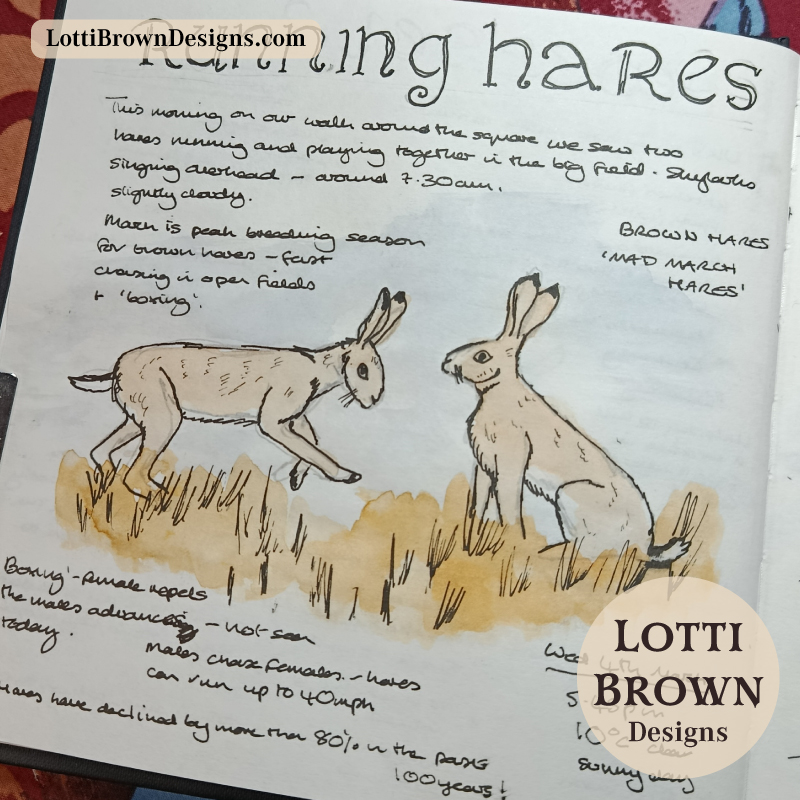 Mad March hares spotted chasing each other in the Spring fields here in East Yorkshire
At the full moon, the night-time fields echo with the calls of Lapwing and Golden Plover – these foraging birds often forage by the light of the full moon and may also migrate in these clear moonlit nights, too.
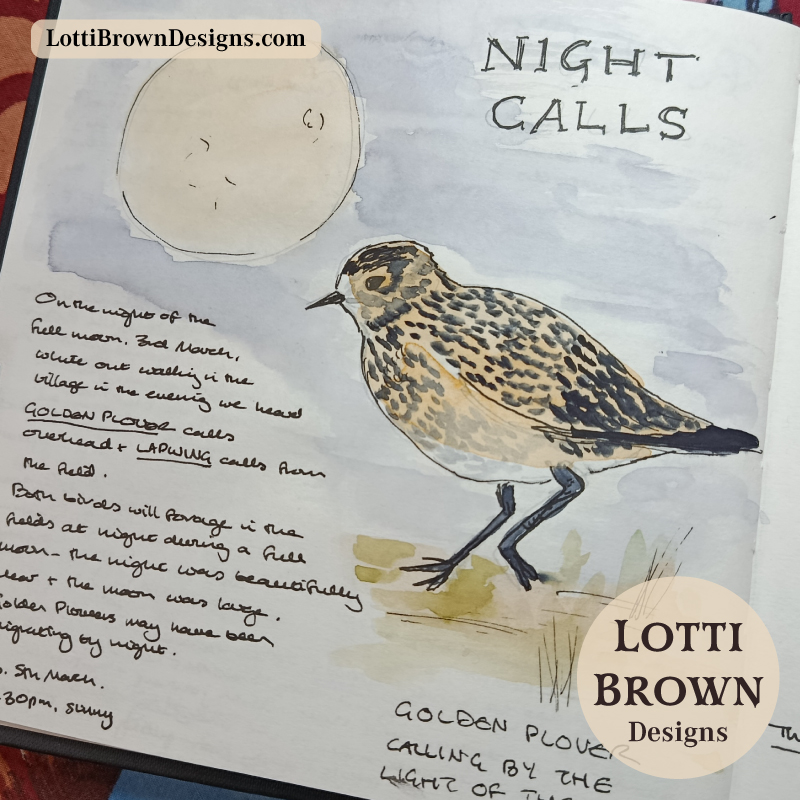 Hearing the evocative calls of the Golden Plover and Lapwing at night, by the light of the full moon
And early in the morning, a weasel runs across our path – very exciting to spot. We do see them sometimes here. They are the UK’s smallest native carnivore.
In folklore, weasels were often believed to be witches’ familiars, fairies, or banshees – and it was thought to be unlucky to have a weasel cross your path.
This may once have been the case, but I actually consider myself very fortunate that a weasel crossed my path on my morning walk – and I will feel even luckier still if it ever happens again – a precious fleeting moment that stays with you long after…
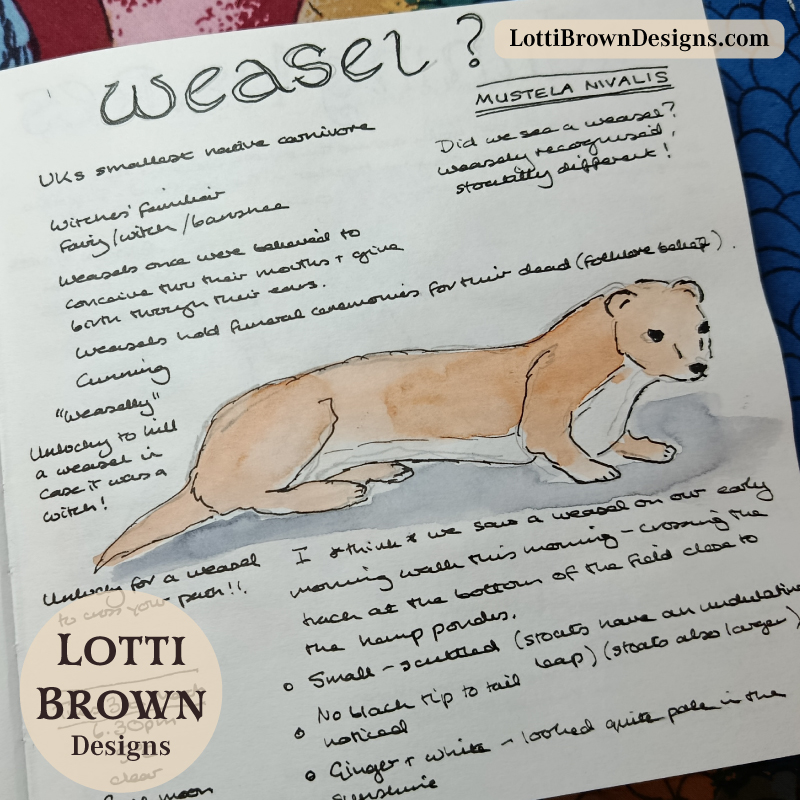 A fleeting meeting with a weasel
Nature in the Garden in March
Even closer to home, the Spring hasn’t forgotten the garden, either – and the garden can be a wonderful place to nature journal…
The first blossoms are early cherry trees. The flowering of the blossoms often symbolises the fleeting beauty of life, and also signifies the renewal of Spring.
Cherry blossoms were once used to decorate churches for Easter.
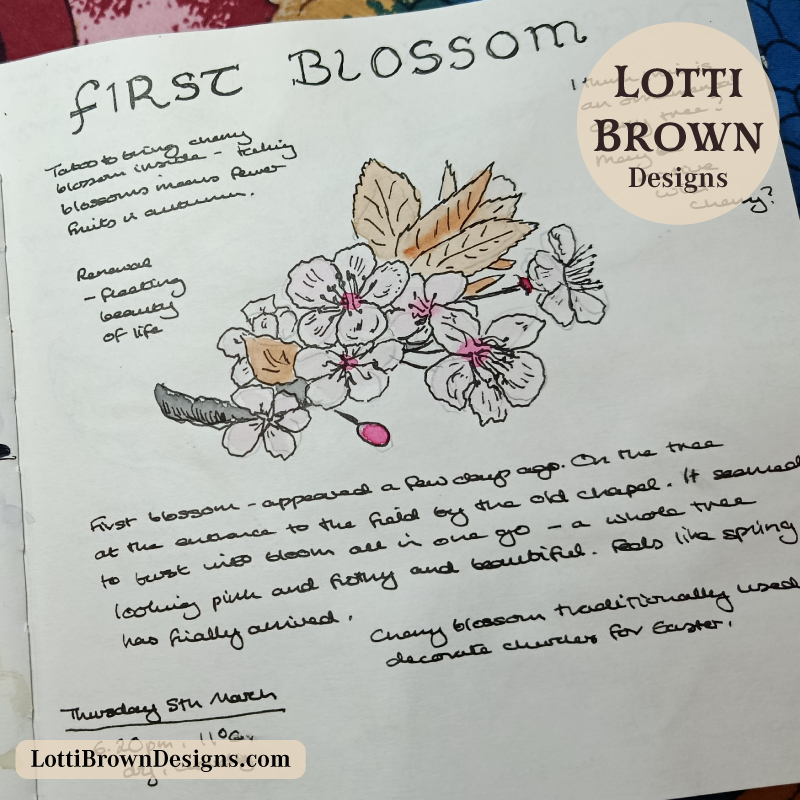 One of the first signs of Spring - the early cherry trees blossoming
Daffodils, too, are another symbol of Spring hope – as we enjoy them in our gardens and homes. The yellow flowers always seem to represent the start of Spring for me – and the yellow seems to resonate with hope and sunshine with the promise of warm days ahead – a quiet kind of reassurance.
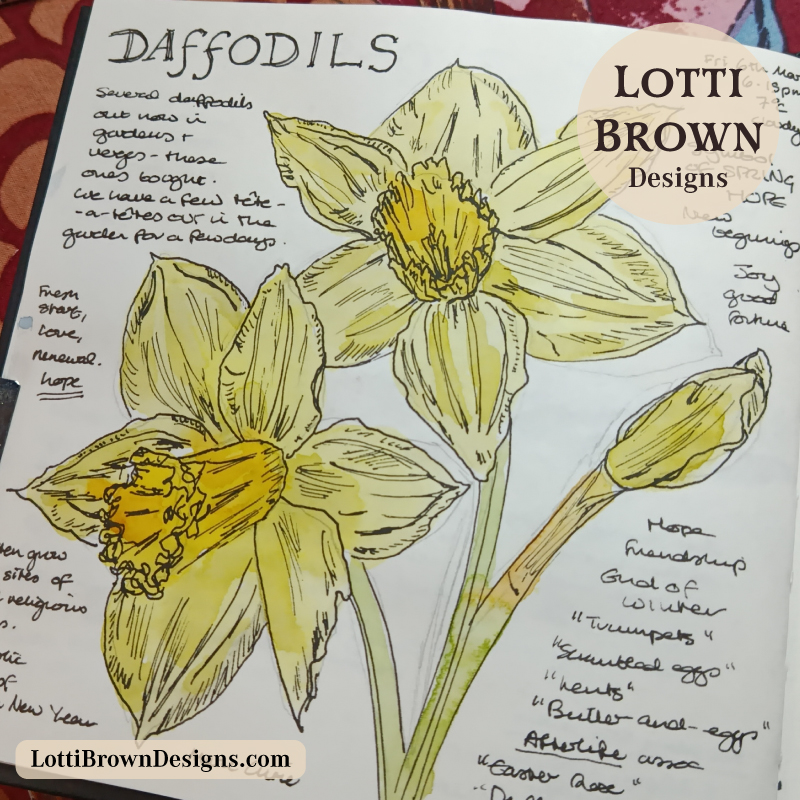 The cheerful yellow of the daffodils is always my personal favourite sign of Spring
Pink hyacinths add to the feeling of Spring and good cheer and brighten the garden along with the deeper pink flowers of the Bergenia.
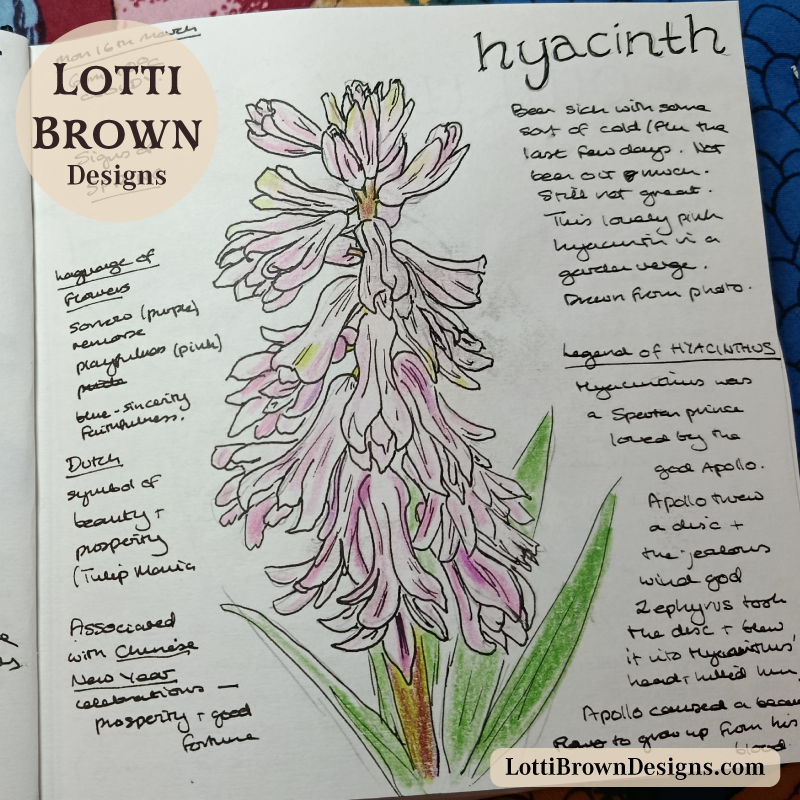 Pink hyacinth
As more colours and green start to fill the garden, it feels like the darkness of winter is gradually receding and the warmth and light of Spring is truly taking hold.
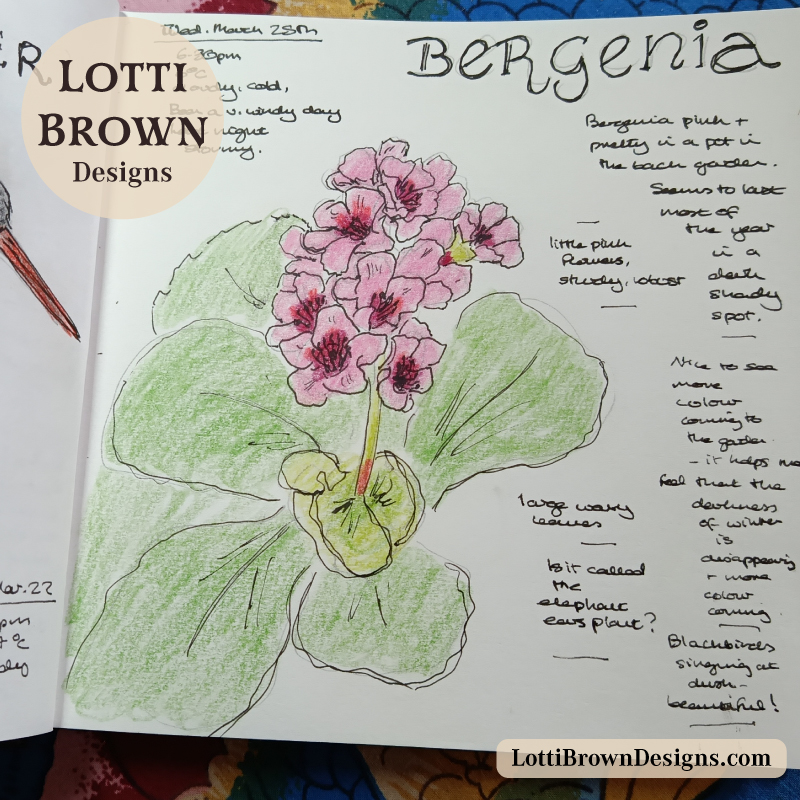 Bright pink Bergenia cheering up my Spring back garden
The Feeling of Early Spring
Dusk falls later and later now, and the sound of the blackbird singing fills these moments with a song that’s so beautiful it seems to invite a pause at the end of the day, to stop, to notice, to appreciate – and be glad it’s Spring – small, special moments that feel fuller than they should.
Some days may still be dark, be cold, be stormy – but the landscape has changed…
More green, more colour, more birdsong, more movement. Spring is in the air, and I feel it too - that same sense of transition, of clearing, of gentle movement forward, as our lives shift quietly in time with the seasons.
If you keep a nature journal, March is a beautiful time to begin - not by capturing everything, but simply by noticing what has changed.
Nature Noticings for March
Prompts for Your Nature Journal in March
March is a month of movement and contrast - a time of shifting weather, returning birds, and the first signs of spring beginning to unfold.
If you’re not sure what to focus on in your nature journal, here are a few gentle prompts to guide you…
- Notice the changing air and any hint of Spring in warmth, light or weather
- Listen to the birds - does there seem a shift in birdsong from before?
- Look for signs of movement in the landscape - birds in the sky, animals in the fields and woods…
- Notice a tree in transition - you could return often to a familiar tree or hedgerow to notice how it changes this month
- Look for early colours returning to the landscape - leaves, catkins, flowers, all slowly bringing colour back to a winter world
You don’t need to notice everything - just something. That is always enough.
You can discover more of my nature journaling here…
If you'd like a free guide to getting started with your first nature journal, you can find that here...
If you'd like to see my nature journal from March last year, that's here.
And for more Spring nature journal inspiration, see my April journal pages here...
If you'd like to explore more folklore of nature, take a look at my Folklore Hub here.
You might also enjoy my deep dive into tree myths, legends and folklore in my Celtic Tree Calendar series here.
Deepen Your Nature Journaling Practice
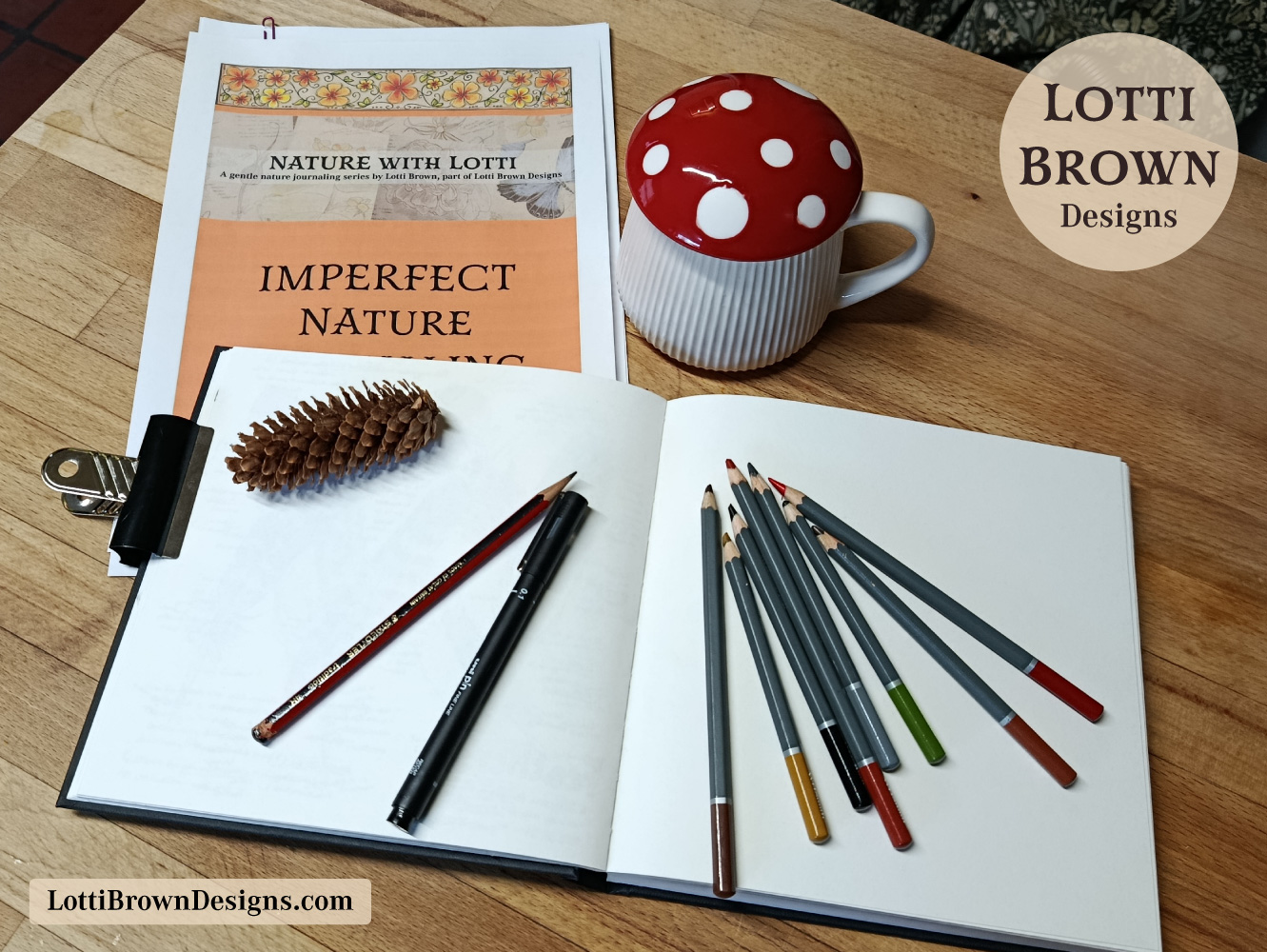 Deepen your nature journaling practice with me...
If you’ve enjoyed my nature journaling reflections, you might also like my 20-lesson course, Imperfect Nature Journaling.
It’s a gently structured, self-paced journey designed to help you:
• Slow down and notice more deeply
• Build confidence in drawing and observing
• Create a calming journaling ritual you can return to
• Feel more connected to the seasons and the natural world
No perfection required. Just curiosity and a notebook.
You can explore the course here whenever you’re ready...
P.S. If you’re just beginning - or would like something quieter and more simple to start with - you might first like to get started with my free 'Getting Started' guide or gain momentum with my 'Gentle Introduction' guide to help you through your first few pages - here...

Shall we stay in touch..?
Each month, I share stories from my own nature journal, new art from my studio, and simple seasonal inspiration to help you feel more connected with the turning year - if you'd like to stay updated, please sign up with your email address below...
Recent Articles


-
Barn Owl Folklore & Meaning - Symbolism of the Barn Owl
Sep 15, 26 03:34 AM
 Explore barn owl folklore, symbolism and meaning, from ancient myths to British traditions. Discover the quiet wisdom and mystery of this ghostly bird.
 -
Bramble Meaning, Myth & Symbolism - Celtic Tree Calendar Art
Sep 02, 26 11:32 AM
 A look at bramble meaning, myth and symbolism as I share my bramble Celtic Tree Calendar art for the month of 'Vine'...
 -
Nature Journal Prompts
Aug 26, 26 04:05 AM
 Easy nature journal prompts to inspire and encourage you - one per week...
Shop My Current Artwork Collections

My art is available as sustainable art prints, notebooks, greetings cards, tote bags and clothing in my Teemill shop.
Find my stockists for all my earlier artworks here...

Lotti Brown is a self-taught nature artist and nature journaling educator whose hand-drawn work is inspired by wildlife, folklore, and close observation. With 18 years in creative fields and 10 years creating nature art, she brings deep practical experience to her work. Trained by the Wild Wonder Foundation, she shares nature journaling courses and guides online. Her artwork has been licensed internationally and exhibited at Goole Museum and Bridlington Spa in the East Riding of Yorkshire, UK.
Follow me:
Share this page: