
- Home
- Nature Journaling
- Nature Journaling for Beginners
- Birdsong for Beginners

A Year of Birdsong
By Lotti Brown
Birdsong for Beginners - How Listening More Closely Changed
the Way I Experience Nature
Looking back on my year of birdsong - a year spent learning to listen more closely to the birds around me as I walked through the fields each day…
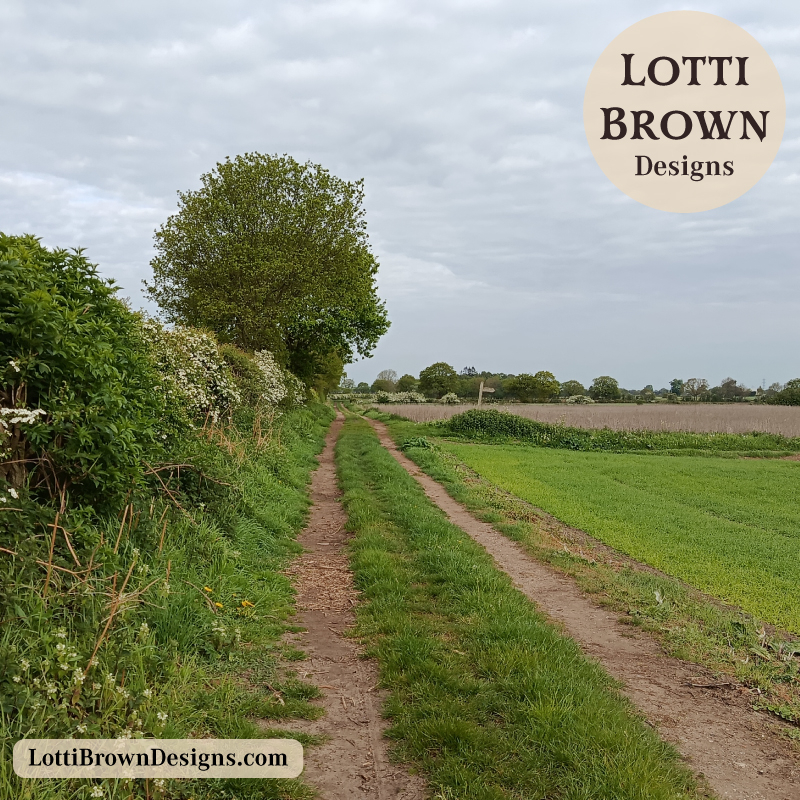 Walking and listening for birds
The Year I Started Listening to Birds
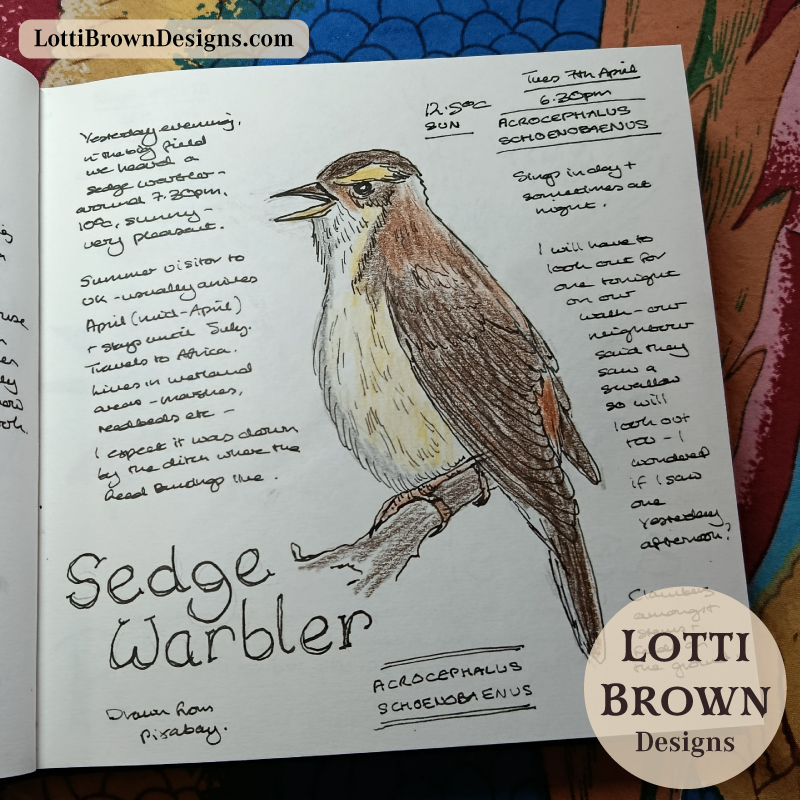 Sedge warbler
I’d already been nature journaling for nearly a year when I started listening more closely to the sound of birds…
My friend suggested I try the Merlin Bird App – I’d actually already downloaded it and tried out the ‘Identify a Bird’ function, where a few questions about the bird size, colour and location brings helpful suggestions…
I knew there was a facility for identifying a bird from its song or call but assumed that you needed the internet for that to function – which can be difficult or expensive when you’re out in the countryside.
I was wrong – the bird song feature doesn’t need to be connected to the internet to work – and everything was free…
So I opened the app one evening while I was out on an ordinary dog walk with my husband and my rough collie – and listened!
My first listening with Merlin Bird App was on 4th May 2025 – I listened for just 4 minutes in a small field, surrounded by trees and hedgerows.
I heard:
- Blackbird
- Robin
- Willow Warbler
- Blackcap
- Wood Pigeon
- Coal Tit
Already, this was interesting enough to capture my attention – I had no idea that birds such as willow warbler, black cap and coal tit were singing alongside me as I walked through the fields every day – and I wouldn’t have been able to identify them if I had!
The next day, I tried the app in my garden – in two minutes it picked up the songs of a dunnock, robin, blackbird and wren. I certainly would not have known the wren was in the garden – and I would not have been able to tell the robin and blackbird songs apart, nor recognised the dunnock from its song alone.
A new world started opening up to me – one that I’d previously overlooked completely – a world of birds that spoke far more of their lives than a brief glimpse of a pigeon flying past or an appreciation of a pretty warble…
Over the next few days, out in the fields, I ‘found’ chaffinches, chiffchaffs, goldfinches, swallows, whitethroats, collared doves, little ringed plovers and corn buntings amongst other more common and recognisable birds.
The die was cast – I was officially obsessed with listening to birds and learning birdsong!
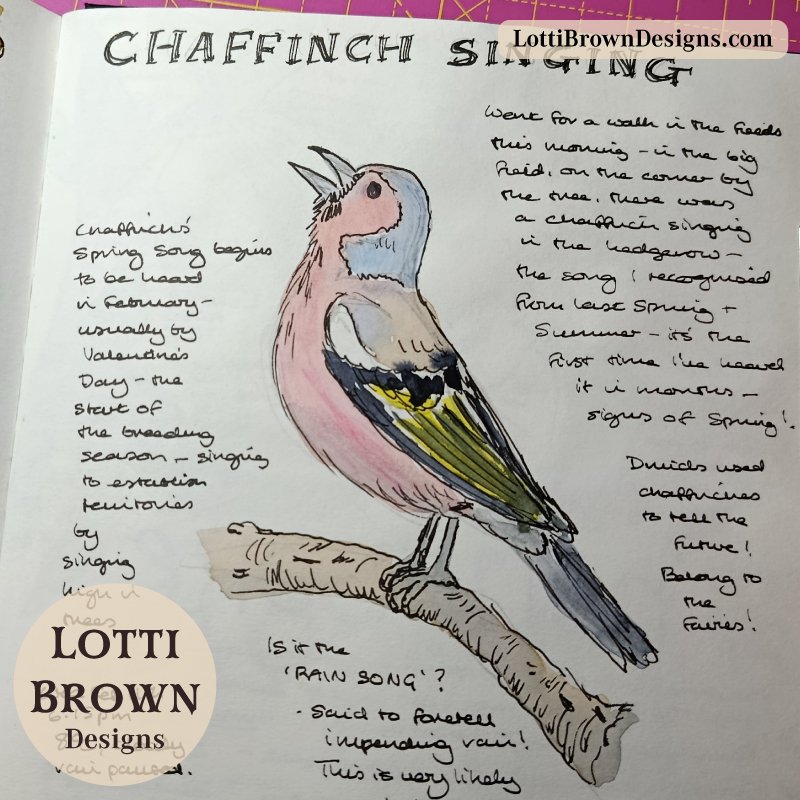 Getting obsessed with birdsong!
The Landscape Changed when I Started Listening
Soon, I started turning on the Merlin Bird app as I left the house and leaving it running until I got home – to make sure I recorded all the birds that I heard while I was out.
And my walks started to take on a new life…
As a nature journaler, I’d already been noticing – looking out for interesting flowers, animals, birds, plants, trees – things I wanted to remember, to record in my nature journal, to feel a part of my day and the natural world…
Now, a whole new dimension opened up – the world of sound!
Even without realising it, I started to listen more carefully – to notice the birdsong instead of letting it fade into the background.
It stopped being scenery and became an important part of the experience itself…
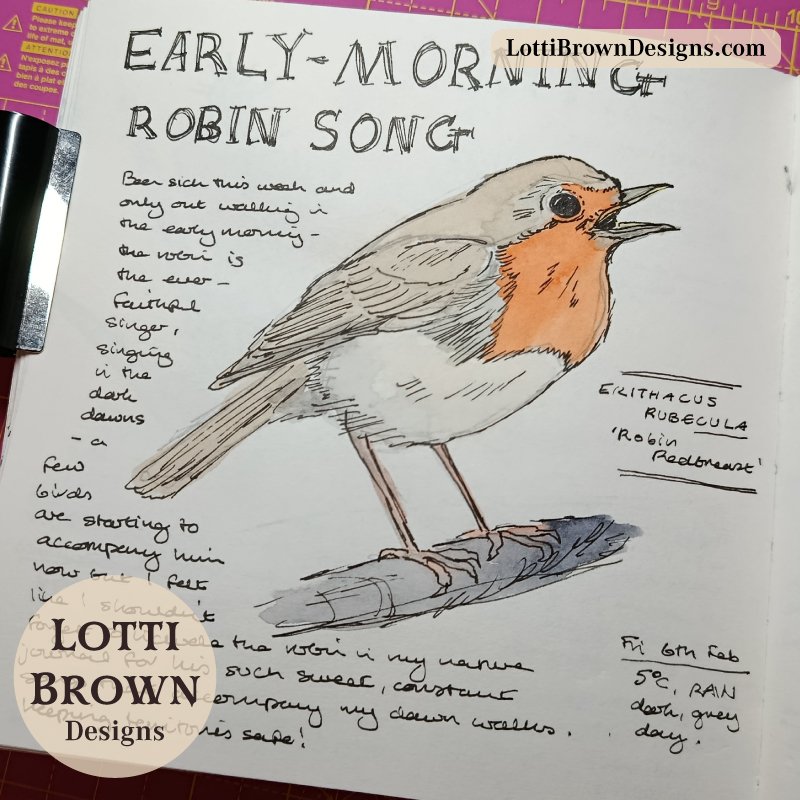 Listening to early-morning robin song - kind of a nice way to start the day!
My walks started to feel more immersive – using an extra sense, my hearing, allowed me to feel more grounded and present, listening instead of rushing.
I realised the landscape had always been full of birds – I simply hadn’t known how to hear them yet.
Just two months after I started listening with the bird app, my dog died – it would’ve been so easy to stop going for my walks at this point…
But the birds kept me going – they gave me a reason to step outside each day – and something to focus on while I was out there.
The walks now didn’t only remind me of my canine companion who used to pace alongside me - but also urged me to focus on the full and sometimes noisy life continuing all around me, even as I grieved.
Discovering the ‘Little Brown Jobs’
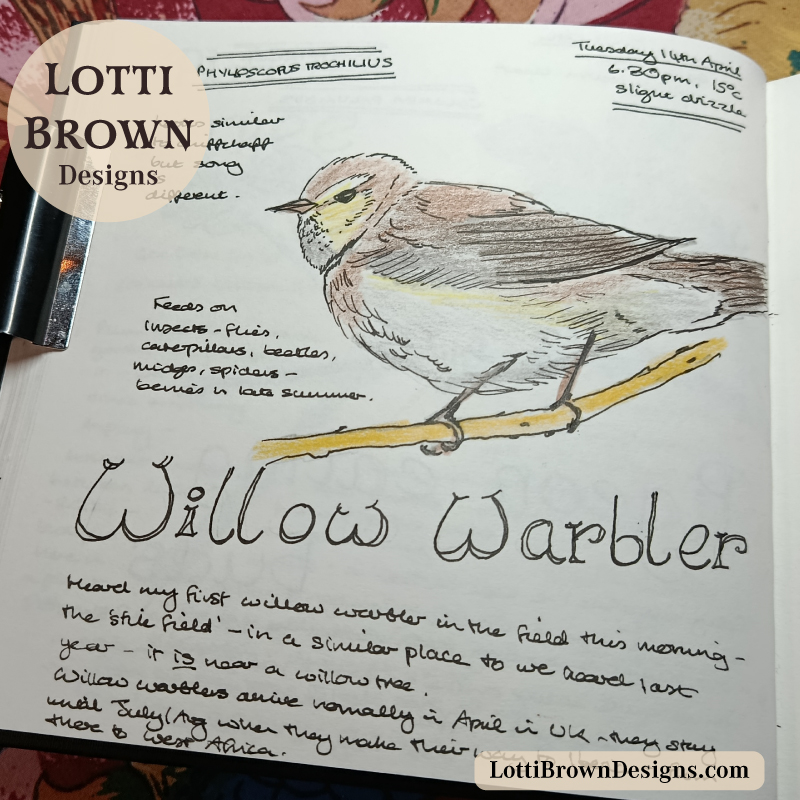 Willow warbler
One of the difficulties I’ve always had with identifying birds, is that all the little brown ones just look the same – lots of different species, one look.
Yes, there were some I learned – sparrows and eventually dunnocks. But all the other ‘little brown jobs’ (as such birds are often known by birdwatchers) were a mystery – just little brown birds that were impossible to identify…
Until they sing!
And then - with the help of an app (or an experienced companion) – those anonymous little brown birds begin to separate into individual species with their own voices, habits and personalities.
And so I loved the app for this – the little brown birds that I sometimes glimpsed flitting in the hedgerows or flying from tree to tree, became linnets, corn buntings, willow warblers, whitethroats, chiffchaffs.
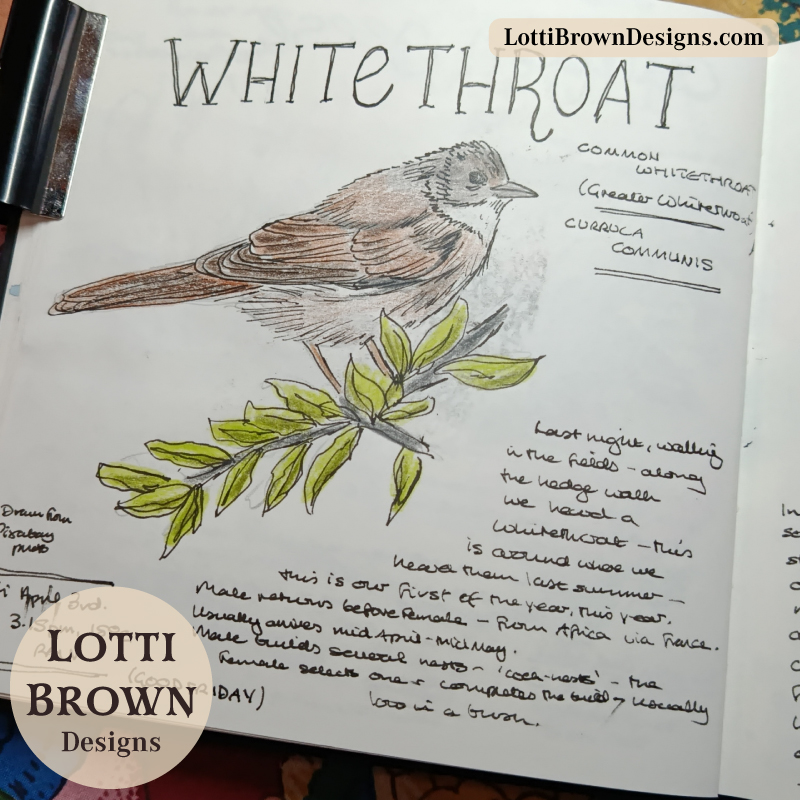 Whitethroat - one of the 'little brown jobs' birds
And by turns suddenly and gradually, I started to recognise familiar voices amongst the birdsong – often in familiar places – starting to map out the bird life of my daily walks and understanding who I might hear as I pass this tree and who’s singing from that hedgerow.
Slowly I started to feel the mystery of birds becoming a part of my landscape – and now a part of my walk, my everyday life…
It started to feel more like the natural world was becoming a real part of my life.
Learning Birdsong Slowly
I’ve loved using the Merlin app to help start to recognise familiar voices – the repetitive ‘chiff-chaff’ of the chiffchaff, the rising warble of the willow warbler, and the trilling song of the corn bunting.
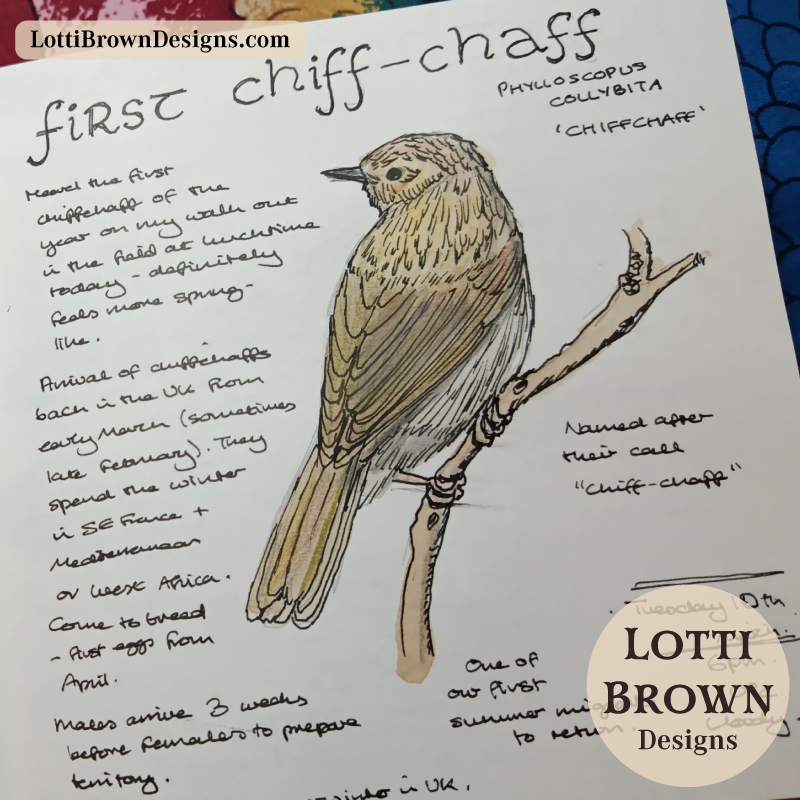 Learning the chiffchaff's call
Just in the simple act of paying attention, I recognised I heard the same songs – and by looking at the app I was able to know who was singing.
Slowly the cacophony of singing birds started to separate, and I was excited to be able to sometimes identify a song I recognised, even if I didn’t know who was singing it yet.
Walking the same routes daily helped – hearing the same songs in the same places each day gave me a big clue to who was serenading me.
Last summer, a bird was singing outside for weeks – the same repetitive little phrase that I heard hundreds of times each day as I sat at my desk. I checked on the app and it was a chaffinch. And now, when I hear the song, I think ‘it’s the bird I hear from my desk’ and I know it’s a chaffinch.
Last year, we heard the corn bunting in the fields most days – though for a long time it was simply part of the general chorus, almost blending into the skylarks.
But as autumn arrived and the birdsong quietened, their song began to stand out - and eventually we learned who was singing.
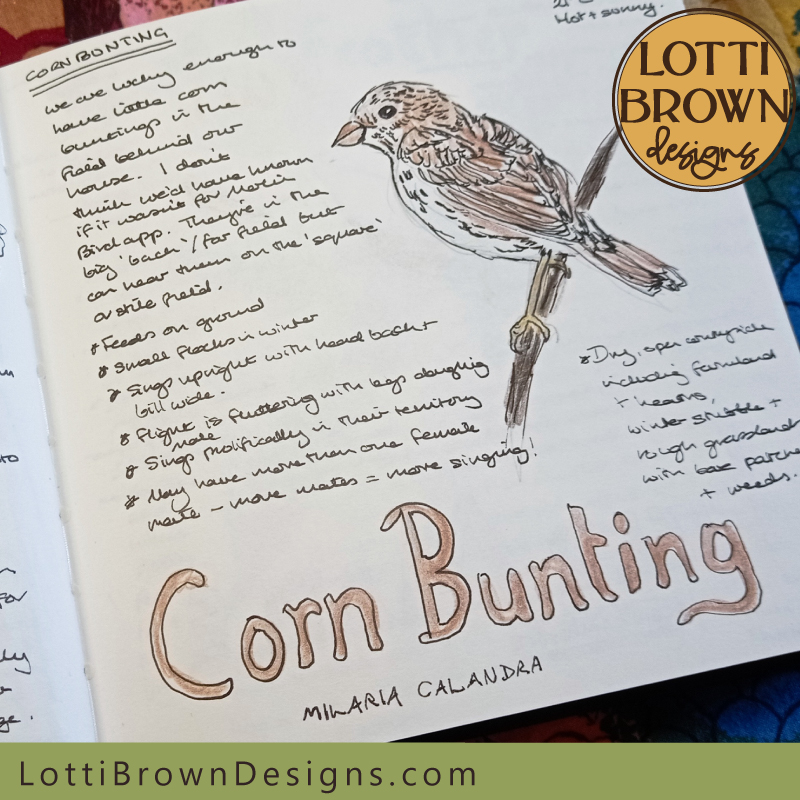 Corn Bunting
Now, almost without effort, we alert to that song we recognise – and try to see if we can guess correctly before checking – my husband is much better at this than me. It’s fun to play at this!
We also love using the app to be able to identify rooks from crows, from their call – and it was amazing to finally identify the geese who we’ve seen flying over our home for the past 20 years – and now know them for greylag or pink-footed geese.
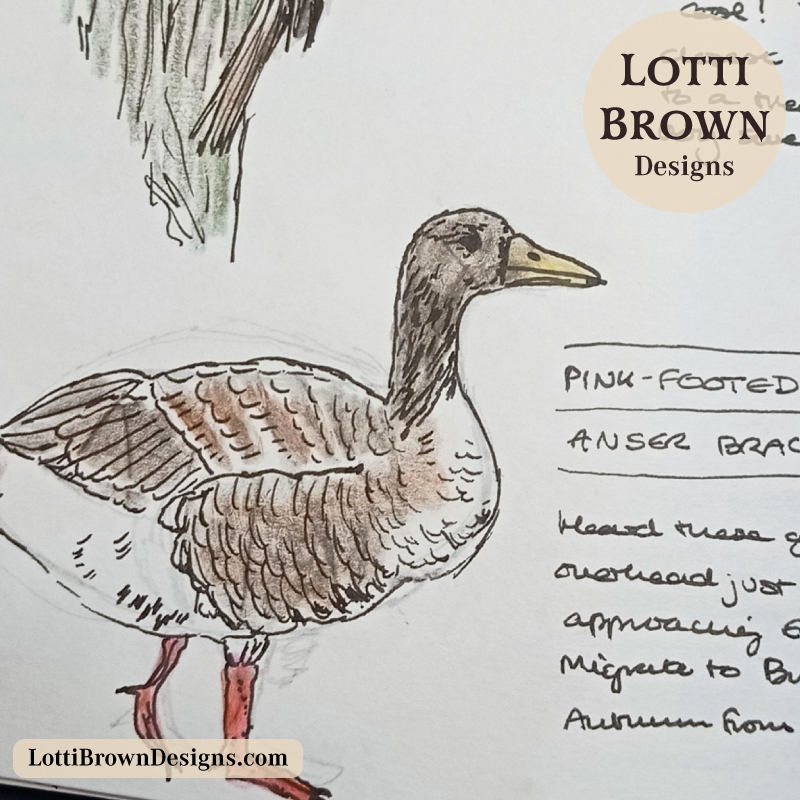 Pink-footed goose
I don’t think I would ever be able to correctly identify a goose call though, no matter how many times I heard it, and that’s okay.
For me, using the app isn’t really about becoming an expert in birdsong or learning every call perfectly.
It’s about feeling that the natural world is becoming more accessible, more familiar, and more alive.
It helps us to feel a part of it – and that, quite simply, feels nice.
Merlin Bird App – What Helped (and its Limits)
My year of birdsong with Merlin Bird app has been eye-opening for me (or perhaps ear-opening would be the better term, if it didn’t sound so weird)…
What I Love About Merlin
- It’s allowed me to easily identify birds which I wouldn’t have had a hope of recognising without its help…
- It’s encouraged me to learn more about the birds its identified and feel more connected to them, as I know they’re real birds, living near me.
- It’s made my walks more immersive and enjoyable and helped me to feel more present during the walks – I find I listen out almost subconsciously now – and notice immediately when I hear a bird call or song I don’t recognise or that sounds new or different.
- I’ve also had some amazing finds with it – such as the hoopoe we ‘found’ with it last May – which we would never have known was there without the app…
But this does bring me to its limitations – and I feel its also important to say that I have absolutely no affiliation with Merlin Bird app (or any other similar app) – I’m just an avid user.
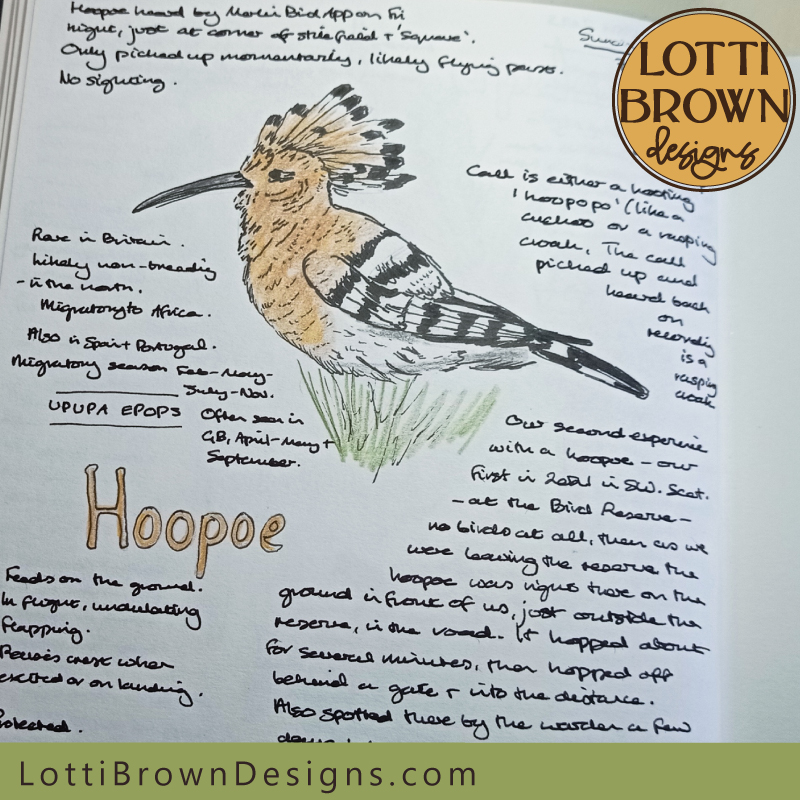 An exciting Hoopoe find with Merlin
Where Merlin isn’t Perfect
I love Merlin Bird app - but sometimes it’s not completely accurate – which is okay – it’s just something to be aware of.
Merlin can be amazingly accurate – but it can sometimes get things wrong. It is, after all, just an algorithm and sometimes it doesn’t have all the information it needs.
We’ve found that Merlin can sometimes make mistakes:
- It can miss birds if its windy or if they’re faint/distant – even if you can hear them well.
- For some birds, it doesn’t seem to have a complete database of calls in its system – whether its regional calls, or what, I don’t know – we’ve sat close to a calling Red Kite and it’s not picked it up, also a song thrush, and a starling – both of the latter two I know mimic other calls and sounds so it’s perhaps that the app can’t account for each individual’s extensive repertoire.
- Sometimes, we’ve noticed it seems to have what we call a ‘pheasant filter’ or a ‘pigeon filter’ – the bird can be calling nearby, quite loud, but the app picks nothing up.
And also, it can misidentify common birds for rarer sightings – one I had recently was a serin, which would be quite rare here in Yorkshire – but I think it was misidentifying goldfinch song.
I discovered the solution to that particular misidentification was to edit the location in my recording – and once it knew the correct location, it actually amended its suggestion and now ‘knew’ that it wasn’t a serin and removed the bird from its list – it’s actually pretty cool to know this.
I’m fairly sure that my hoopoe from last Spring was genuine, even though I didn’t see it with my own eyes – as it coincided with a reported massive influx in the area of hoopoes…
I’m less certain about my rare Golden Oriole though – which it picked up last Spring but I didn’t actually see – again, a Golden Oriole had been reported in East Yorkshire a week before, so it may have been a genuine recording – or not! I’ll likely never know for sure.
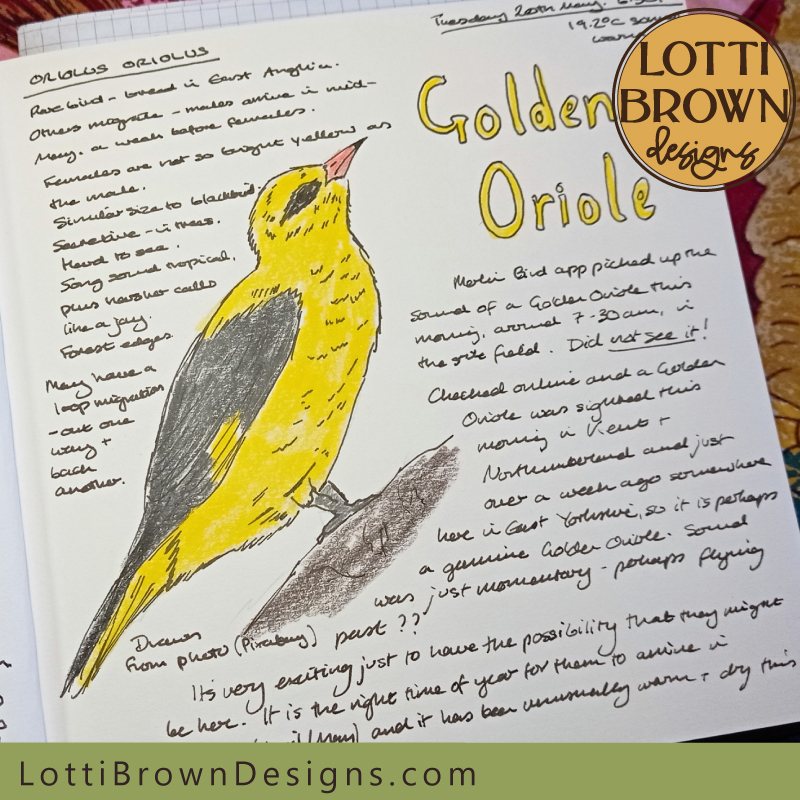 Did I really hear a Golden Oriole..???
It’s worth just remembering, though, that Merlin can make mistakes. Making sure the correct location is attached to the recording can help a lot – but also just taking a moment to check if the season and location are likely, or at least possible, and in the case of rarities, checking online to find out if there’s been other sightings in the vicinity recently.
Even so, it’s fun just to get the possibility of an exciting or rare bird – and it’s interesting to find out about rare or exotic birds, even if you end up thinking that it might not have actually been that you heard – but still, anything’s possible!
In many ways, if you treat Merlin just as a list, you’re not using it to its full potential. For me, anyway, Merlin (or a similar app) works best as part of a partnership with you, helping you listen, helping you become more aware of bird song and helping you start to feel more connected with the world of birds.
Merlin opened the door - but learning to truly listen came from spending time outdoors consistently, returning to the same places, and paying attention.
Birdsong and Nature Journaling
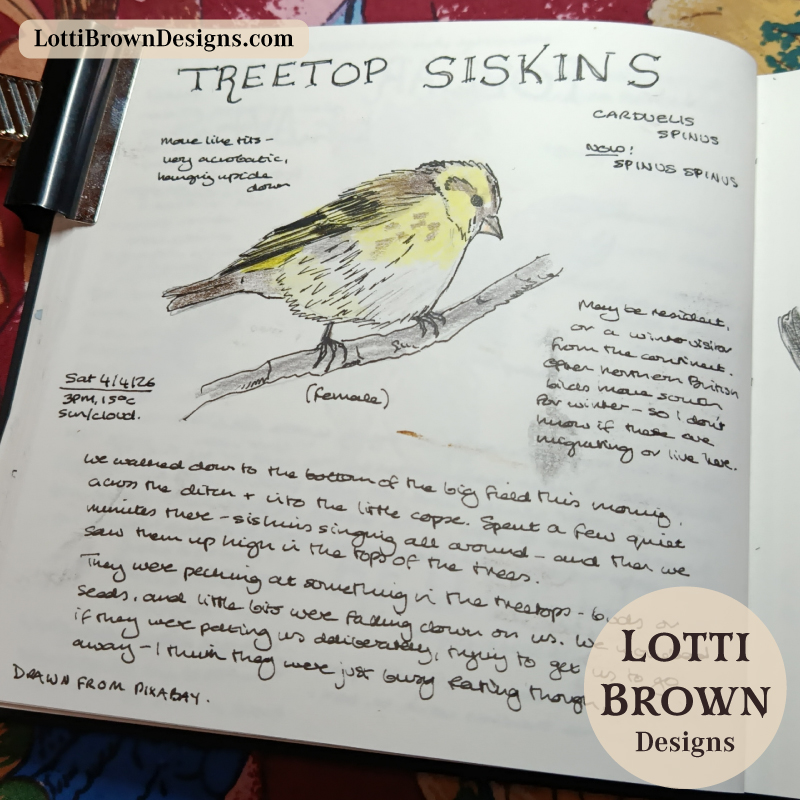 Treetop siskins - identified with Merlin
Since I started my year of birdsong, listening to birds has provided endless journaling inspiration for my nature journal…
I’ve enjoyed recording species that I didn’t know were there and it’s also allowed me to lean deeper into thinking about bird behaviour, arrivals and departures for migration or seasonal changes such as spring breeding, summer moults (when it all goes quiet) and winter arrivals and departures.
Including birdsong in a nature journal can open up a whole new way of noticing the natural world.
Instead of recording only what you see, you begin paying attention to sound too - hidden birds in hedgerows, distant calls overhead, the changing soundtrack of the seasons.
Nature journaling doesn’t need to be visual only – and there’s lots of different ways to record birds and bird songs – for more ideas see my nature journaling course which includes lessons on recording sounds.
Highlights and Memorable Moments
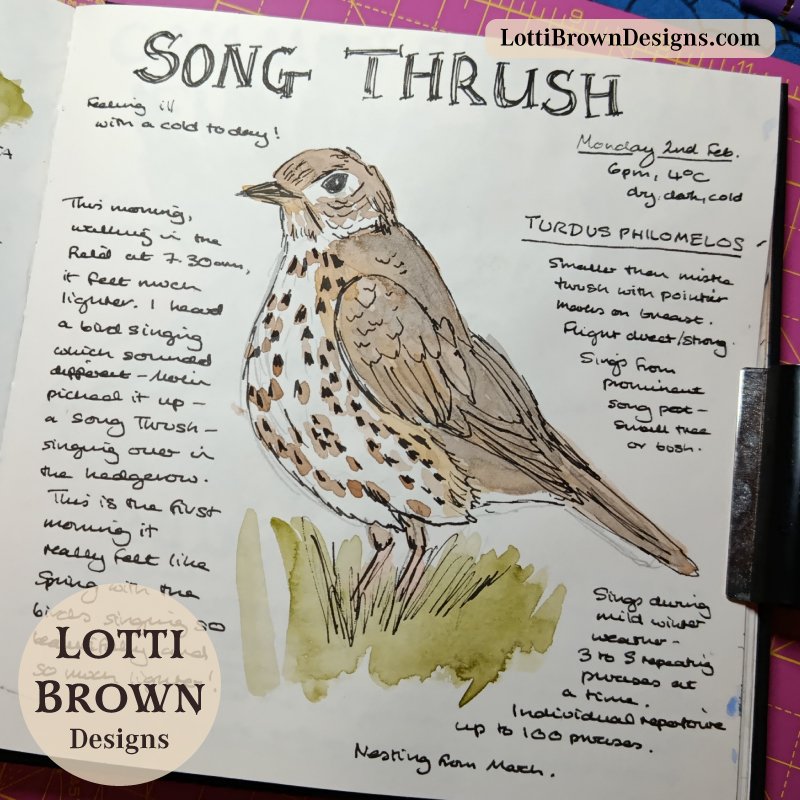 Hearing the early morning song of the song thrush was a welcome sign of Spring
I’ve just completed a year of bird song – a year of using the Merlin Bird app to record bird songs and calls – and here are some of my personal favourite birds I ‘found’ with it…
Unexpected Finds
Early on, the hoopoe was an amazing ‘find’ and it really encouraged me that the app could allow me to experience birds in a different way than just through seeing them.
A black-tailed godwit heard in the village – the Lower Derwent Valley National Nature Reserve is just a few miles away and it had been spotted there around the same time.
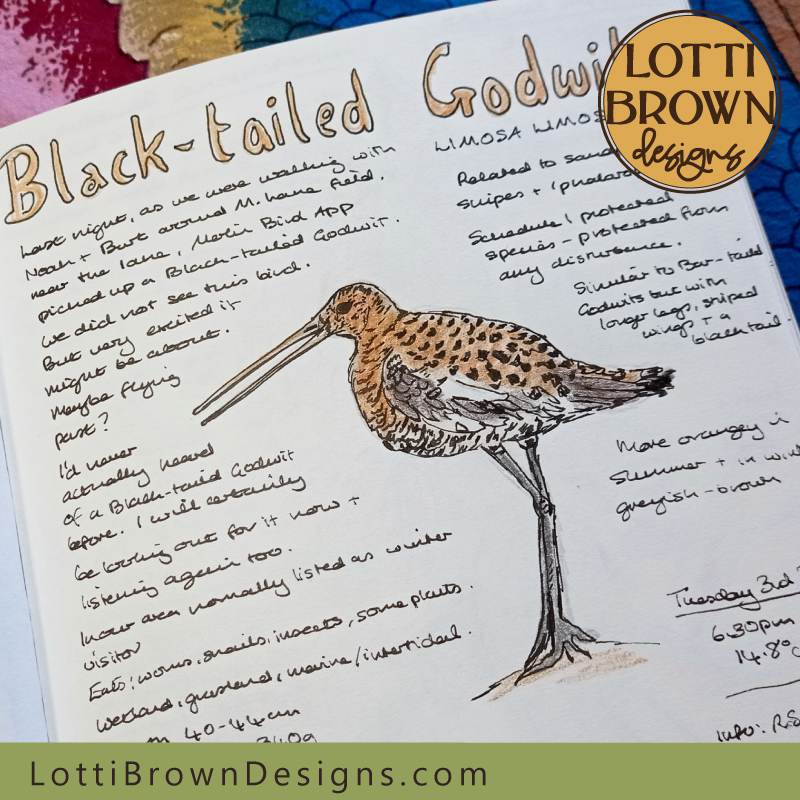 Black-tailed godwit - a surprise 'find' from Merlin
Quiet Moments of Connection
It was amazing to see two baby birds chirping inside a hedge, just near the field gate – and pausing for a moment to look allowed Merlin to pick up the chirping as Lesser Whitethroats – I would never have been able to identify these sweet little fledglings without the app, although it’s a sweet moment of connection with nature just the same!
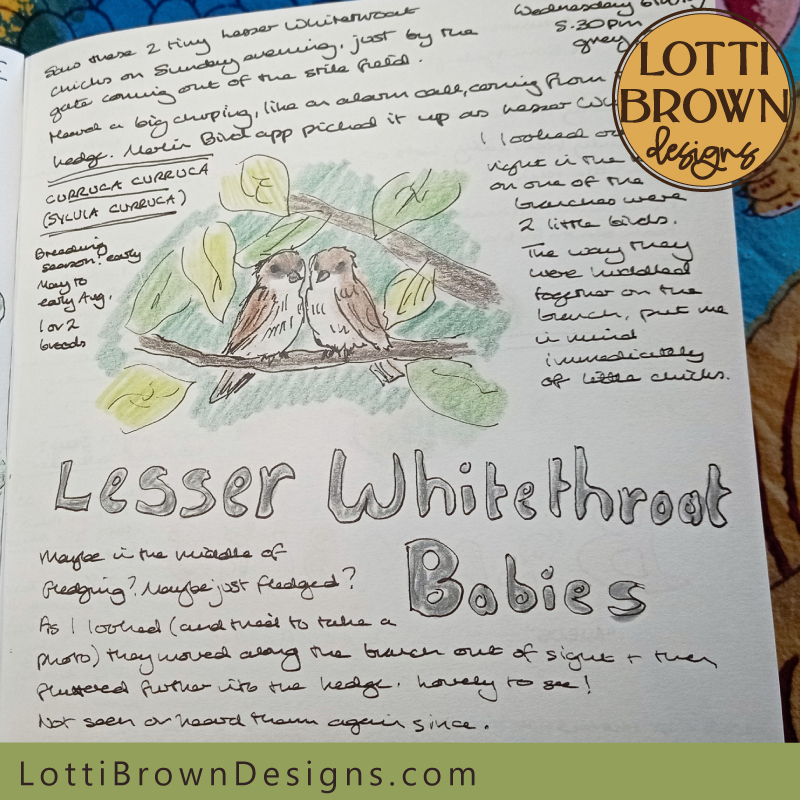 Lesser whitethroat fledglings were able to be identified with Merlin
And when we heard a rasping snoring sound beneath the barn owl nesting box in the field, we knew for certain that there were baby barn owls inside as this unusual sound was identified as the call of the hungry young – we’d never have known otherwise.
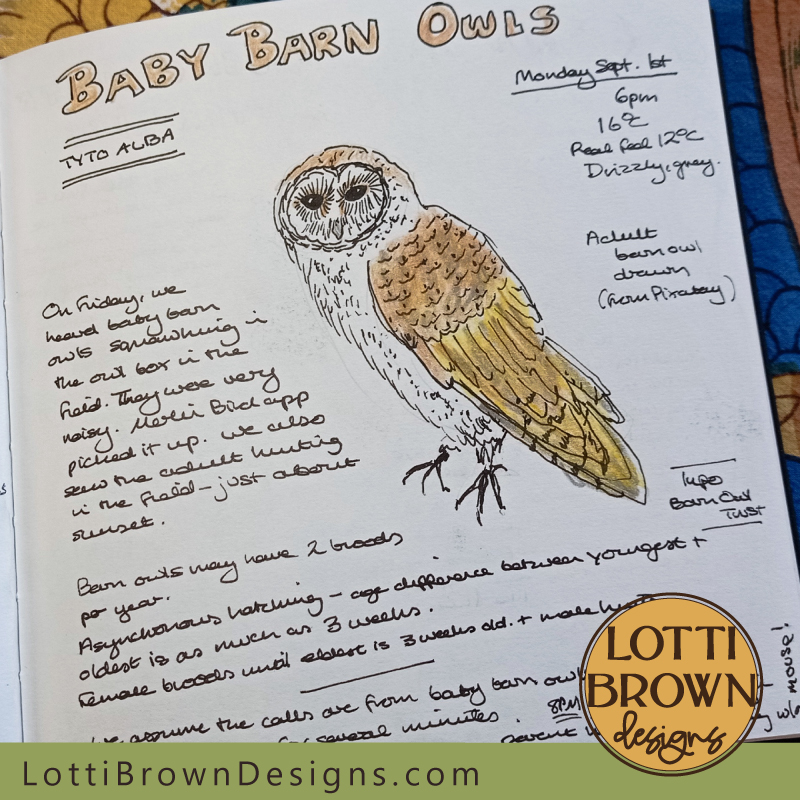 Baby barn owls heard 'snoring' in their nest box
In the woods, a high-pitched cheeping turned out to be tiny goldcrests – and we started to recognise the calls. Then in our own garden – hearing it again, and wondering, what’s that?
Recognition of a song that’s familiar, if not yet immediately identified – and the noticing is rewarded a few moments later with the sight of the tiny birds just outside my kitchen window. Without my months of listening, would I have thought to look out..?
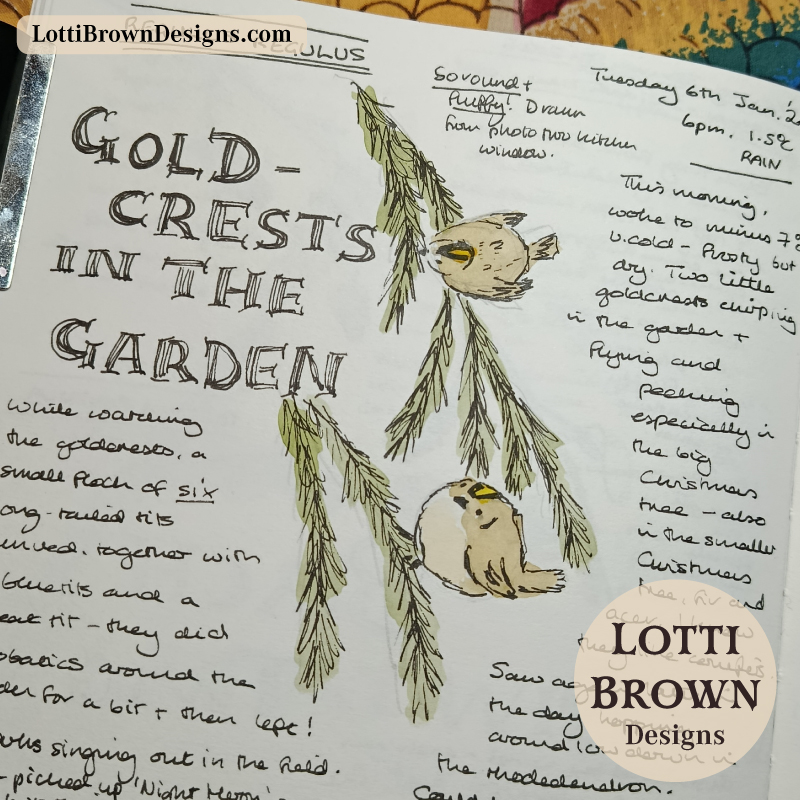 Goldcrests in the garden
Familiar Voices
The corn-bunting is one of my favourites – it’s been out in the fields virtually all year – and it noticeable by the way Merlin sometimes gives it an orange or red spot (to indicate rarity) – we’ve now learned its call and know the trees it perches on.
 Learning to listen to the corn bunting has been such a pleasure over the year
Over the year, we now notice there seems to be several corn buntings in 2 or 3 different locations around the field, so last year’s breeding must’ve been successful. Always one of my favourite Merlin finds even though we get it so often.
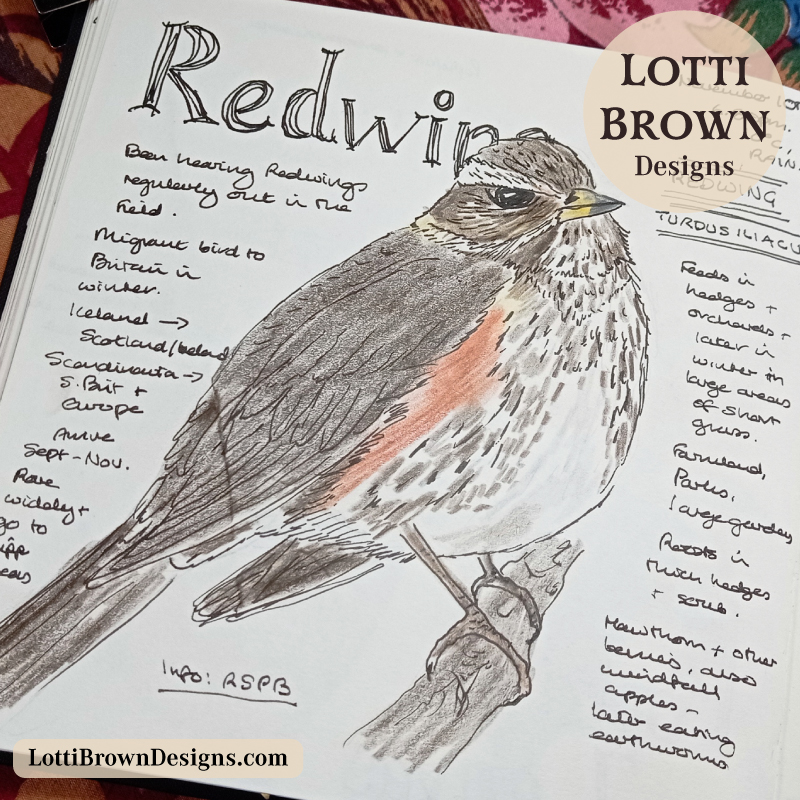 Redwing
As the season turned to autumn, it was very exciting for Merlin to pick up Redwings and Fieldfares – I’d wondered if I’d seen these in previous years, but now Merlin confirmed it.
By Spring, we were starting to be able to (sometimes) identify the chatter of the Redwings (more blackbird like) and the Fieldfares (sounding a bit like magpies). They’ve now departed for the summer, so I wonder if we’ll still recognise their calls when they return in autumn.
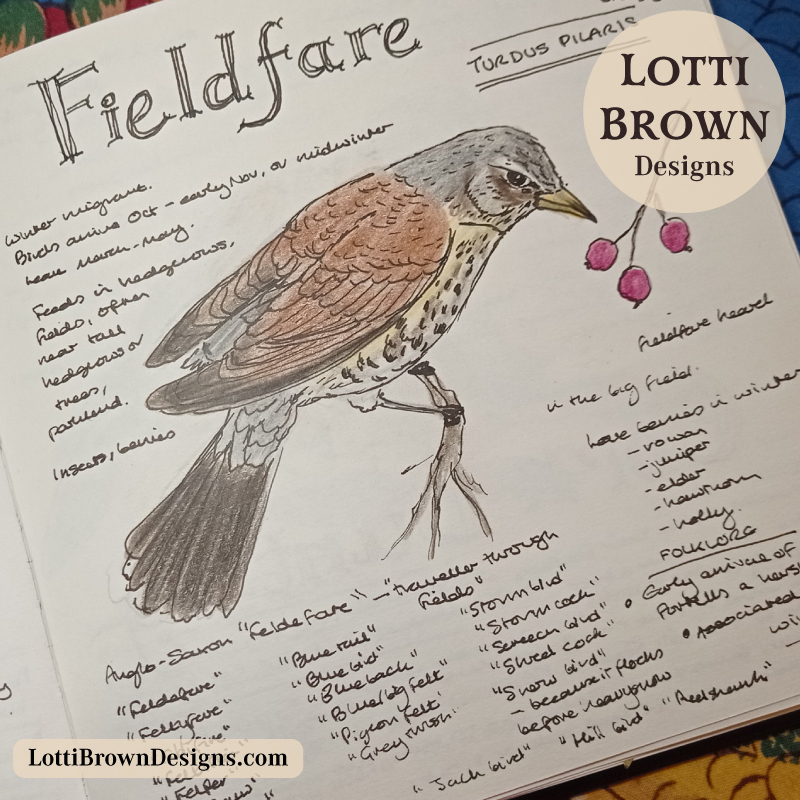 Fieldfare
Over winter, the little twittering birds that flew ahead of us on our early morning walks, we discovered were linnets – and the flock that landed in the old oak tree each morning were redpolls.
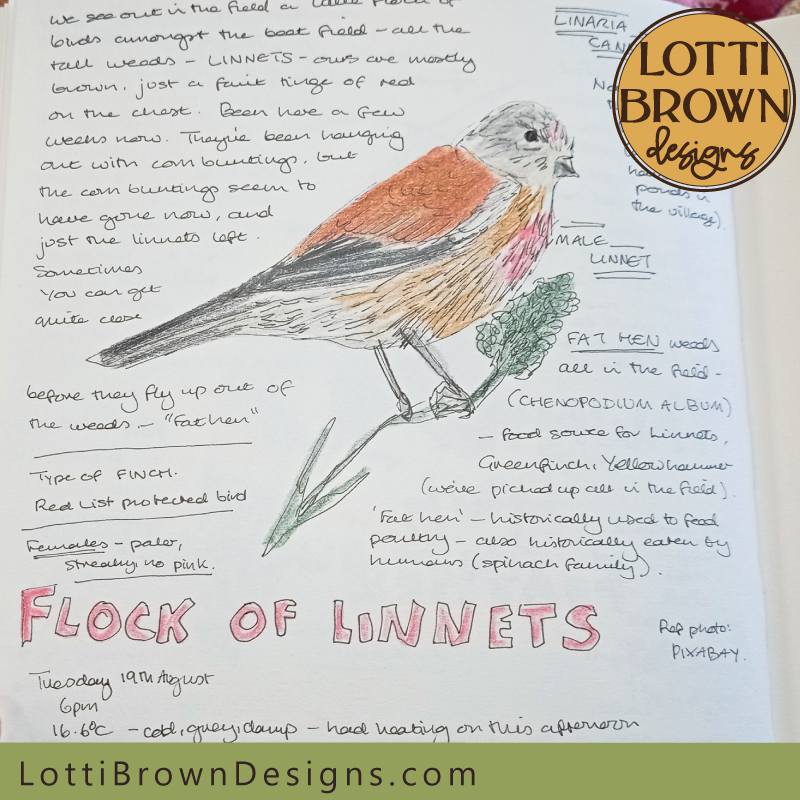 Linnets
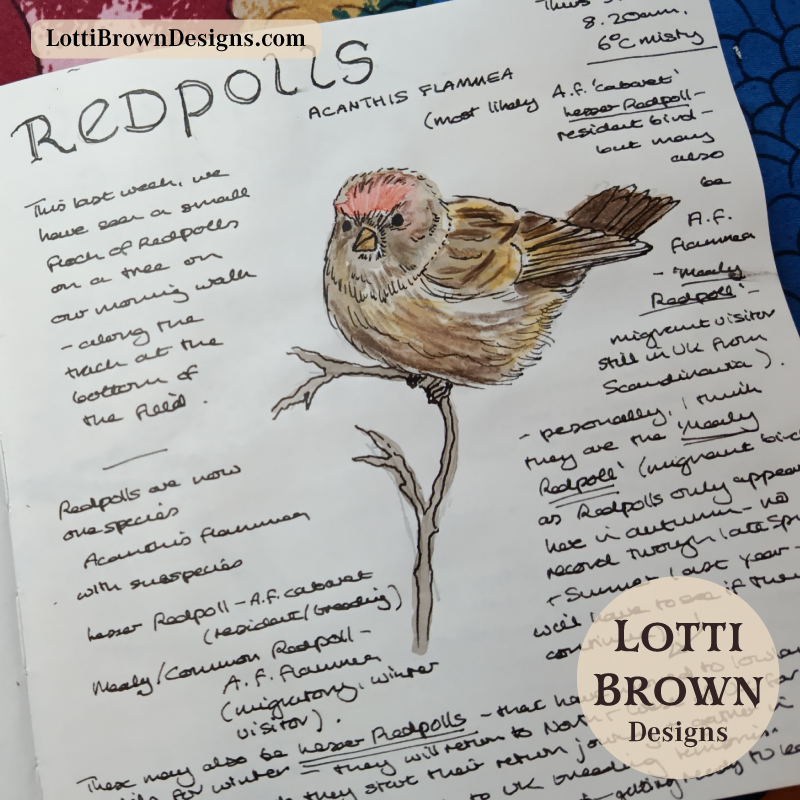 Redpolls
Rooks accompanied the dawn and dusk – and we recorded their calls…
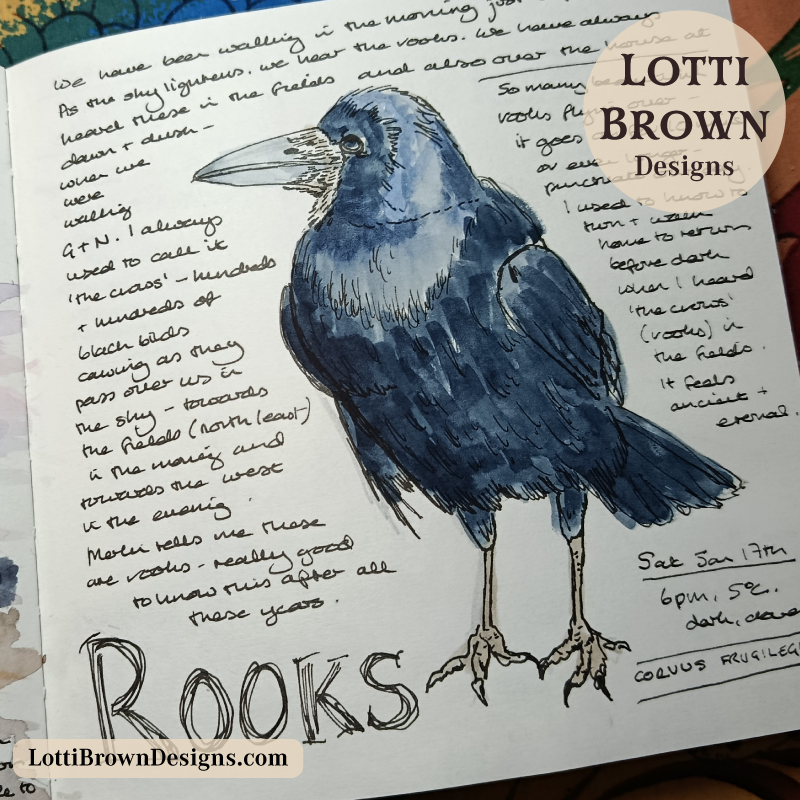 Hearing rooks became a part of my daily routine
And through it all, the skylarks kept singing over the fields – each recording a secret delight even while their song became first recognisable, then known, and eventually the soundtrack to so many of our field walks.
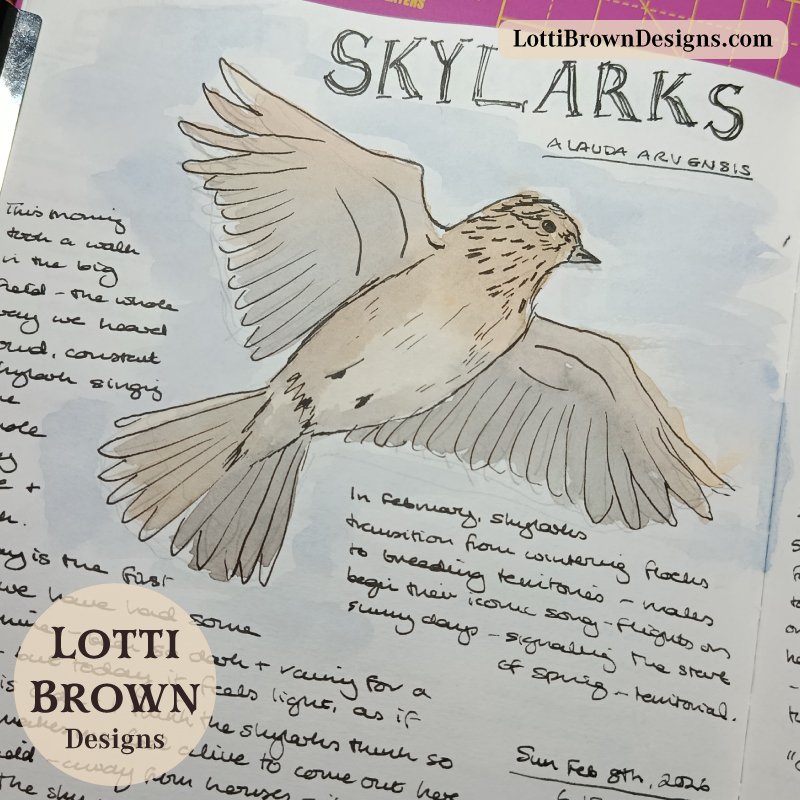 Singing skylarks
A Year of Listening
During my year of listening, I thought I was just having fun with a bird app, identifying birds and finding out things about where I live – and I absolutely was.
But at the same time, even without consciously realising, I was also learning to notice more, learning to listen more deeply, to be curious, to feel more connected with the natural world.
The landscape feels fuller now – alive with voices, movement, small familiar presences that I might once have missed entirely.
 Listening to bird song - song thrush & great tit
I set out simply wanting to try a bird app…
Instead, I found myself drawn into a year of listening more closely, noticing more deeply, and feeling far more connected to the landscape around me.
I won’t be hanging up my bird app after this first year of listening though – I have so much fun and enjoyment from walking with my bird app that I fully intend to continue indefinitely – listening and learning, noticing and connecting…
Birdsong Tips for Beginners
- Start with common birds – or the ones you notice most as you listen.
- Listen regularly.
- Revisit the same places often.
- Focus on listening to one bird at a time – it’s actually helpful to have favourites.
- Try listening early in the morning or just before sunset – there seems to be more birdsong at these times.
- Walk slowly or even pause for a while.
- It doesn’t matter if you’re in the town or countryside – in towns I’ve found more birds in areas with parks, trees, and residential gardens and even in the countryside areas with hedgerows and trees have more birds.
- I noticed I find less birds when it's raining and/or windy. Birds seem to enjoy sunny days too.
- Have fun and don’t worry about trying to become an expert – let that come gradually in its own time.
- Use Merlin as a guide, not the absolute truth.
- Enjoy the music the birds make – it’s okay to just listen and not try to identify.
If you’d like to explore the subject of bird song and bird language more fully I can recommend ‘What the Robin Knows’ – read my review of the book here…
If you’d like to explore more of my bird finds, look through my seasonal journaling pages here…
You might also be interested in mindfulness in nature – find out more here…
Or explore nature journaling for beginners and more in my nature journaling hub here…
If you’d like to go deeper into nature journaling and explore different ways to record sounds including birdsong in your nature journal, take a look at my ‘Imperfect Nature Journaling’ course here…
If you love birds, you might also like my British birds art collection, here...
Deepen Your Nature Journaling Practice
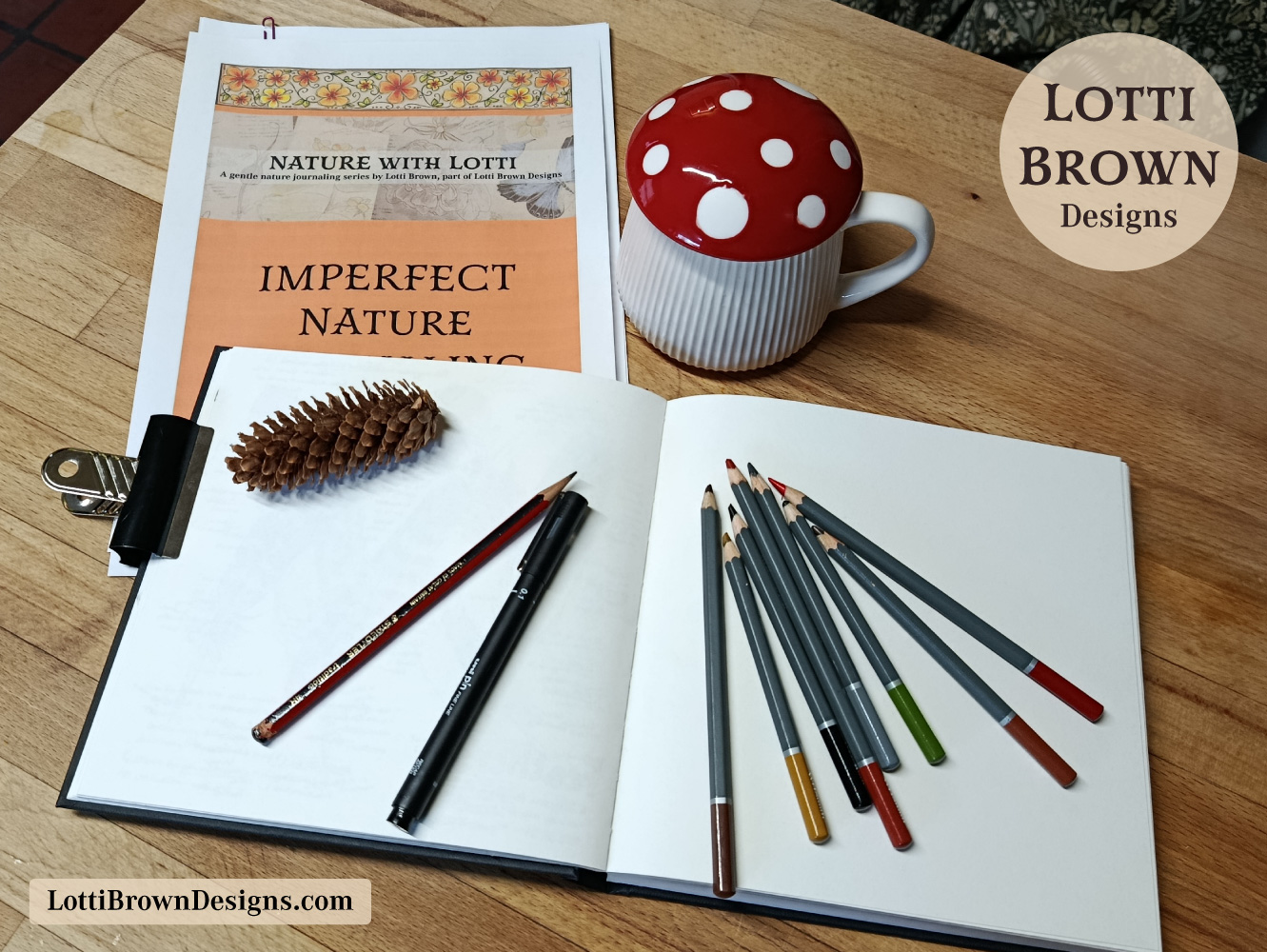 Deepen your nature journaling practice with me...
If you’ve enjoyed my nature journaling reflections, you might also like my 20-lesson course, Imperfect Nature Journaling.
It’s a gently structured, self-paced journey designed to help you:
• Slow down and notice more deeply
• Build confidence in drawing and observing
• Create a calming journaling ritual you can return to
• Feel more connected to the seasons and the natural world
No perfection required. Just curiosity and a notebook.
You can explore the course here whenever you’re ready...
P.S. If you’re just beginning - or would like something quieter and more simple to start with - you might first like to get started with my free 'Getting Started' guide or gain momentum with my 'Gentle Introduction' guide to help you through your first few pages - here...

Shall we stay in touch..?
Each month, I share stories from my own nature journal, new art from my studio, and simple seasonal inspiration to help you feel more connected with the turning year - if you'd like to stay updated, please sign up with your email address below...
Recent Articles


-
Barn Owl Folklore & Meaning - Symbolism of the Barn Owl
Sep 15, 26 03:34 AM
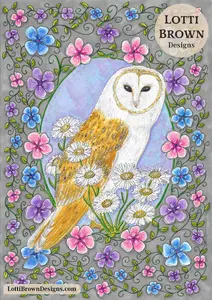 Explore barn owl folklore, symbolism and meaning, from ancient myths to British traditions. Discover the quiet wisdom and mystery of this ghostly bird.
 -
Bramble Meaning, Myth & Symbolism - Celtic Tree Calendar Art
Sep 02, 26 11:32 AM
 A look at bramble meaning, myth and symbolism as I share my bramble Celtic Tree Calendar art for the month of 'Vine'...
 -
Nature Journal Prompts
Aug 26, 26 04:05 AM
 Easy nature journal prompts to inspire and encourage you - one per week...
Shop My Current Artwork Collections

My art is available as sustainable art prints, notebooks, greetings cards, tote bags and clothing in my Teemill shop.
Find my stockists for all my earlier artworks here...

Lotti Brown is a self-taught nature artist and nature journaling educator whose hand-drawn work is inspired by wildlife, folklore, and close observation. With 18 years in creative fields and 10 years creating nature art, she brings deep practical experience to her work. Trained by the Wild Wonder Foundation, she shares nature journaling courses and guides online. Her artwork has been licensed internationally and exhibited at Goole Museum and Bridlington Spa in the East Riding of Yorkshire, UK.
Follow me:
Share this page: