
- Home
- Wildlife Art
- Hare Art & Folklore

Brown Hare Folklore, Meaning & Mythology
(with Hand-Drawn
Art)
By Lotti Brown
Explore the myths, stories and British hare folklore around one of our most mystical wild animals, the brown hare - discover my hand-drawn hare art, created to celebrate this gorgeous creature.
The brown hare is one of my favourite wild animals - and I’m lucky enough to see them fairly often here in East Yorkshire, where the wide, open fields seem to suit them perfectly.
I’ve watched them boxing in the fields in March, loping across the grass in those long, elegant strides, hunkering down with a flick of an ear - and one summer I was fortunate enough to see a little family of leverets playing in the soft light of early morning. Those moments stay with you.
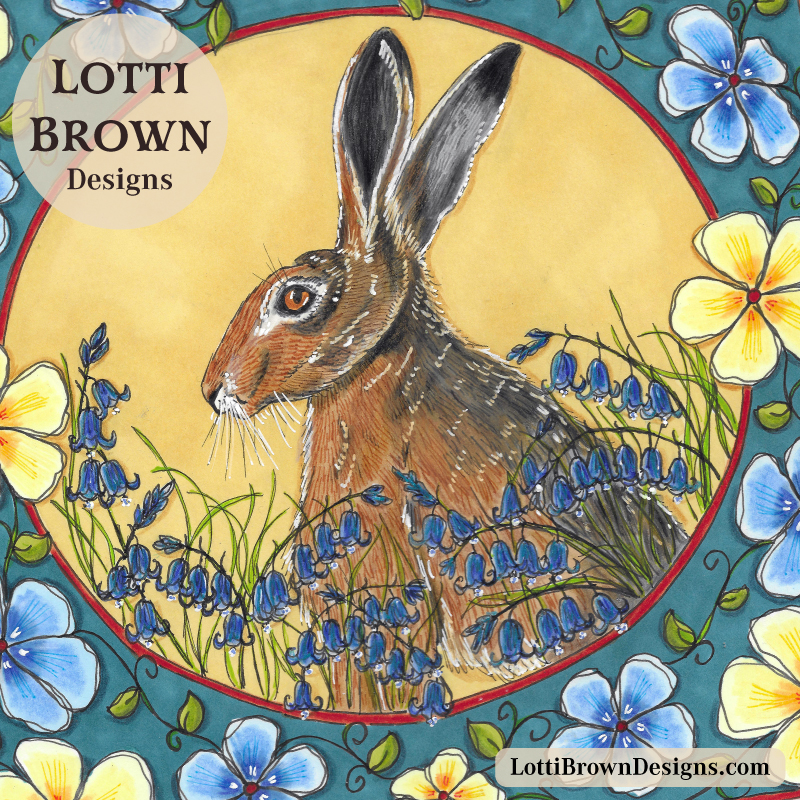 Brown Hare hand-drawn illustration by Lotti Brown
Mysterious, swift, wild, otherworldly… the hare is one of our most cherished countryside animals, and it’s no wonder that so much hare folklore and meaning has gathered around her through the centuries.
Far more than just a big rabbit, when you watch a hare run, you feel the difference! She stretches out like a dog or deer, all sinew and speed, a creature that seems half-made of wind.
There’s something fleeting about a hare - not only fleet of foot, but also ephemeral, as though she slips between worlds. It’s little wonder that folklore across Britain and across centuries holds the hare as a magical being, part of the Otherworld and part of ours, never fully belonging to either.
Meeting the Brown Hare - Folklore & Traditional Names
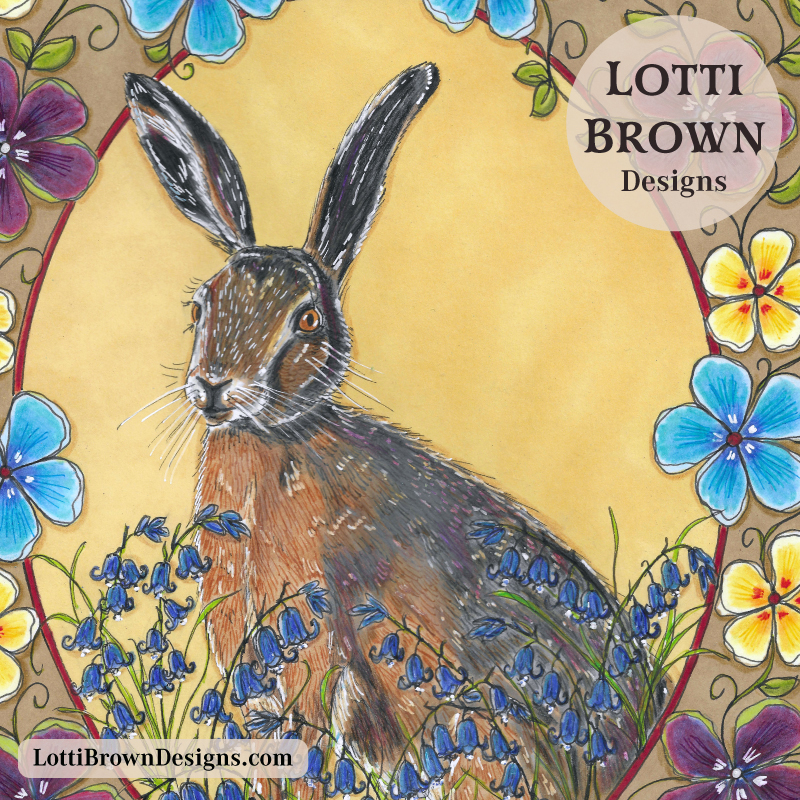 Brown Hare illustration detail - hand-drawn by Lotti Brown
The hare has gathered a wonderful collection of country names over the centuries, each one hinting at how people saw (and sometimes feared) this wild and mystical creature.
Many old names link the hare to the cat - a connection that will resurface later when we explore hares as shape-shifters and witch familiars.
Gaelic
- Gearr
Welsh
- Cath-eithin (meaning ‘furze-cat’)
- Cath-y-coed (meaning ‘wood-cat’ or ‘cat of the woodland’)
Country names
- Old Sarah/Owd Sarah
- Old Sally/Owd Sally
- Aunt Sally
- Katie
- Bautie/Bawtie/Bawty/Betty
- Baud/Bawd/Bawdrons/Baudrons (meaning ‘cat’ – Norfolk)
- Wat/Walt/Walter
- Malkin/Maulkin/Mawkin/Maudlin
- Laverock/Lavrock
- Pussy
In Britain and Ireland there are three native species of hare:
- Brown hare (European hare) – Lepus europaeus – widespread across England
- Mountain hare – Lepus timidus scoticus – often turns white in winter – present today in Northern England and Scotland
- Irish hare – Lepus timidus hibernicus – may turn white in harsh winters – present today on the island of Ireland and the Isle of Mull
Ancient Hare Mythology - Britain & Beyond
 Brown Hare art by Lotti Brown
The story of the hare stretches deep into the past, and early hare mythology appears long before written history…
Our relationship with the hare goes far back into prehistory, and traces of this connection can be seen in fossils, mythology, and even the way hares were buried with honour in Iron Age Britain.
Cave fossils in Ireland suggest that Irish hares were present in Ireland as much as 30,000 years ago!
The mountain hare is native to the Scottish Highlands. But although the Brown hare is now considered a native animal to Britain, it’s argued that Brown hares may have been introduced to Britain by the Romans – or perhaps a little earlier, between the 5th to 3rd centuries BC.
An archaeological study led by Professor Naomi Sykes of Exeter University discovered that Iron Age hares (as well as chickens) were “buried with great care”. The hares (and chickens) were “carefully buried without being butchered” which implies the hare and chicken were treated with a special reverence and that people considered chickens and hares were “too special to eat.”
Indeed, we know that Roman Emperor Julius Caesar wrote that the Britons believed that it was “contrary to divine law to eat the hare, the chicken, or the goose. They raise these, however, for their own amusement or pleasure.”
Cassius Dio, (writing in the 3rd century AD) tells us about Boudicca, the Iron Age Briton warrior queen who was said to release a hare from beneath her cloak before battle…
“When she had finished speaking to her people, she employed a species of divination, letting a hare escape from the fold of her dress; and since it ran on what they considered the auspicious side, the whole multitude shouted with pleasure, and Bodicea, raising her hand toward heaven, said, I thank thee Andraste [a goddess of battle and victory]… I supplicate and pray thee for victory.”
A number of animal-motif artefacts including brooches have been found in Britain from the late Iron Age through to the late Roman period, which are thought to depict a hare (rather than a rabbit).
It’s been argued that these may point to the worship of a Celtic hare-deity in particular regions where the brooches are found – the south and east of England.
Place names in the same areas may also relate to the Anglo-Saxon goddess Eostre who is often said to be the goddess of Easter and associated with the hare…
- Eastrington, East Yorkshire
- Eastrea, Bambridgeshire
- Eastry, Kent
It’s thus suggested that the Celtic hare-deity may have evolved into the later Anglo-Saxon Eostre in these areas…
Eostre, Easter & the Hare as a Symbol of Spring
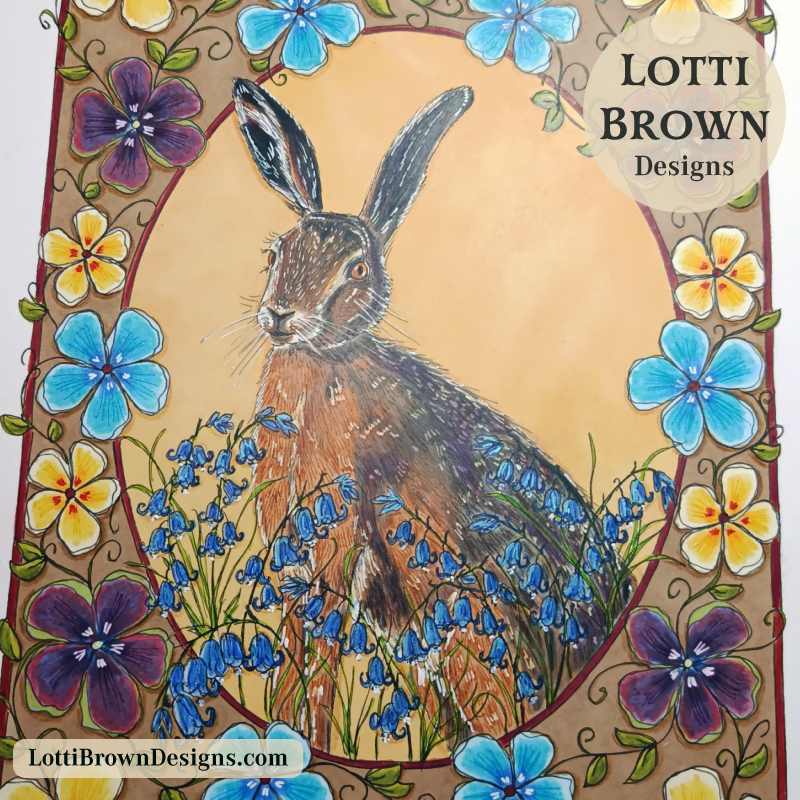 Hare art detail - creature of the Easter goddess Eostre/Ostara and symbol of Springtime
The myths that link the hare with Easter, dawn, and rebirth weave together myth, misunderstanding, and genuine folklore into something that feels enchantingly inevitable. Whether or not Eostre truly had a hare as her sacred animal, it’s clear the hare’s springtime magic captured people’s imaginations.
Eostre, also known as Ostara (a Germanic goddess) is believed to represent the origins of our Easter – the name, the link to hares/rabbits, and the concept of rebirth and renewal of life.
Eostre/Ostara has also been linked to a European goddess Austro and also Ausos, an earlier proto-Indo-European goddess – both are goddesses of dawn and bringers of light.
All we know for sure of Eostre/Ostara is taken from the writings of Bede in the 8th century, regarding the Easter month celebrated by the pagan Anglo-Saxons of the past.
“Eosturmonath (Easter month/April) has a name which is now translated as ‘Paschal month’, and which was once called after a goddess of theirs named Eostre, in whose honour feasts were celebrated in that month. Now they designate that Paschal season by her name, calling the joys of the new rite by the time-honoured name of the old observance.”
In the early 19th century, mythologist Jacob Grimm again linked Eostre/Ostara to the celebration of Easter. And later that century, Professor Adolf Holtzmann associated Eostre/Ostara with the hare:
“The Easter Hare is inexplicable to me, but probably the hare was the sacred animal of Ostara.”
And also suggested that, “The hare must once have been a bird, because it lays eggs.”
By the very end of the 19th century, it was somehow enshrined in the public’s consciousness that Easter celebrated the story of the Anglo-Saxon/Germanic goddess Eostre/Ostara and how she had found a wounded bird on the ground in late winter…
She helped the poor bird by transforming it into a hare – but the transformation was not complete and the hare still laid eggs, which became part of the Easter tradition.
It may be that in times past, people did believe the hare was a magical being who laid eggs in spring…
Hares create little nests on the ground in fields that do look like the nests that lapwings create on the ground too – hares and lapwings both thrive in the same large, flat fields. So it’s an understandable jump to link the lapwings nest of eggs with the hare.
And so the hare is linked with the goddess Eostre/Ostara and the ideas of springtime, new life, and fertility.
Read more about the other folklore symbol animal of Easter here - the lapwing...
A Love Story – Ancient Hare Mythology
The Ancient Greek goddess of love, Aphrodite is associated with the hare – and the Ancient Greeks engraved hares on wedding rings and wedding bowls.
The Hare and the Moon - Magic, Mystery & Meaning
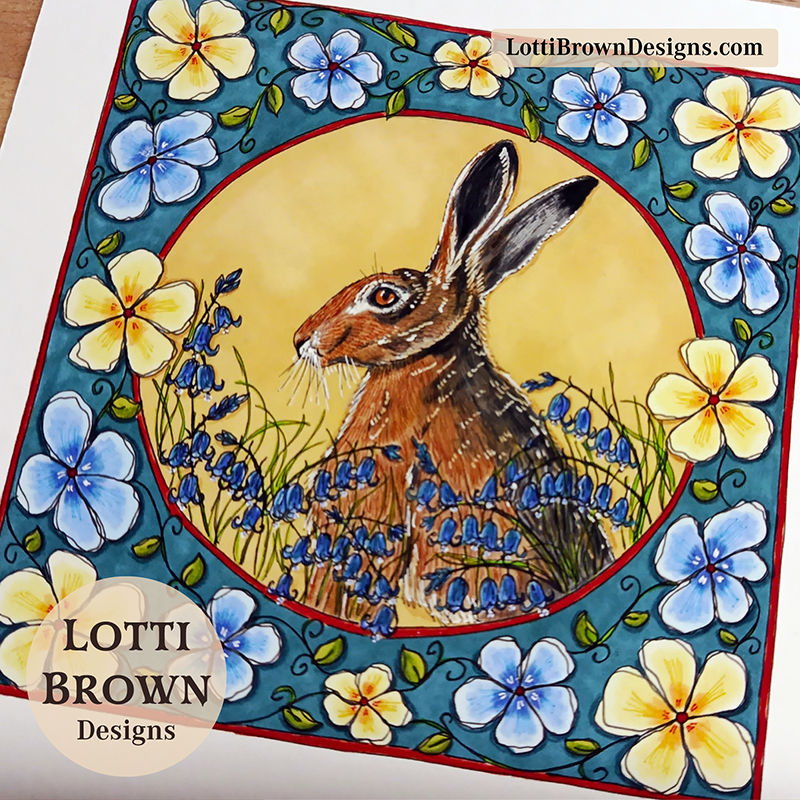 Hare and moon art print
The hare’s long association with the moon and with mystical transformation spans continents and millennia. Even today, there’s something uncanny about seeing a hare sit upright in moonlight — a moment that feels lifted from folklore.
Hares are very much associated with the moon – not just in Britain but all over the world.
The image of the ‘Mad March Hare’ that we have – those iconic ‘boxing hares’ (which are actually thought to be a mating ritual between male and female hare) – are part of the hares ‘madness’ and linked to the idea of being ‘moonstruck’, being sent mad by the moon.
The markings of the moon are seen as hares (or rabbits) in various cultures, including in Asia, and the Aztecs who believed that the marks on the moon were caused by a rabbit being thrown at the moon by a god.
In North America, the Algonquin Ojibwa and Sioux Winebago Native American culture had Menebuch the Great Hare as a mythical ancestor from the heavens and go-between between this world and the Otherworld.
In Ancient Egypt, the god Osiris took the shape of a hare and was ‘killed’ and thrown into the Nile in order to ensure seasonal renewal.
Egyptian mythology linked hares to the moon – like the moon (which was believed male when in waxing phase and female when in waning phase), hares were also believed to switch genders…
And even in Britain and Europe, too, it was thought that hares alternated between genders either monthly (with the moon) (or sometimes annually.) Ancient Welsh laws stated one flat compensation price for hares as they changed gender month to month (the price for other animals differed according to whether they were male or female).
The Siberian-Ugrian goddess Kaltes-Ekwa was a moon-goddess associated with fertility and childbirth. She was also associated with the bringing of dawn and often appeared as a hare.
Harvest Myths - The Hare of the Fields
The link with new life and fertility carries through the seasons and we see the hare appear at the Autumn equinox time of harvest just as surely as at the Spring equinox (Easter).
In times of harvest, people would start seeing hares again after their spell of ‘March Madness’ had given way to a quieter time when the hares were effectively hidden from view by the growing crops.
This re-emergence at such a symbolic time ties her closely to rituals of reaping, renewal, and transformation — themes echoed in the magical tale of Ceridwen and Gwion Bach, which you can read just below...
The last sheaf of corn that was cut was known as ‘the hare’ – and people referred to this ritual cutting as ‘cutting the hare’ or ‘killing the hare’. It was believed to be very lucky if a hare ran out from this final sheaf of corn.
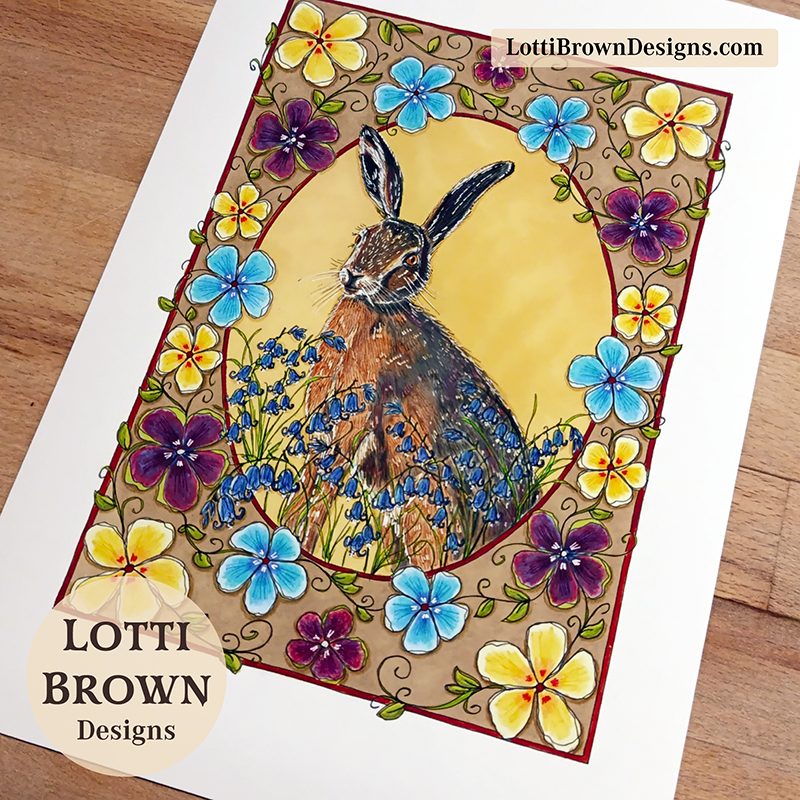 Hare art print - creature of the harvests
Explore the brown hare artwork collection here...
The Celtic tale ‘The Book of Taliesin’ from the Mabinogion tells the story of the servant boy Gwion who stirs a cauldron of magical potion for the enchantress Ceridwen. Only the first three drops of the potion will convey beauty and wisdom and the rest is poison. The precious drops are destined for Ceridwen’s son.
Gwion spills the potion on his hand and unwittingly consumes the valuable three drops as he licks his hand clean. As the potion takes effect, he realises that Ceridwen will be angry and turns himself into a swift hare to flee…
Ceridwen chases him as a greyhound. He then becomes a fish and she an otter – then a bird and she a hawk.
Gwion finally turns himself into a grain of wheat. Ceridwen eats it but becomes pregnant. When she gives birth to Gwion, reborn as a beautiful child, she floats him out to sea.
He is found and raised as his own by a Prince and becomes the great and wise Taliesin.
So the hare is very much linked to this story of Ceridwen who is often shown as a Celtic goddess of creation and inspiration.
Fire Folklore & Fiery Hare Legends
At harvest time, too, we see more of the association of the hare with fire.
Fire and hares are entwined in both Eastern and British traditions. There’s something fitting about imagining this quicksilver creature leaping through the flames - a flash of spirit escaping into the night.
Buddhist and Hindu writings call the hare a ‘creature of fire’ with the idea of rebirth from the fire (similar to a phoenix).
The Indian Jataka Tales tell the story of the Buddha in his previous lives. He was reborn as a hare and in hare form threw himself into the fire, a self-sacrifice to provide food for others who were hungry. This virtuous act was celebrated by the hare’s image being painted onto the moon.
In Britain, too, people associated the hare with fire – often linked to the burning of stubble in the fields that used to happen after harvest.
In The Leaping Hare, George Ewart Evans & David Thomson write of the hare hunkering down as the crop-stubble burns to “hang on to the last minute then make a dash for it” seeming to appear out of the flames.
Sometimes the hare is seen to leap back into the fire – perhaps the fear of the people around controlling the fire is greater than the fear of the fire itself.
It was also believed that “if a hare runs through a village street, a fire will break out in one of the houses very shortly afterwards.”
In Ulster, it was permitted to chase the hare only directly after the harvest – this was called ‘Chasing the Cailleach’ (the hag-goddess).
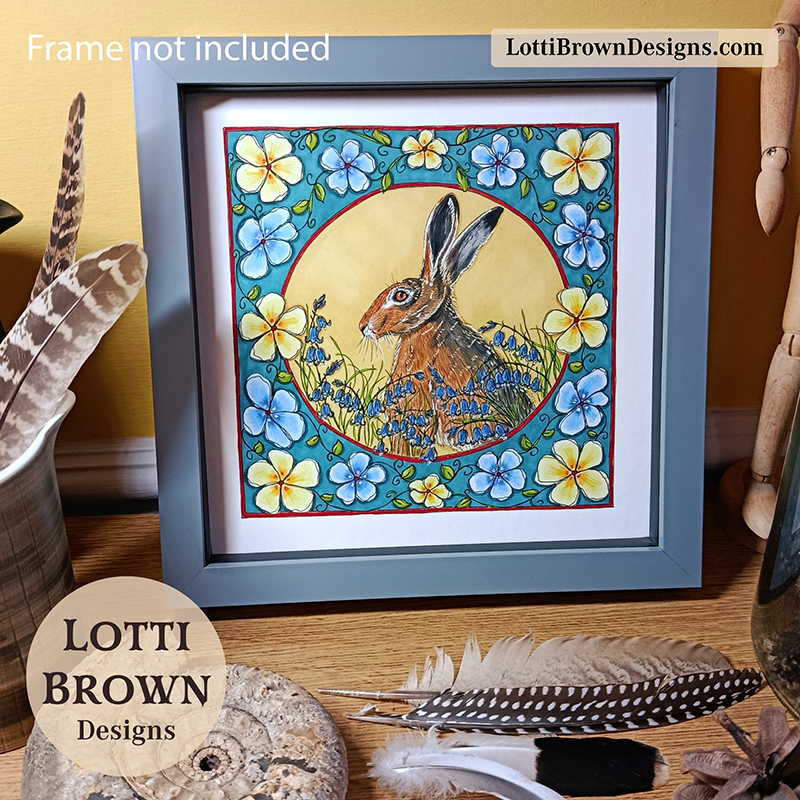 Hare square art print - displayed in my Yorkshire cottage
Explore the hare artwork collection here...
Shape-Shifting Hare Stories & Witch Lore
Hares were very much associated with witches and it was believed that witches would shape-shift into hares.
People feared that witch-hares would suck a cow dry of milk by night – and there were tales of hares who had been wounded disappearing into the night – with the same wound seen on the local wise-woman the following day.
The Celtic tale of Oisin tells of the warrior who hunted and wounded a hare in the leg. He followed the hare into the ground and discovered a beautiful young woman in a large underground hall – but she was also wounded in the leg! A shape-shifting hare!
A reported behaviour of hares when they sit in rings is known as a ‘Hares’ Parliament’ and was thought to be a gathering of witches in hare form.
It was believed that a witch-hare could only be killed by a silver crucifix or a silver bullet.
I’ve often wondered how much of this lore is shaped by real moments people witnessed, long before torchlight or street lamps - because I too have seen small hares (or perhaps rabbits) sitting upright together in fields at night, seemingly “moonstruck” under a bright full moon. It’s a sight that feels like stepping into a story.
The Three Hares Symbol - Mystery Across Cultures
One of the most mysterious hare symbols is the ancient motif of the Three Hares — a design that feels both sacred and strangely familiar.
The symbol of the hare is important to us culturally and is found throughout the world. The Celtic hare motif of the ‘Three Hares’ is enigmatic but significant.
It’s a design of three hares chasing each other in a circle with intertwined ears, so that each hare shares ears with the other two.
It’s been found in sacred sites (Buddhist, Muslim, Jewish, and Christian) in locations ranging from the Middle East and Far East to Europe and Britain with Northern Germany and Devon seeing particular concentrations.
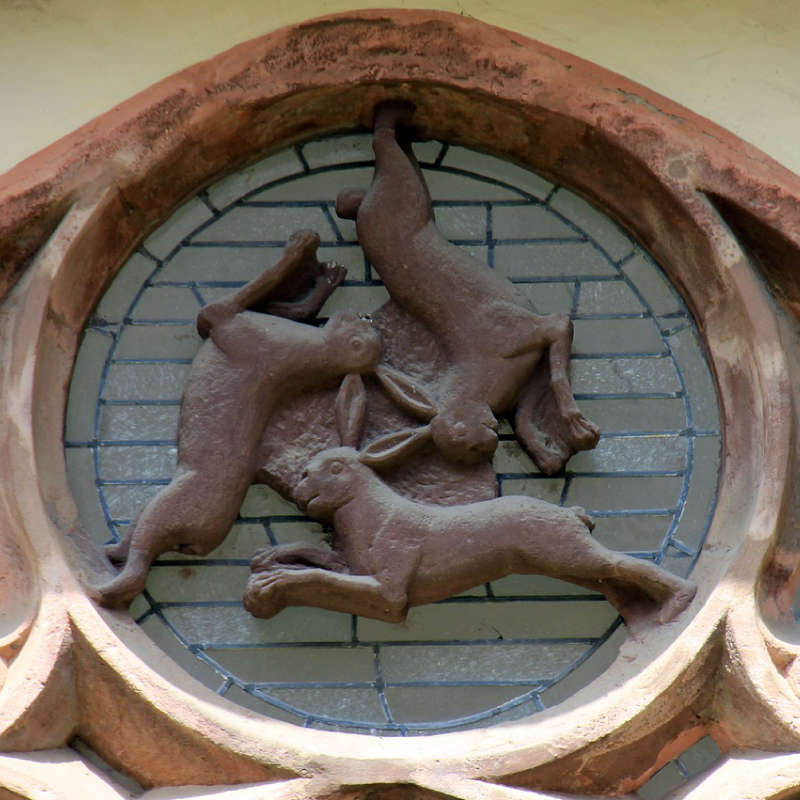 Three Hares symbol in a window at Paderburn Cathedral, Germany
In England, the Three Hares symbol is often in a prominent position in a church so is seen as having a particular significance or importance. It is likely that the motif relates to the Celtic triple goddess and the Christian Holy Trinity – also encompassing ideas of the changing lunar cycle and concepts of fertility and the natural world.
The hare was viewed as changing genders or hermaphrodite and was believed able to give birth without loss of virginity and so was associated with the Virgin Mary. In medieval illuminated manuscripts and paintings, a hare was often seen at the side of the Virgin Mary.
In some locations, the Three Hares is also associated with the equally enigmatic Green Man – and as such could be seen as a symbol of our earthly nature or representative of the seasons and cycles of our year and lives.
A Welsh Hare Folk Story
An early Welsh saint, Monacella or Melangell is associated with hares.
A 15th century rood screen in the church in Pennant Melangell in Wales tells the story – a Prince was hunting with dogs near the village. They chased a hare into bushes and when they followed the hare, they discovered it sheltering in the skirts of a beautiful maiden, Monacella/Melangell, who was praying.
The dogs did not attack the hare under Monacella’s protection and the Prince granted the land as a perpetual sanctuary.
Hare Luck, Omens & Traditional Beliefs
Hares carry luck in both directions — generous to those who honour them, and dangerous to those who do not.
People used to keep a hare’s foot as a lucky charm. It’s likely this evolved into a rabbit’s foot – when I was a child, my Granny had a rabbit’s foot for luck and it was quite common then – people would wear it like a brooch.
A left rear foot was seen as particularly lucky. A hare’s foot was often kept to protect against rheumatism or by an actor to ‘shapeshift’ more easily into a role. It was seen as disastrous to lose this lucky foot.
But a hare’s foot was seen as unlucky on a fisherman’s boat and the word ‘hare’ was very unlucky to be spoken at sea.
It was also seen as unlucky for a hare to cross your path, when setting out on a journey.
But it was considered lucky to call on the hare with the phrase ‘white rabbit’ called out on the first of the month – this was a tradition that we followed in our home when I was a child. The idea is for the phrase to be the first words to pass your lips on the first morning of the month – and this could bring you luck for the whole month.
 Hare art print - displayed in my Yorkshire cottage
Hare Meaning & Symbolism
The hare is a special creature to us and clearly has been for hundreds if not thousands of years, across different cultures and continents as well as across the years.
The hare meaning is:
- Energetic
- Sexual with associations of fertility
- Wild and unconventional
- Mystical and magical
- Shapeshifting
- Encompassing all genders
- Selfless and brave
- Springtime and rebirth
- Inspiration, creativity and ‘inspirational madness’ (being ‘moonstruck’)
Drawing the Hare - My Art Inspiration
 Drawing my brown hare illustration - multi-media with pens and coloured pencils
The hare’s deep well of stories - from goddess-creatures to shape-shifters to moonlit messengers - is part of what makes her such a powerful presence in our landscapes and in our imaginations.
So when I began drawing my own hare, I wanted to capture not only her wild grace, but that flicker of ancient magic she carries in her eyes.
I drew her with bluebells to signify Spring and for that gorgeous, mystical tone of blue that seems to signify wildness and a deep, enduring connection to nature.
Bluebells also symbolise everlasting love, inner calm and clarity, which are perfect for my Spring hare.
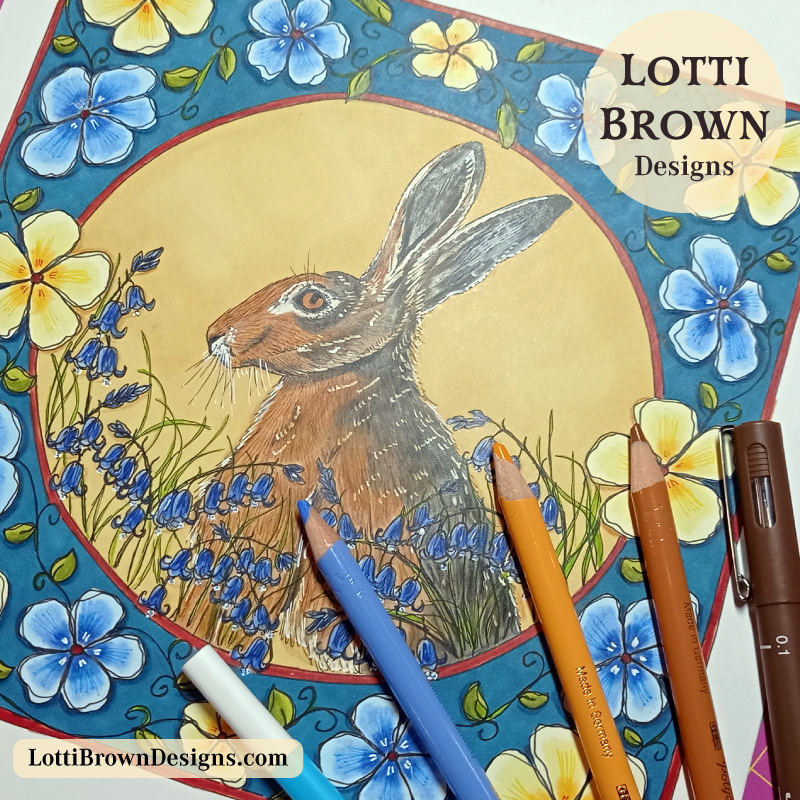 Square-format, brown hare coloured pencil and pen, hand-drawn art
You may have noticed I have two hare artworks featured on this page - one is A4 (portrait) format with brown and gold tones, and one is square format with blue and gold tones...
I love hares so much that I just wanted to keep on drawing them, so I did two formats, which I really enjoyed!
Both are available as sustainable art prints, notebooks, greetings cards, tote bags and clothing in my Teemill shop - see separate links for each artwork just below...
My Hare Artworks
Hare (Alertness, Energy, Seasonal Change)
If this hare (above) has caught your attention - her sudden movement, that alert stillness - this first piece was created to hold onto that fleeting moment.
It grew from those encounters where the hare seems both present and gone in an instant, carrying a quiet intensity and awareness.
Take a closer look at the brown hare artwork collection here...
It’s a piece that brings a sense of energy and quiet watchfulness into a space.


Hare (Wildness, Myth, Moon & Landscape)
If this hare (above) has resonated with you - with her sense of wildness, mystery, and connection to the land and cycles of the seasons - this piece was created to reflect that deeper atmosphere.
Inspired by the hare’s long presence in folklore and its link to seasonal rhythms, the drawing carries something of that timeless, shifting energy.
Take a closer look at the hare artwork collection here
A piece like this brings a sense of depth and quiet wildness into a space.

See both hare artworks below...
Explore more of my hand-drawn nature-inspired art from this page...
If you enjoy reading about the folklore of the natural world, you can browse a while in my Folklore Hub here...
You might also like to step into my little world of nature in my nature journals here...
Earlier Hare Artworks from My Archive
If you enjoy exploring different artistic interpretations, you might also like to see a couple of my earlier hare artworks, created using my previous mixed media and digital techniques. These older pieces are part of my Living Archive - still available as prints and products through my Redbubble store...
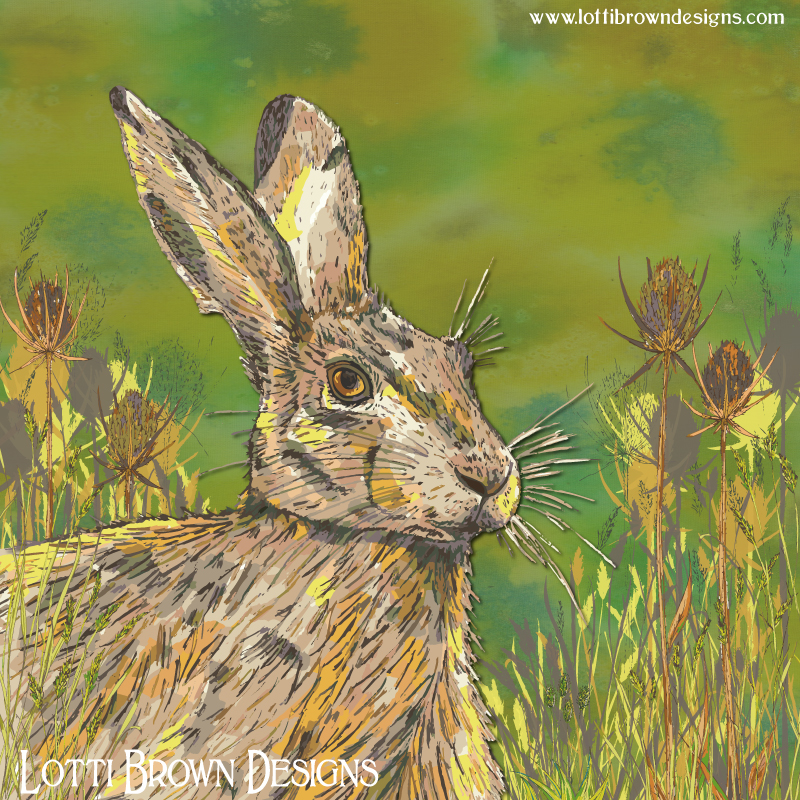
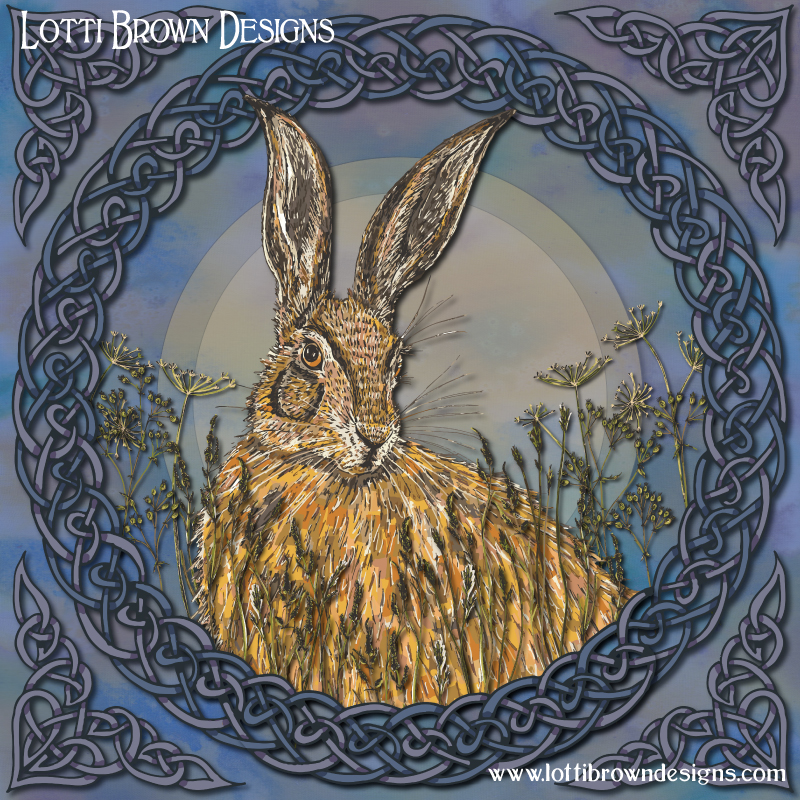
You might also like my earlier wildlife artworks, here - and my Celtic nature & wildlife artworks, here...
You can also explore more artworks, all from this page...
Further Reading/Resources
- The Druid Animal Oracle – book by P&S Carr-Gomm
- Beasts of Albion – book by M Gray
- The Leaping Hare – book by GE Evans & D Thomson
- Penguin Dictionary of Symbols
- https://www.tandfonline.com/doi/full/10.1080/00438243.2018.1515655
- https://www.ancient-origins.net/news-general/chickens-and-hares-0013546
- https://folklorethursday.com/legends/chasing-hares-stories-myth-legend/
- https://www.transceltic.com/pan-celtic/importance-of-hare-celtic-belief-and-our-duty-protect-all-wildlife
- https://www.all-creatures.org/articles/rf-theleaping.html
- http://www.chrischapmanphotography.co.uk/hares/index.html
- https://www.learnreligions.com/history-of-ostara-the-spring-equinox-2562485
- https://www.learnreligions.com/the-jataka-tale-of-the-selfless-hare-450049
- https://mythopedia.com/celtic-mythology/gods/ceridwen/
Websites above accessed 12th December 2025
Article originally written 2nd June 2020 and published on a previous version of this blog.

Shall we stay in touch..?
Each month, I share stories from my own nature journal, new art from my studio, and simple seasonal inspiration to help you feel more connected with the turning year - if you'd like to stay updated, please sign up with your email address below...
Recent Articles


-
Barn Owl Folklore & Meaning - Symbolism of the Barn Owl
Sep 15, 26 03:34 AM
 Explore barn owl folklore, symbolism and meaning, from ancient myths to British traditions. Discover the quiet wisdom and mystery of this ghostly bird.
 -
Bramble Meaning, Myth & Symbolism - Celtic Tree Calendar Art
Sep 02, 26 11:32 AM
 A look at bramble meaning, myth and symbolism as I share my bramble Celtic Tree Calendar art for the month of 'Vine'...
 -
Nature Journal Prompts
Aug 26, 26 04:05 AM
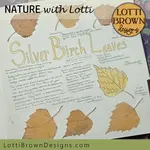 Easy nature journal prompts to inspire and encourage you - one per week...
Shop My Current Artwork Collections

My art is available as sustainable art prints, notebooks, greetings cards, tote bags and clothing in my Teemill shop.
Find my stockists for all my earlier artworks here...
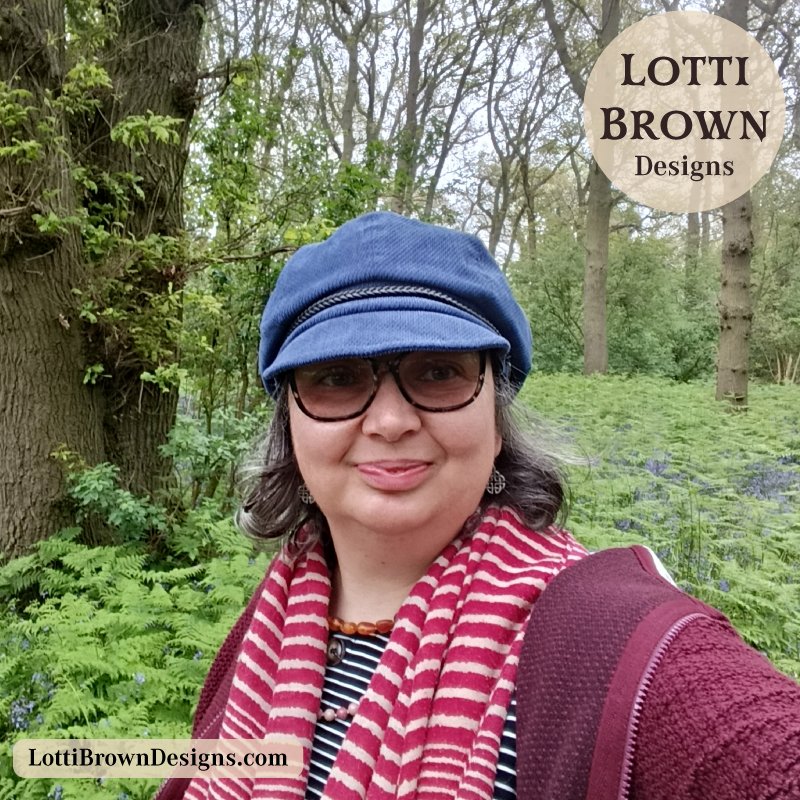
Lotti Brown is a self-taught nature artist and nature journaling educator whose hand-drawn work is inspired by wildlife, folklore, and close observation. With 18 years in creative fields and 10 years creating nature art, she brings deep practical experience to her work. Trained by the Wild Wonder Foundation, she shares nature journaling courses and guides online. Her artwork has been licensed internationally and exhibited at Goole Museum and Bridlington Spa in the East Riding of Yorkshire, UK.
Follow me:
Share this page: