
- Home
- Nature Journaling
- Seasonal Nature Journaling
- August Nature Journaling Ideas

August Nature Journaling Ideas
By Lotti Brown
Looking for August nature journaling ideas? This month I'm noticing ripening berries and seeds, gathering summer birds, tiny insects, harvest fields and the first quiet signs of the season beginning to change.
August is a month of turning - abundance becoming harvest, summer birds beginning to gather, seeds and berries replacing flowers, and even the weather reminding us how quickly a season can change.
There are so many things to notice in nature in August, but this year I've been particularly struck by the feeling of change…
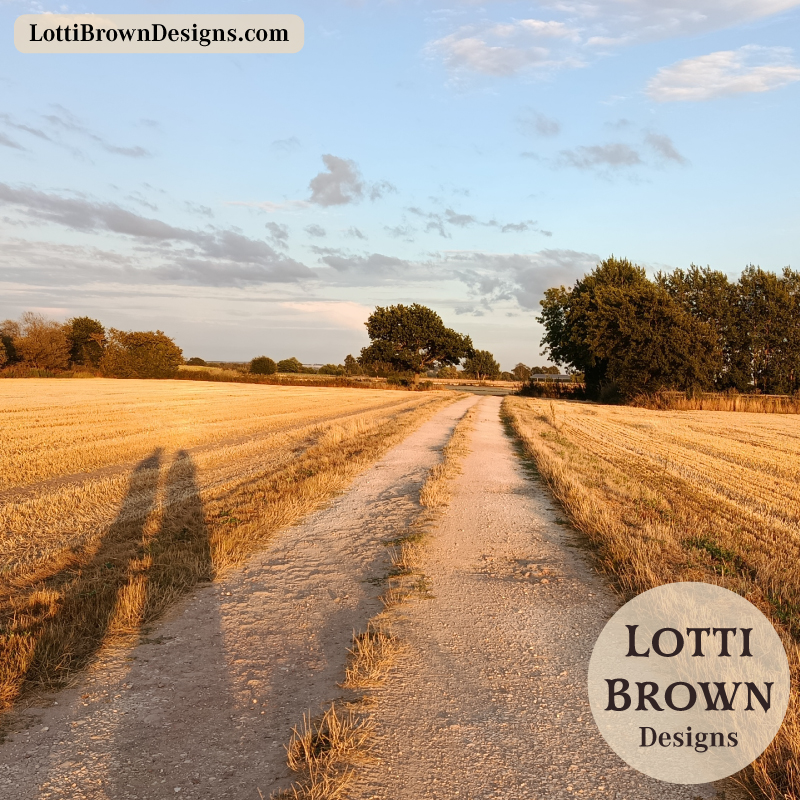 August walks through dry and dusty fields
August began for us in the heat, with days of over 30C heat making the fields dry and the birds quiet – our evening walks got later and shorter as it remained warm late into the evening and the fields felt empty and quiet, tiring rather than restorative…
But somewhere along the way, the month seemed to turn. The air cooled, the rain returned - and suddenly I noticed birds singing again. And green returned to the parched grass while we drank in the smell of rain on dry earth.
In the hedgerows, flowers give way to berries and seeds, while swallows and house martins gather together above the fields.
August still feels like summer, but it's a summer beginning to change...
If August is bringing extreme heat where you are too, I've shared some gentle ideas for nature journaling in a heatwave here, including ways to keep noticing without pushing yourself out into uncomfortable or unsafe weather.
Berries, Seeds & the Coming Harvest
With the extra heat and sun this summer, fruits, nuts and seedheads are ripe and ready – little splashes of colour in the hedgerows signalling that the season has begun to transition…
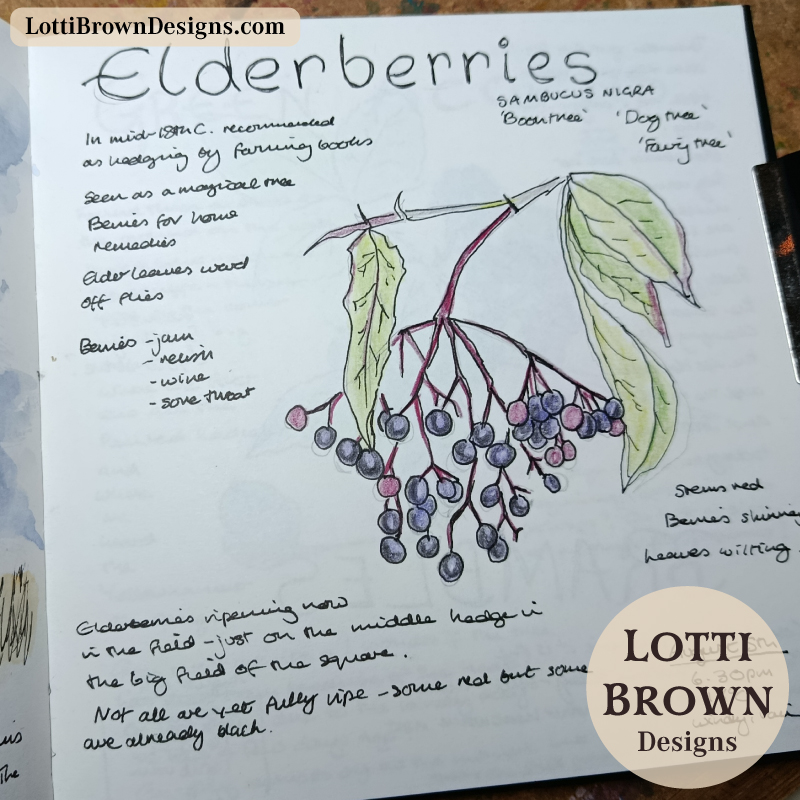 Elderberries are ripening
Tiny deep purple elderberries shine in clusters in the hedgerows – little promises of jams or cordial to make – some seem fully ripe and some still red, still ripening…
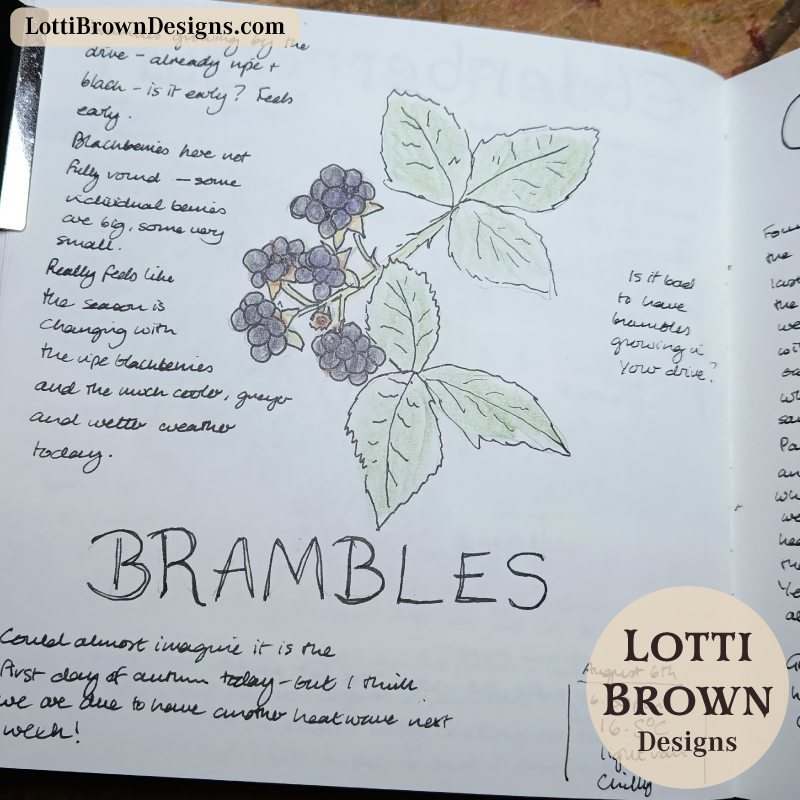 Ripe brambles in early August
Nearby, brambles are ripe and black – it feels early in the season (August 6th)…
And cheery red haws drip from hawthorn bushes…
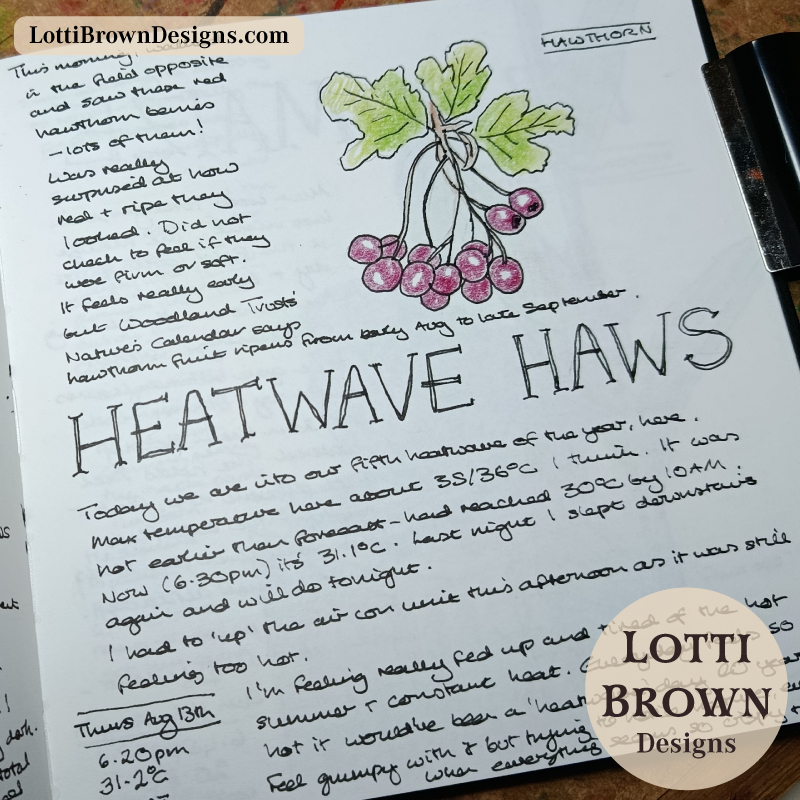 Hawthorn berries - already ripe and red
Old weather lore says that a heavy crop of haws and other berries foretells a hard winter ahead – although perhaps it's more comforting to simply know that, whatever winter brings, there should be plenty of food waiting for the birds.
It feels strange to see these first signs of autumn, even while we feel like we’re in the midst of summer days…
Perhaps the seasons don't really change as neatly as our calendars suggest. Autumn doesn't suddenly arrive one September morning - its first tiny beginnings are already tucked into August.
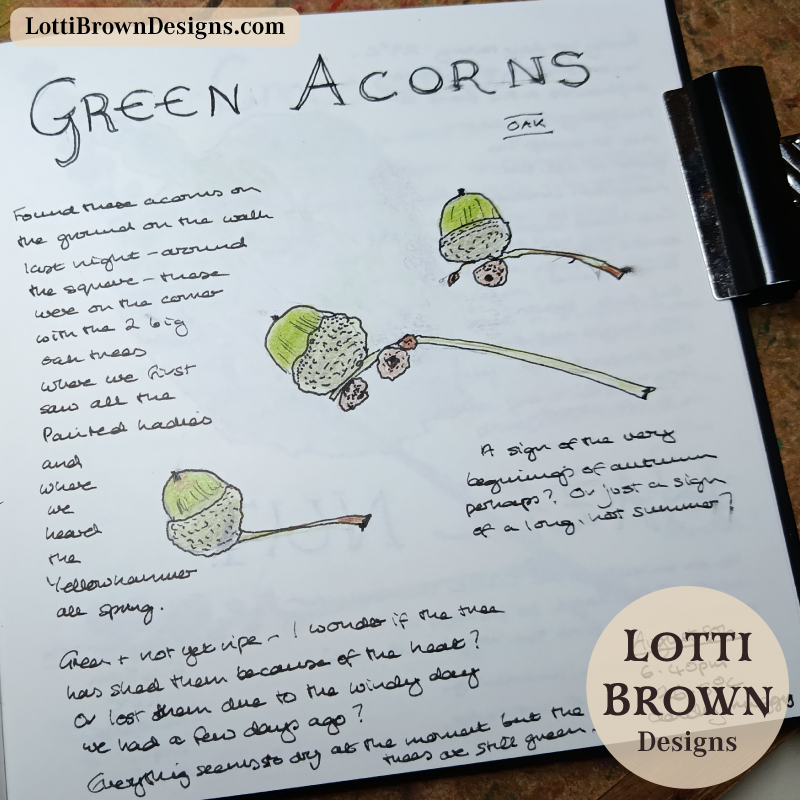 I found these bright green acorns on the ground beneath the old oak tree
We found these vibrant green acorns on the ground near the big old oak tree after a windy day – they’re clearly not ripe yet, so we wondered if it was the wind that had dislodged the acorns, or if the extreme heat had caused the oak to shed excess nuts that it couldn’t continue to feed and grow.
I don't know the answer, but I like having questions like this in my nature journal too - not every noticing needs to end in certainty.
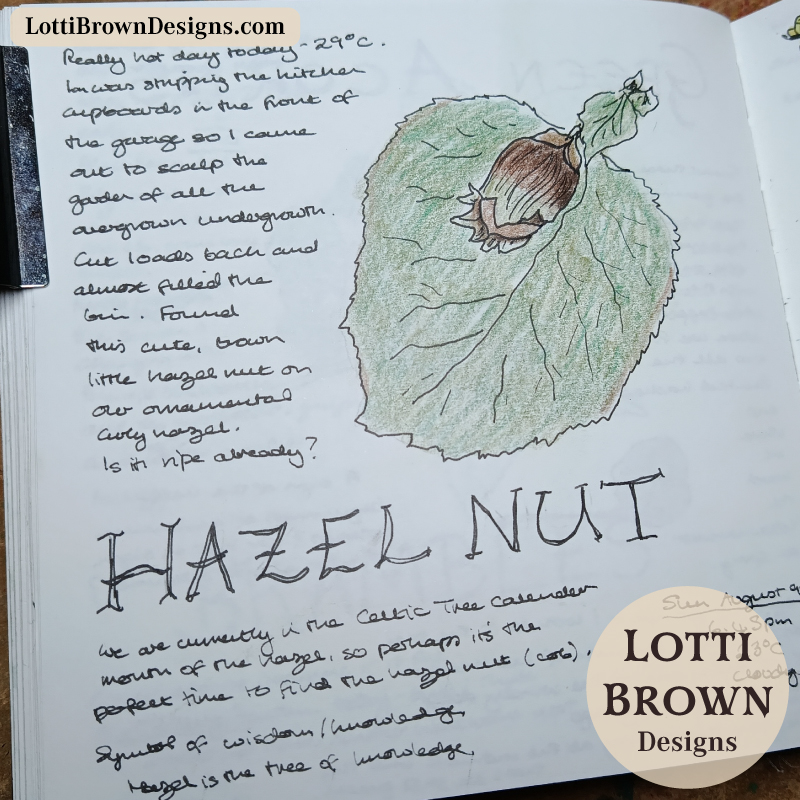 Hazelnut
In the garden, I found a little hazelnut growing on my ornamental hazel tree – we've just moved into the Hazel period in the modern Celtic Tree Calendar, so it seems a perfect find for the season.
And our crocosmia flowers, that have barely seemed to flower this year, are starting to grow little seeds…
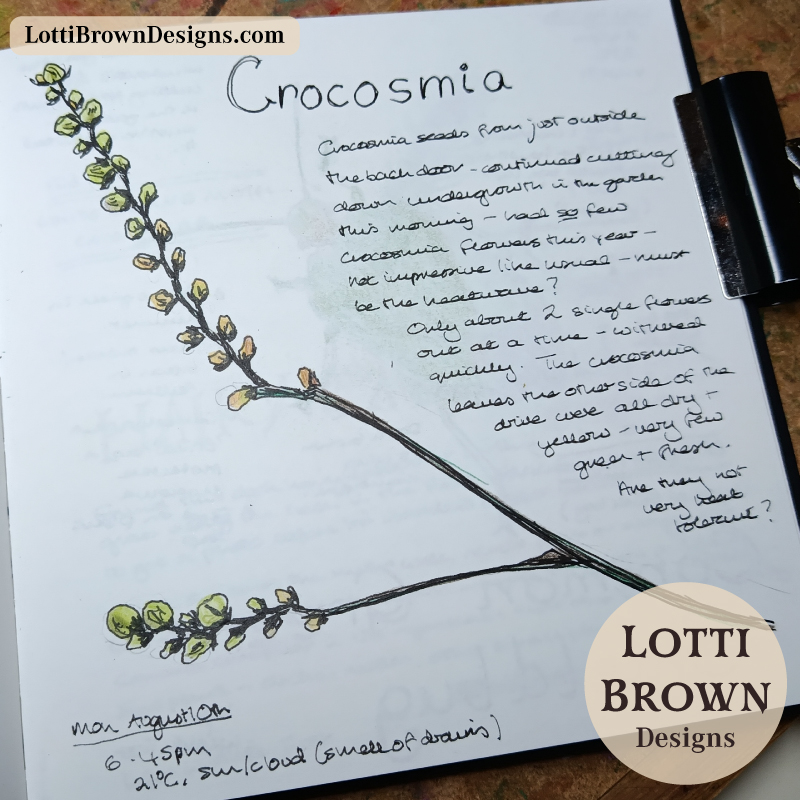 Crocosmia seedheads
And back in the field, the wheat and barley are harvested and the fields just flat stubble now – but the field of maize grows tall still, even while the plants around the edges seem dry and bedraggled. Even these smaller plants are growing fattening sweetcorn cobs – and it’s nice and somewhat reassuring to see that the growth continues even through the heatwave weather and hottest days.
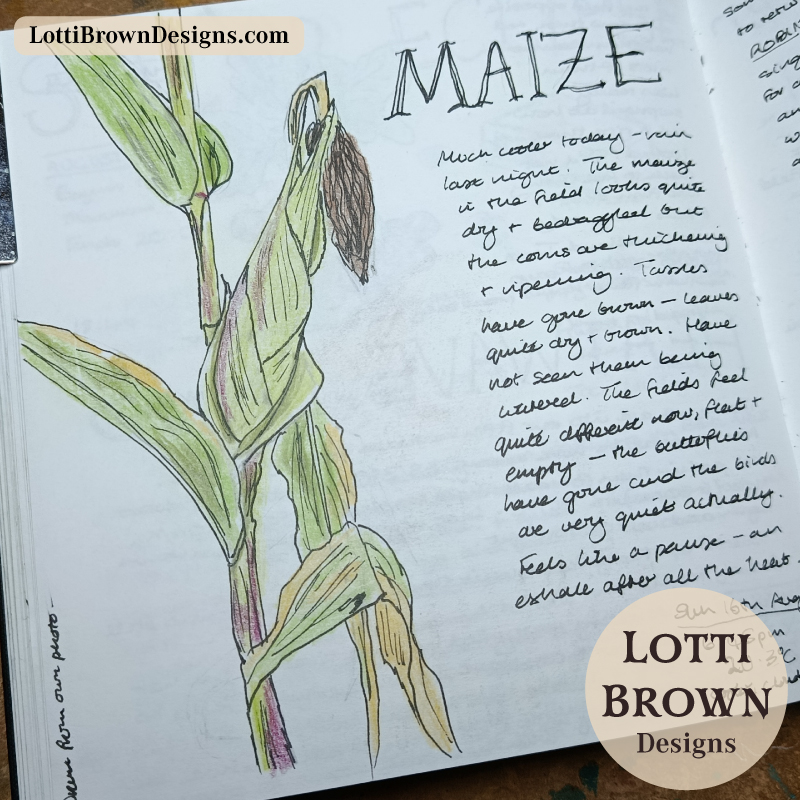 Maize ripening
August Flocks in Flight
For me, one of the most beautiful things to notice in late summer is the gathering of swallows and house martins...
Walking along the field trackways in August, as the clouds gather, they seem to bring with them the flocks of swallows and house martins who swoop and dance in the sky, sometimes so close we can hear their tiny wings – chattering all the while…
The youngsters are out with the adults, swelling the numbers, and it’s a true sight to see so many of our summer birds taking to the skies, creating a beautiful spectacle that seems much bigger this year than I've noticed in previous summers…
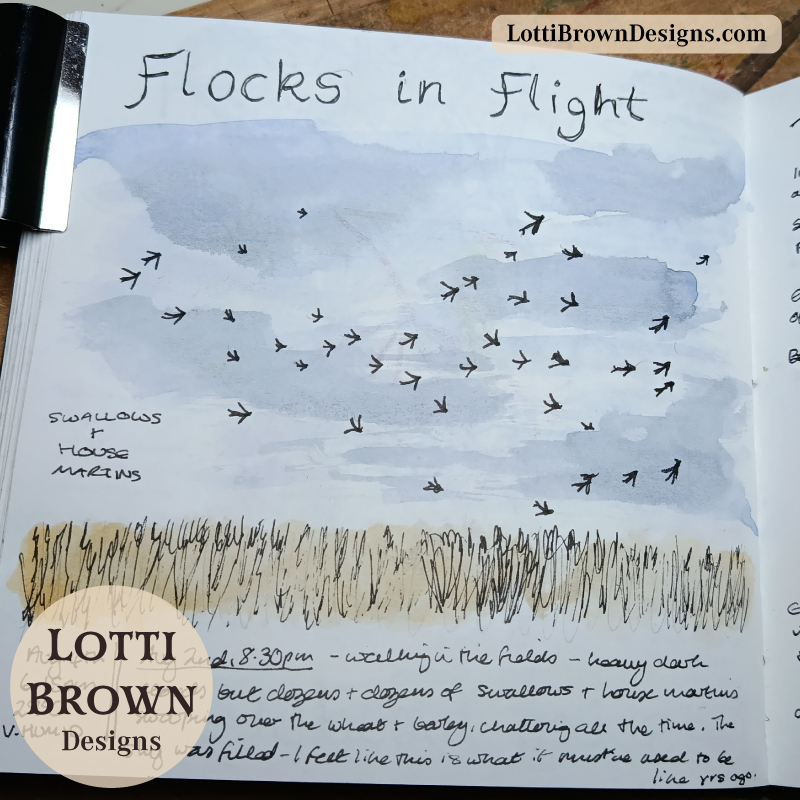 Summer flocks of swallows and house martins fill the skies
The birds seem so numerous that I wonder if this is what it was like in times past, when wildlife and birds were such a feature of everyday life and folklore.
Perhaps they gather now, feeding together and learning to fly as a group, ready for their coming migration journey – seeing them like this seems poignant: right at the height of summer, the intensity of the birds in the skies already speaks of their coming departures.
Perhaps that's part of the poignancy of August: sometimes abundance itself is the first sign that something is about to change.
Solar Eclipse
A solar eclipse is a real highlight in the natural world – the moon passes in front of the sun and blocks it, sometimes completely, sometimes just partially.
Although this time there was a complete solar eclipse in Spain, here in the UK, it was just a partial solar eclipse – around 91% of the sun covered where I am in Yorkshire.
I remember the total eclipse in 1999 – we all went into the car park from my office job and watched the skies become surprisingly dark.
In 2015, I watched the partial solar eclipse through a colander – this time, I decided to build myself a pinhole eclipse viewer…
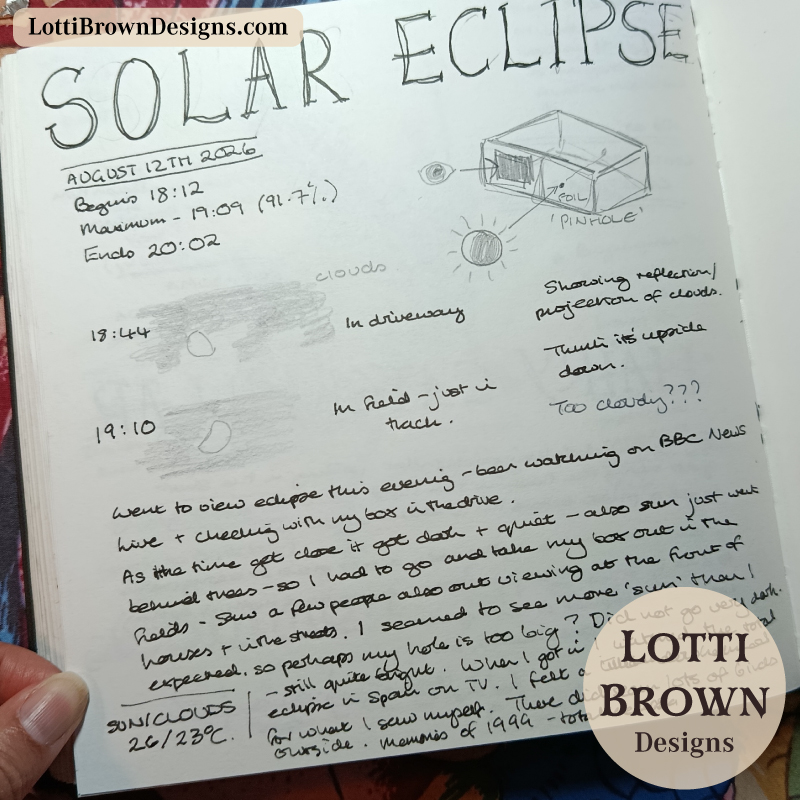 Recording the solar eclipse in my nature journal
I waited expectantly for the appointed hour in the evening – it was a hot day, still 26C at the start of the eclipse hour…
I started watching the eclipse in my front drive through the colander and my viewer box – but as the hour came close I had to relocate out into the field as the sun went behind a tree…
The sky grew darker, the temperature dropped by 3C, and the birds began their twilight song – but almost as soon as the shadows fell, they were lifted again and the bright sun returned.
I viewed through my viewer but found the moment of the fullest (partial) eclipse a little underwhelming if I’m honest…
Perhaps I built my box a little wrong? I’m not sure – I will say I was looking on enviously at neighbours in my street sat out in their eclipse glasses – and from what I saw on TV, it looks like they got an interesting experience.
At least in the modern world, I can relive the eclipse experience via TV or live feeds for a more complete and satisfying experience.
The eclipse itself may have been a little underwhelming through my homemade viewer, but looking back, perhaps the most interesting part was everything happening around it…
Feeling the temperature fall, watching the light change and hearing the birds respond as if evening had suddenly arrived. Nature journaling doesn't always have to be about the thing we expected to notice.
And Then the Rain
After so many heatwave days, with lawns and fields parched and wildfires starting all over the country, we all sighed a deep sigh of relief as the latter part of August turned much cooler and the rains finally came…
‘Petrichor’ is the smell of rain on dry earth and it’s such a distinctive smell, and apparently instinctively appealing – perhaps we recognise the importance of rain and crave it after such a hot summer.
It came overnight, here, and it was like waking up in a different world – while the grass still looked pale and scorched, the air was soft and damp and the smells of the dusty earth receiving its first splashes of water were almost intoxicating…
Later, walking under the trees, the smells of the dampness, the soil softening, the leaves beginning to degrade in the wet and the trees dripping down felt like a place completely changed – the first scents of autumn weather…
And the birds began to sing too – after the quiet days of July and August, the birdsong slowly started to return, beginning with the robin…
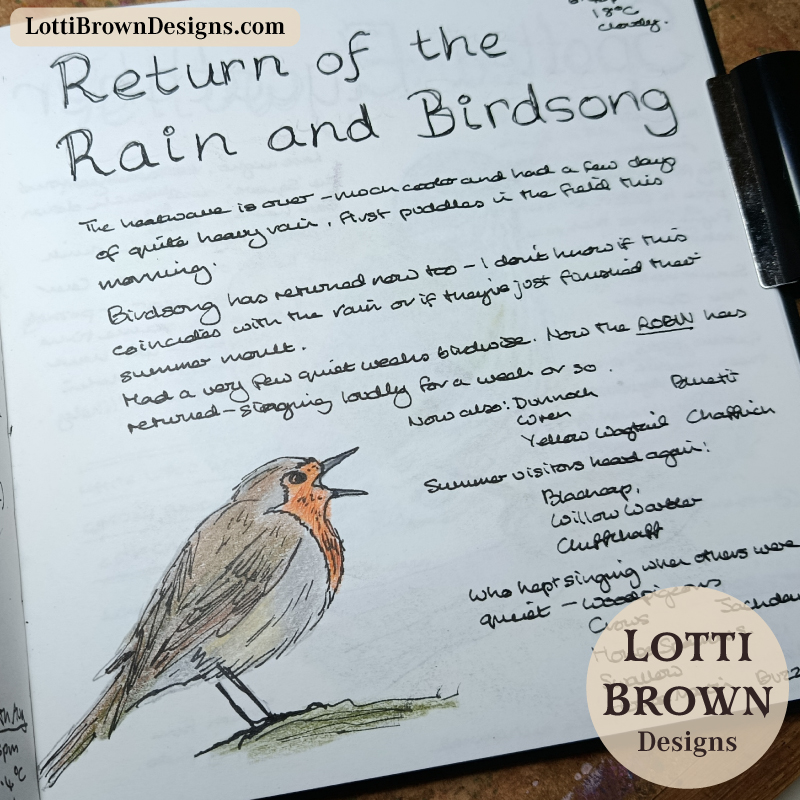 August finally sees the return of rain and birdsong
Gradually we hear some of our other summer favourites join him: wren, yellow wagtail, blue tit, chaffinch, blackcap, willow warbler, and chiffchaff.
Still, it’s nothing like those heady spring days of warbling birdsong – yet the return of the rain and the birdsong feels like, after the stillness of the heat, the world has started breathing again and coming back to life…
And as the world seems to come back to life, it feels like I can exhale again, too, and relax – I think I was holding myself taut and tight through the unfamiliar heatwave days and weeks as the world felt so unnatural and still…
It's one of those moments that reminds me that noticing nature isn't only about recording what's happening outside us. Sometimes, in paying attention to how the world changes, we notice something changing inside ourselves too.
Now the cool and the rain returns, I can relax again and enjoy watching life and activity return again to the fields…
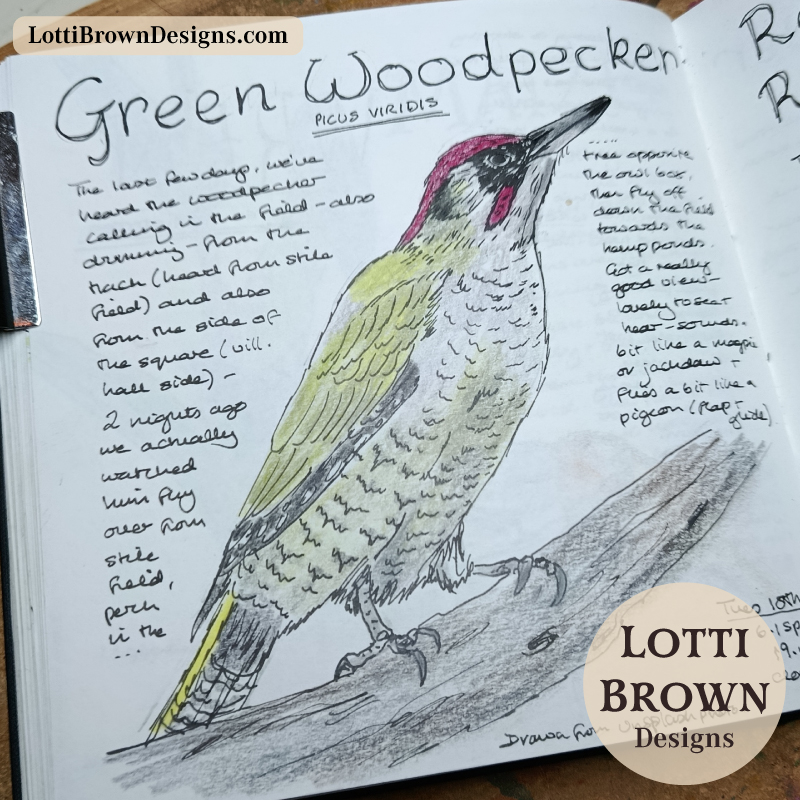 Green woodpecker
We notice a green woodpecker who often seems to be about as we walk – calling and even pecking on wood with his distinctive hammering. We spot him alight in a tree – and fly off again in a distinctive flap and glide pattern.
Then, venturing further in the cooler weather, down under the tall trees at the bottom of the lane, we hear a Spotted Flycatcher – our first this year – but it’s a location where we found him last year, so it’s quite exciting to hear him again this year too.
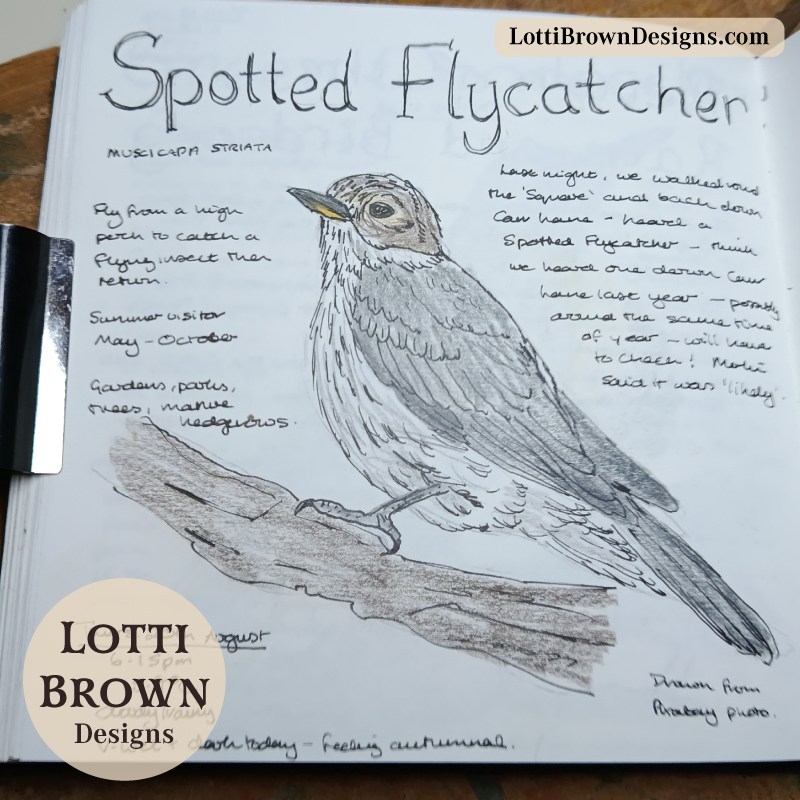 Spotted Flycatcher
A Pigeon Family
While the hedgerows are fruiting and summer migrants are preparing to leave, somewhere close by a new little life is beginning.
In the corner of our trellis arch around our front door, seeming slightly out of sync with the rest of the season, a woodpigeon settles down into her nest…
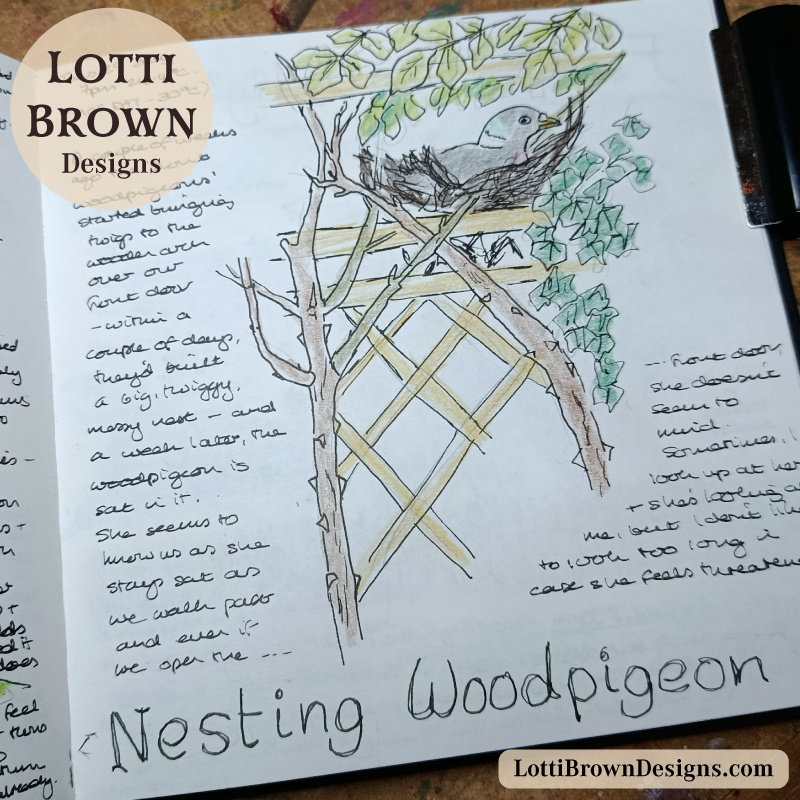 Nesting woodpigeon
I spotted her at the very end of July (too late to get into my July article) having spent a couple of days bringing twigs to a shambolic looking nest that seemed to lose twigs as fast as it gained them at first and we never thought would see the light of day…
After a couple of weeks sat quietly on her nest, remaining even while we used the front door close by, we spotted a sweet pigeon baby, nestled up under her breast, looking for all the world like a baby penguin in its protected pose.
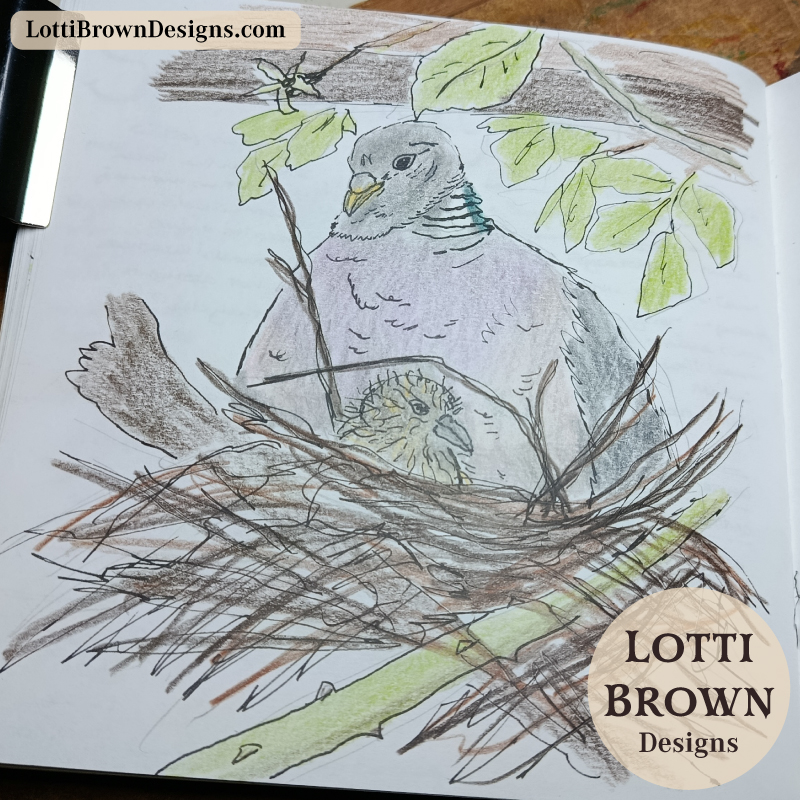 Mama woodpigeon with her baby
Then, another – there’s two! Grizzled little things, dark brown and grey with yellow fluff and enormous beaks.
I don’t want to peer too close and frighten them, but they look sweet and at the moment sit quietly and wait for mama to return before stretching up to be fed. It’s early days yet, but I hope we’ll be able to see them grow and fledge over the coming weeks…
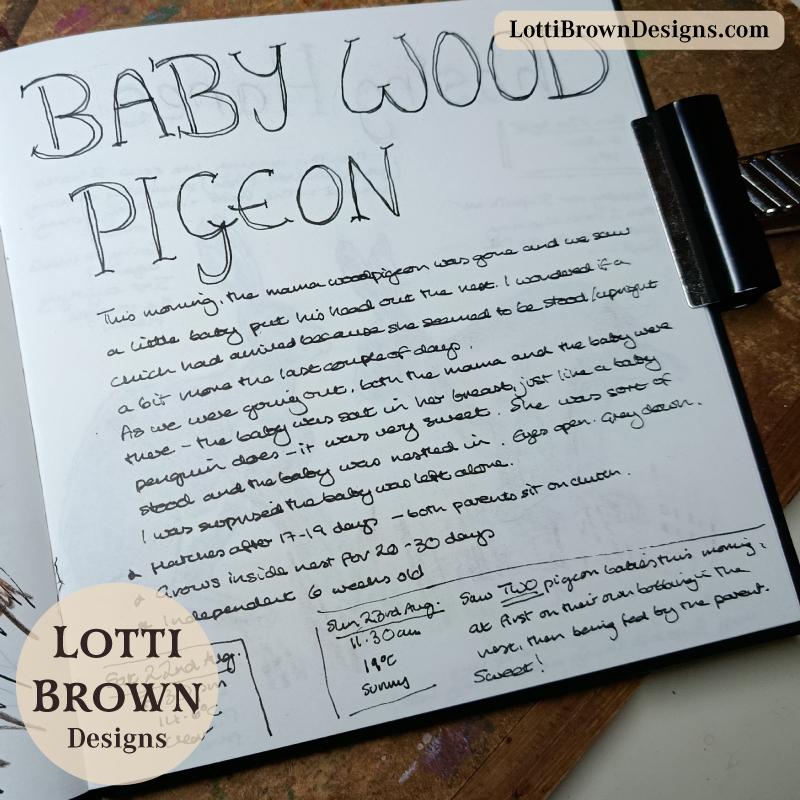 Recording the baby woodpigeon we spotted in the nest - then we realised there's two!
Nature rarely seems to follow one storyline at once.
Some creatures are preparing to migrate. Plants are setting seed. Harvest is underway. And our woodpigeons are raising babies!
Small Things I Nearly Missed
It pays to look closely when you’re nature journaling – here are some little treasures that I might’ve missed…
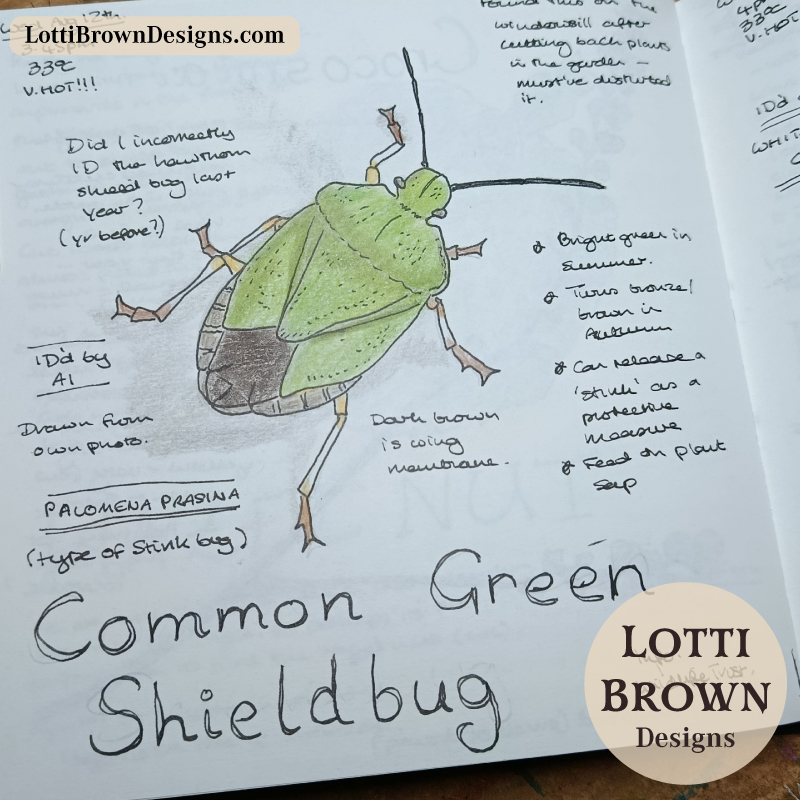 Common Green Shieldbug
A lovely green shieldbug sitting on my windowsill – I think I must’ve disturbed it while cutting back some plants in the garden.
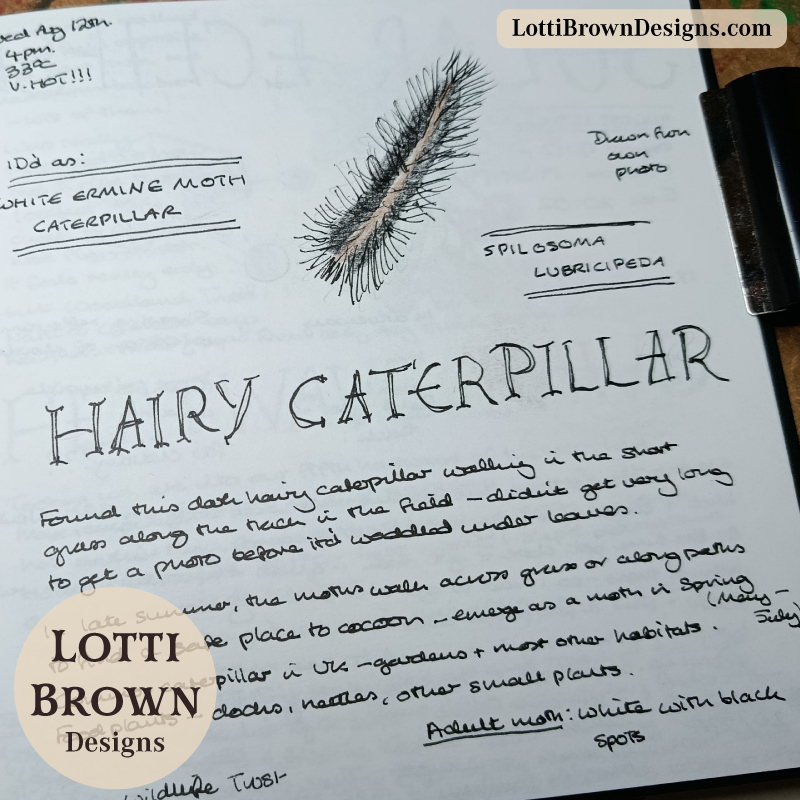 Hairy caterpillar
This incredibly hairy caterpillar waddling along the track in the field – I’m not entirely sure, but I think it’s a White Ermine Moth caterpillar – in spite of the black colouring of the caterpillar, it should emerge into a white moth with black ermine-like spots.
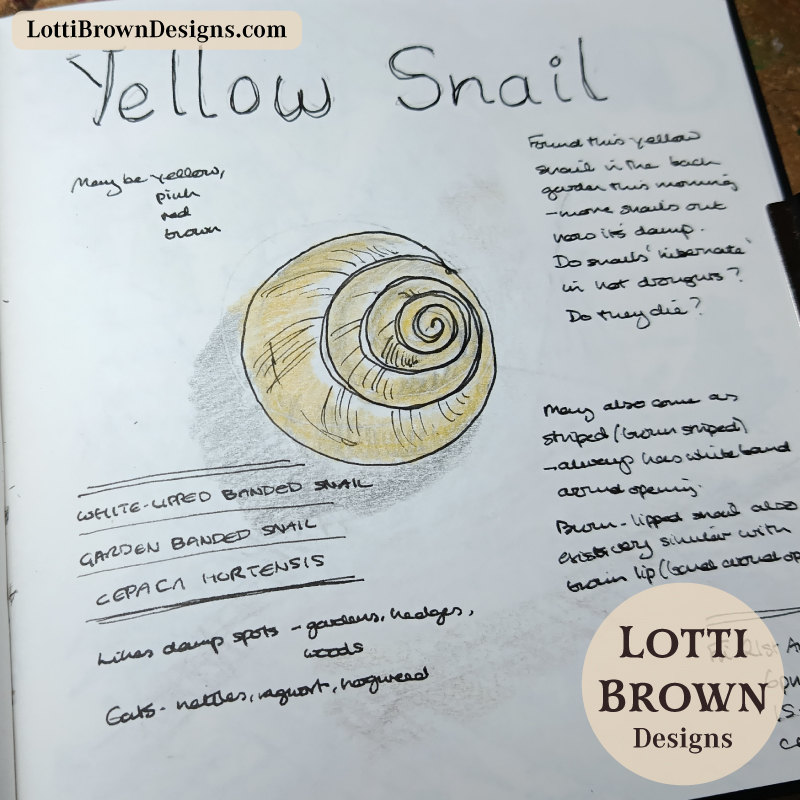 Yellow snail
A beautiful yellow snail – ventured out with the first rain in months.
And a hummingbird hawkmoth that I just happened to see while I was stood in the drive waiting for my husband – it was feeding on some of our Red Valerian flowers – it wasn’t even particularly sunny as it was quite late on in the evening.
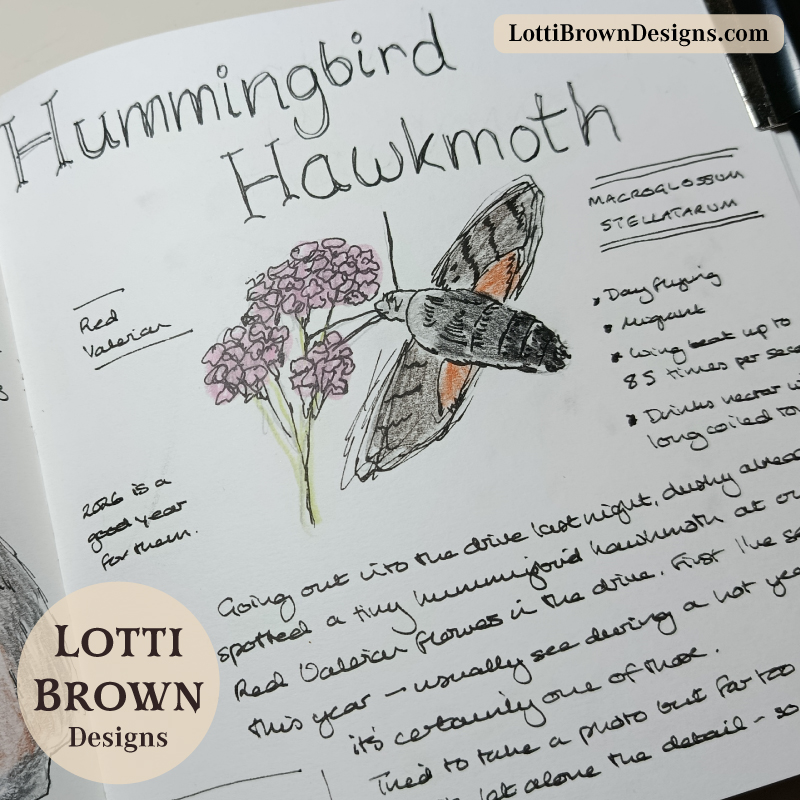 Hummingbird hawkmoth
We have seen them in the front garden, feeding on Red Valerian flowers before – usually only in a very hot year, which of course we’ve had this year.
The first time we saw one, we thought it was an actual tiny hummingbird – but actually, it’s an amazing little moth that hovers with ultra-fast beats of its wings and uses its long tongue to feed on the nectar of flowers like the Red Valerian.
Chasing Hares
Late in August, a surprising sight – two hares chasing each other in the stubble of a wheat field. We actually spotted this twice from the car in two different locations miles apart – I think the hares are easily visible now in the short stubble…
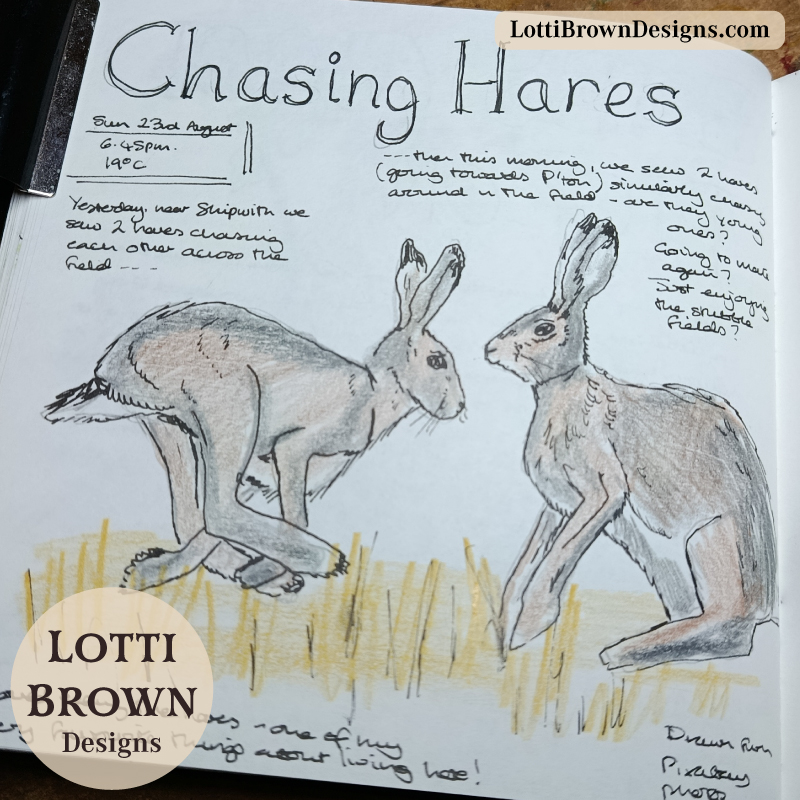 August hares
Were they youngsters playing, adults chasing, or was something else going on entirely? I don't know – but it was wonderful to see and the first time I remember seeing hares chasing like this in the fields at this time of year.
The crops being harvested changes what we can see too. Perhaps the hares have been there all along and it’s only now, with the wheat reduced to stubble, that their lives become briefly visible to us.
August begins in the intense heat of midsummer, yet by the end of the month berries are ripening, seeds are forming, crops have been harvested, swallows are gathering, the rain has returned, and the birds are singing again...
And yet there's a baby pigeon in a nest!
Nature is never static – it’s always in the middle of becoming something else – and that’s why nature journaling is so interesting, there’s always something new to look out for, something different to notice, and some new aspect to record.
August Nature Journal Prompts & Ideas
Some ideas for your own nature journaling in August...
You don't need to do them all (or any at all). Choose whichever catches your attention this month.
- Find a sign of the season changing. It might be a berry, seedhead, changing leaf, gathering bird or simply a difference in the light.
- Notice something that has transformed. Can you find a flower that's now becoming fruit or seed? Draw it, photograph it or simply record what has changed.
- Watch the sky. Look for gathering birds, changing clouds, the moon or an astronomical event. What happens when you make the sky itself your nature journal subject?
- Look for one tiny creature. A snail, caterpillar, beetle, bug or moth is enough. What do you notice when you give it your full attention?
- Notice what happens after rain. Listen for birds, look at the plants, smell the air and notice how the world - and perhaps you - responds.
- Record one August moment you want to remember. It doesn't have to be important. A swallow overhead, the taste of a blackberry, a hare disappearing across a field...
- Finish the sentence: "The thing I'll remember most about August is..."
I hope these August nature journaling ideas encourage you to notice some of the small changes happening around you as summer begins to turn...
The approach of September feels like the beginning of another turn of the seasons – and, for this journal, the end of a year spent noticing nature month by month.
The seasons change, nature changes and I think as we notice nature and come back to it season after season and year after year we begin to notice the changes in ourselves too…
We grow older, perhaps a little wiser...
And our journals change as we do – the style, the subjects, the drawings, the things that catch our attention.
They become a record of our own personal journey and our own personal relationship with nature as much as a record of what’s happening in the natural world itself.
Over this year of seasonal nature journaling, we've learned to notice, to look and to see. But perhaps the loveliest thing I've discovered is that a year of paying attention doesn't leave me feeling as though I've seen everything. It makes me realise how much there still is to notice.
So, as the seasons turn once again, perhaps we don't need another list of things to look for. We can simply keep looking, keep wondering, and see where our curiosity takes us next…
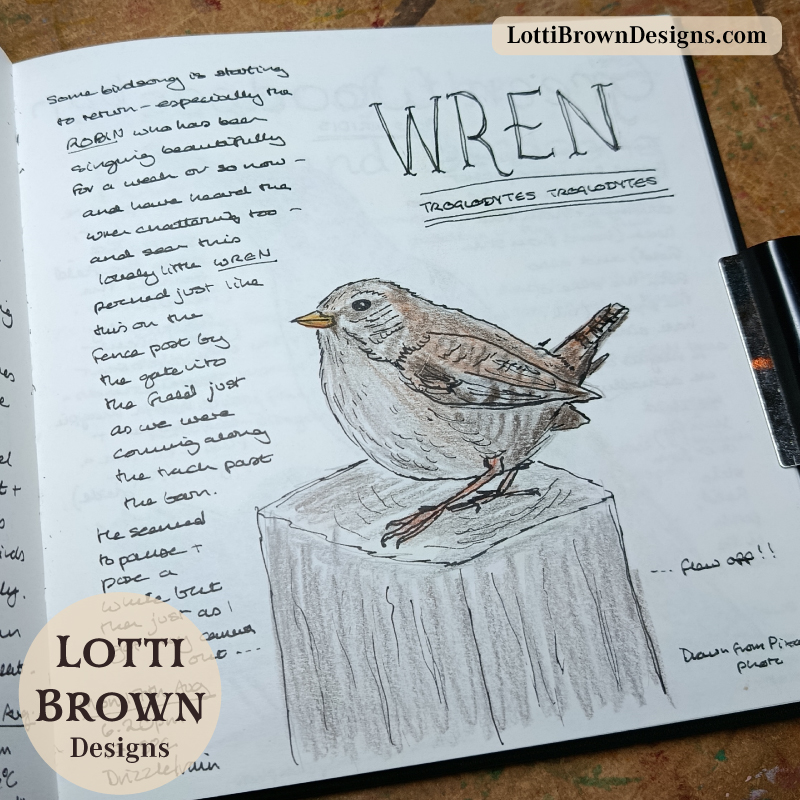 August Wren
More to Explore
You can also explore my earlier August Nature Journal here... and summer journaling pages here...
Find out what happened in July, here... Or jump ahead to September, here...
You might also like my heatwave nature journaling page here and my nature journaling in everyday life page here...
If you'd like weekly prompts for your nature journal, you can find those here...
If you're new to nature journaling, or just ready to explore the topic further, start in my nature journaling hub here...
I also have a free guide to get you started here...
Deepen Your Nature Journaling Practice
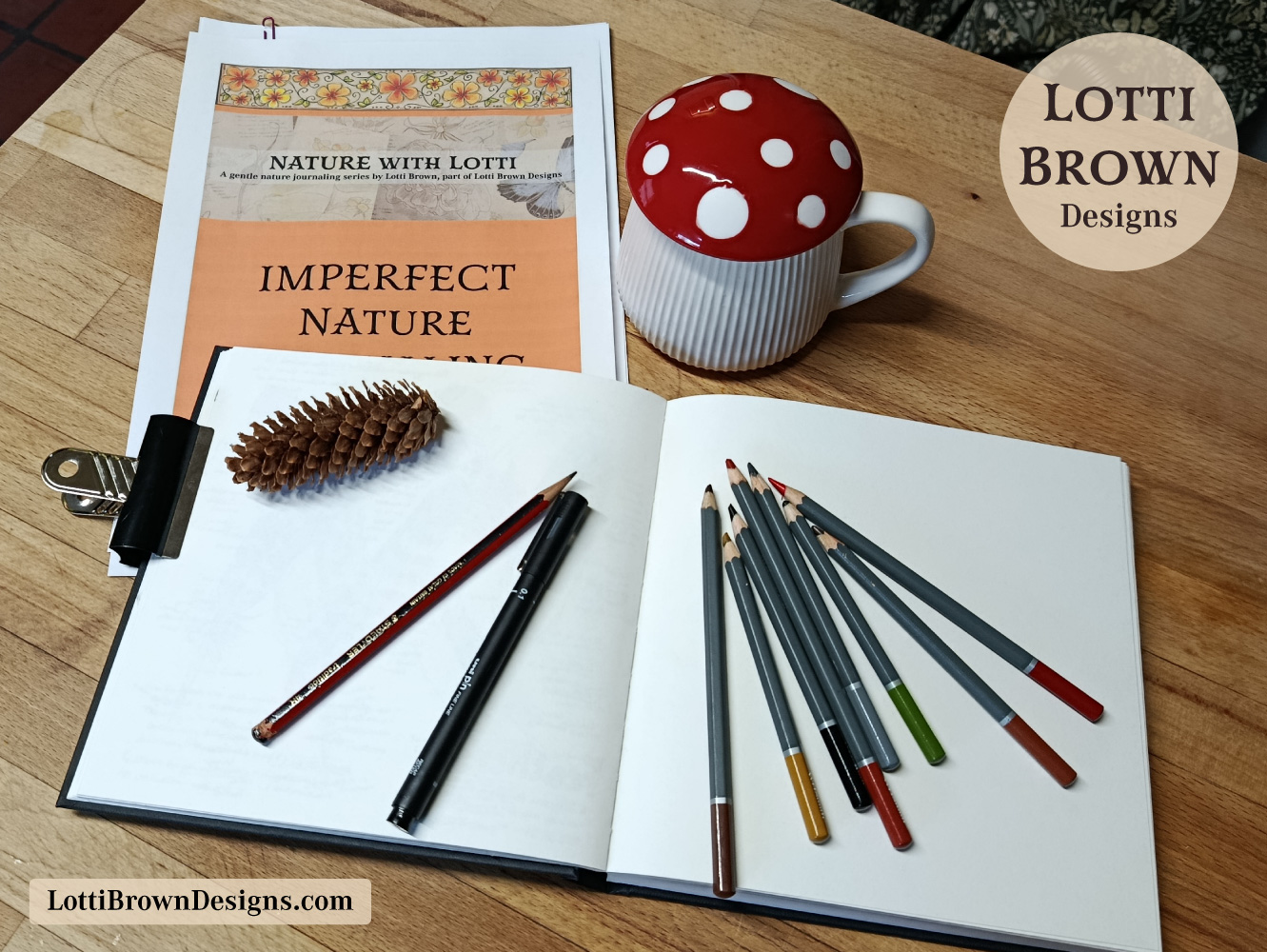 Deepen your nature journaling practice with me...
If you’ve enjoyed my nature journaling reflections, you might also like my 20-lesson course, Imperfect Nature Journaling.
It’s a gently structured, self-paced journey designed to help you:
• Slow down and notice more deeply
• Build confidence in drawing and observing
• Create a calming journaling ritual you can return to
• Feel more connected to the seasons and the natural world
No perfection required. Just curiosity and a notebook.
You can explore the course here whenever you’re ready...
P.S. If you’re just beginning - or would like something quieter and more simple to start with - you might first like to get started with my free 'Getting Started' guide or gain momentum with my 'Gentle Introduction' guide to help you through your first few pages - here...

Shall we stay in touch..?
Each month, I share stories from my own nature journal, new art from my studio, and simple seasonal inspiration to help you feel more connected with the turning year - if you'd like to stay updated, please sign up with your email address below...
Recent Articles


-
Barn Owl Folklore & Meaning - Symbolism of the Barn Owl
Sep 15, 26 03:34 AM
 Explore barn owl folklore, symbolism and meaning, from ancient myths to British traditions. Discover the quiet wisdom and mystery of this ghostly bird.
 -
Bramble Meaning, Myth & Symbolism - Celtic Tree Calendar Art
Sep 02, 26 11:32 AM
 A look at bramble meaning, myth and symbolism as I share my bramble Celtic Tree Calendar art for the month of 'Vine'...
 -
Nature Journal Prompts
Aug 26, 26 04:05 AM
 Easy nature journal prompts to inspire and encourage you - one per week...
Shop My Current Artwork Collections

My art is available as sustainable art prints, notebooks, greetings cards, tote bags and clothing in my Teemill shop.
Find my stockists for all my earlier artworks here...

Lotti Brown is a self-taught nature artist and nature journaling educator whose hand-drawn work is inspired by wildlife, folklore, and close observation. With 18 years in creative fields and 10 years creating nature art, she brings deep practical experience to her work. Trained by the Wild Wonder Foundation, she shares nature journaling courses and guides online. Her artwork has been licensed internationally and exhibited at Goole Museum and Bridlington Spa in the East Riding of Yorkshire, UK.
Follow me:
Share this page: