
- Home
- Nature Journaling
- Seasonal Nature Journaling
- Winter Nature Journaling - January Stillness

Nature Journaling in Winter
January Stillness
By Lotti Brown
Nature journaling in winter - a January nature journal inspired by bare trees in winter, quiet landscapes, winter birds and the slow return of light - a season of stillness and noticing.
January is a month of still and quiet after the busyness of Christmas and the excitement of the New Year. It could be a dark and difficult time, with the cold and the dark after the twinkling lights of Christmas, but I’ve been trying to lean into the calm, quiet stillness of nature to appreciate the lessons of the season more.
Actually, January asks very little of us - just to notice what remains when everything else is quiet...
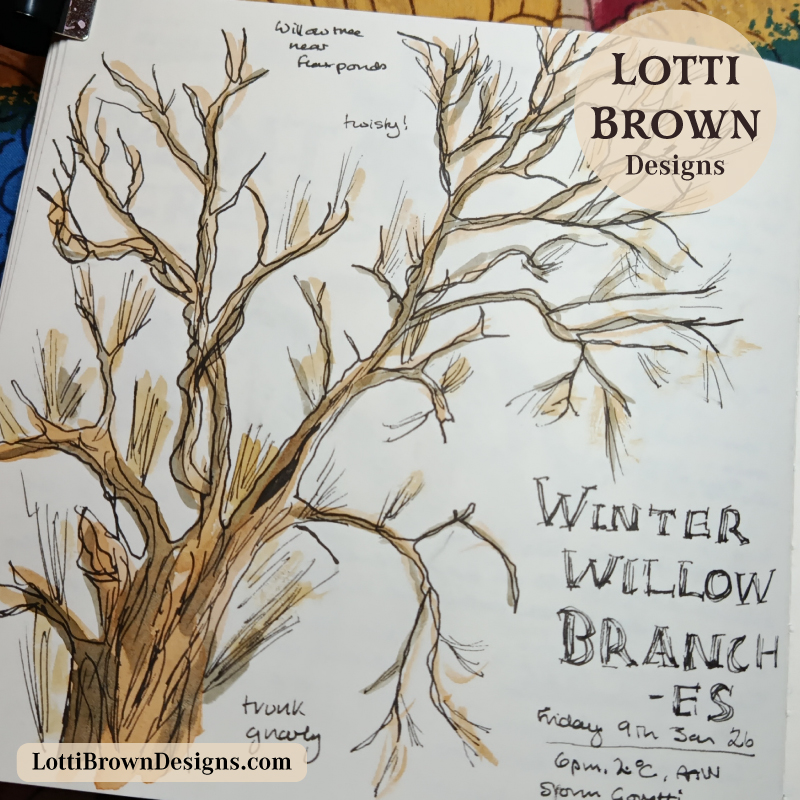 Drawing the branches of winter trees in my nature journal
Nature Journaling in Winter - Finding Strength in Stillness
For a January nature journal, there does seem to be less to draw from – our gardens and countryside are not filled with flowers and plants, colour and joy. So we need to look more closely to see.
The quiet of January, deep midwinter, reveals the structure of nature – what’s essential, the foundations of the year – the core strength and resilience of the natural world and not its abundance.
So I approached January as a month of quiet presence, of noticing, and feeling the strength and structure of the stillness – everything extraneous stripped back, leaving us with the simple heart of the year.
This is a time for slow nature journaling in winter – and mindful nature journaling...
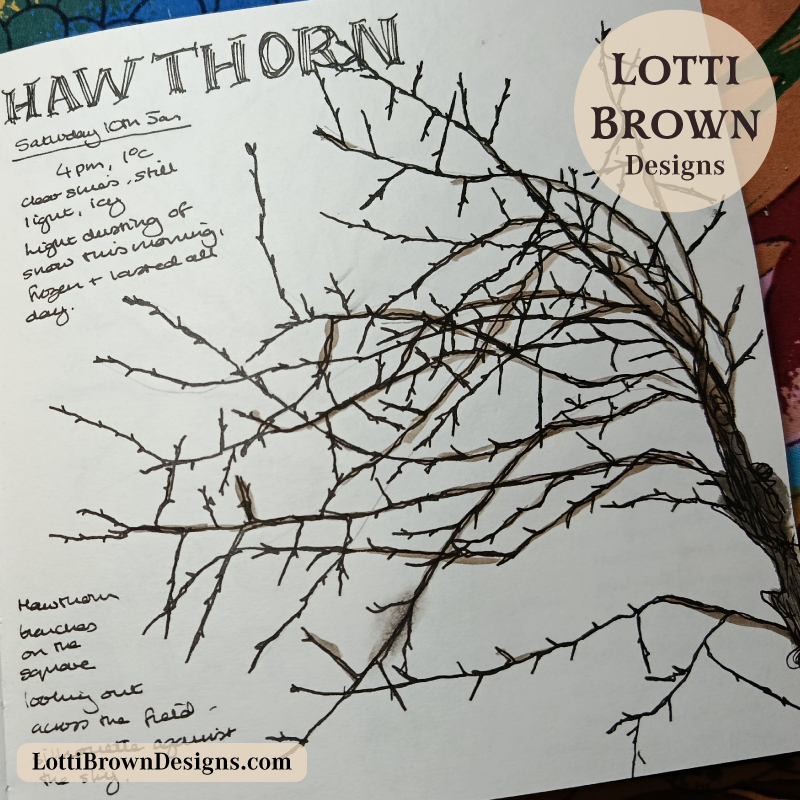 Drawing the branches of hawthorn in my January nature journal
Trees in Winter – The Bones of the Landscape
January is the month of bare trees – empty branches, which used to seem stark to me. Winter nature journaling invites us to notice structure rather than colour, so this year, I’ve been taking the opportunity to appreciate the structure of the trees and to see the beauty of the twisty branches.
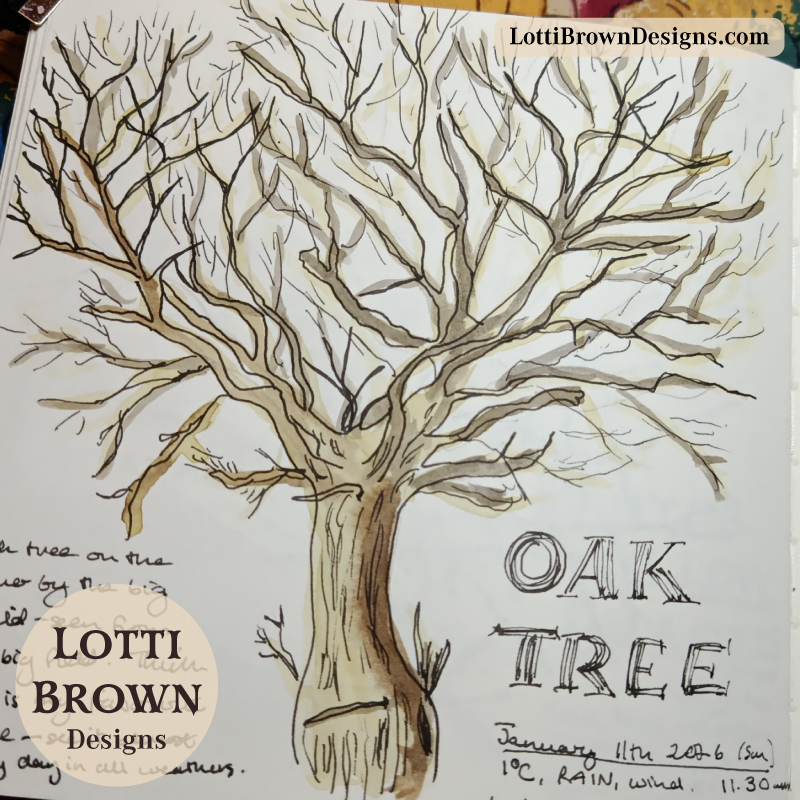 Sketching a winter oak tree in my January nature journal
Each tree is unique and beautiful in its own right – its branches growing in a unique pattern which tells us the story of that individual tree.
When the winter sun shines in January, shadows cast upon the branches of trees create interesting patterns which move in the wind, creating a world of life, light and movement in the bare branches.
It was a lovely opportunity to spend some time with individual trees, trying to follow the routes of the branches and twigs with my pen (nearly impossible for some trees!). Noticing the differences of shape, colour and texture that go unnoticed in summer.
The still winter trees feel like eternal symbols of patience, endurance and trust – the trees have seen decades of winters in many cases, and in the stillness of the season they know to rest, holding onto the seeds of Spring. There is no excess, just the stillness of a deep enduring strength that we can hold onto in the darkness of January.
 Beautiful winter tree (species unknown)
Trees are notoriously hard to identify in winter when they don’t have leaves, flowers, seeds or nuts – and I’ve found that this can be strangely freeing…
I don’t think it’s always necessary to identify the trees we explore in our nature journal – I haven’t identified all the trees I saw this month. And we can feel connected to nature just by noticing their beauty – but it can also be fun, sometimes, to learn to identify the trees we see around us.
I bought a small booklet from the Field Studies Council to help identify winter trees from the twigs, which I found extremely helpful (I liked the photo version a lot, but personally, I couldn’t get on with the other version).
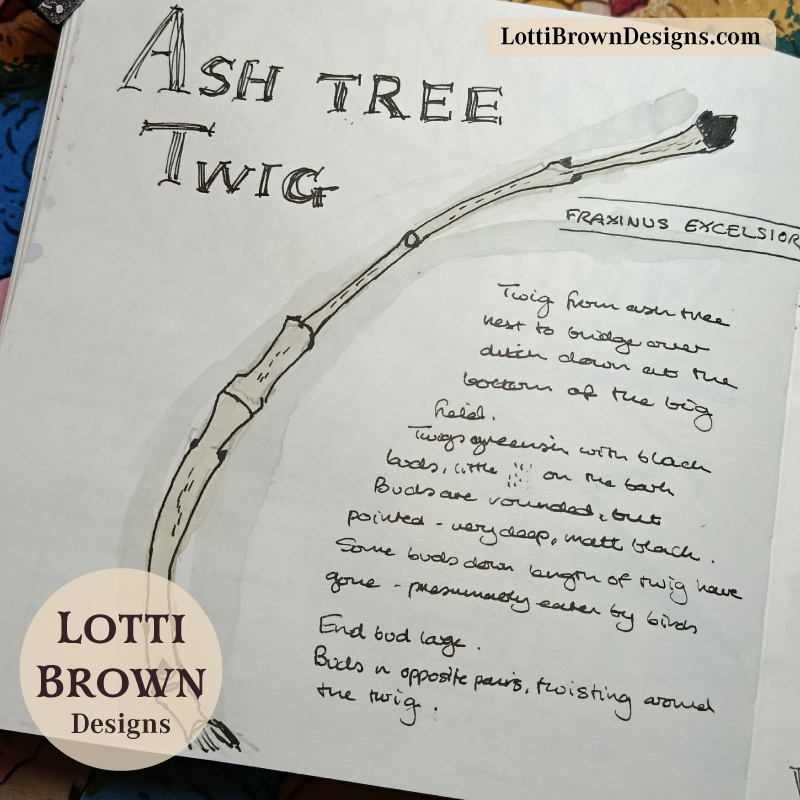 Winter trees - ash tree twig drawn in my January nature journal
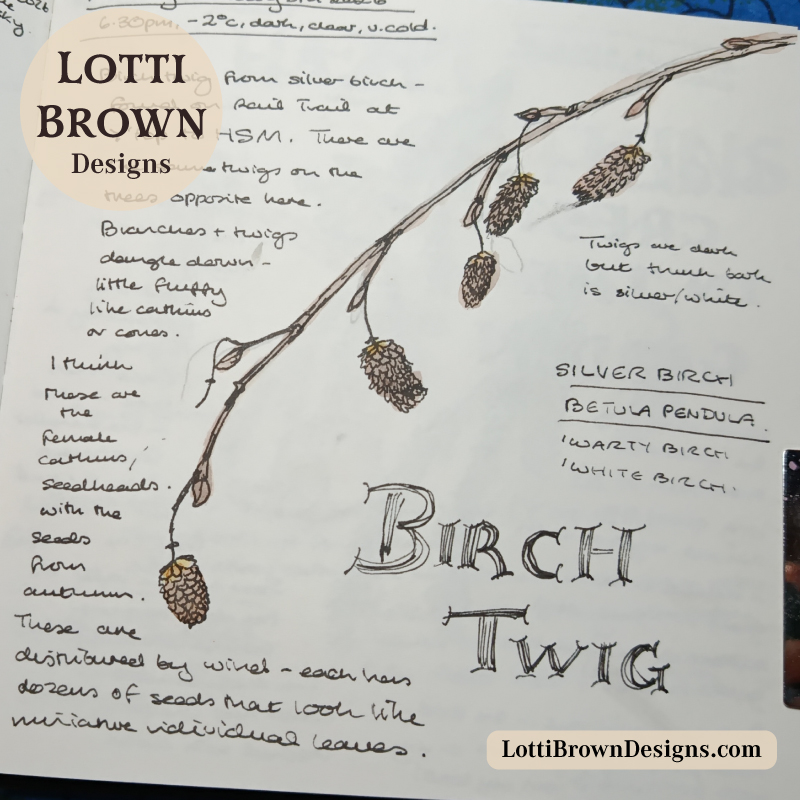 Winter trees - birch tree twig drawn in my January nature journal
And so I enjoyed drawing the twigs of winter - each already carrying the buds of spring like small promises, quietly held for now, but ready to share with the world when the time is right, trusting their moment will come.
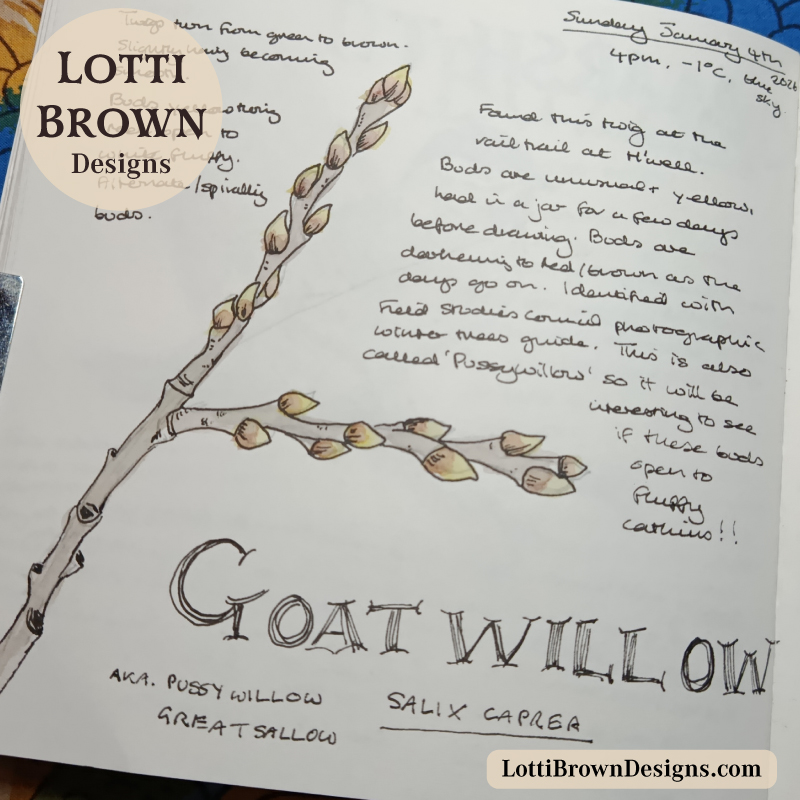 Winter trees - goat willow tree twig with buds - in my nature journal
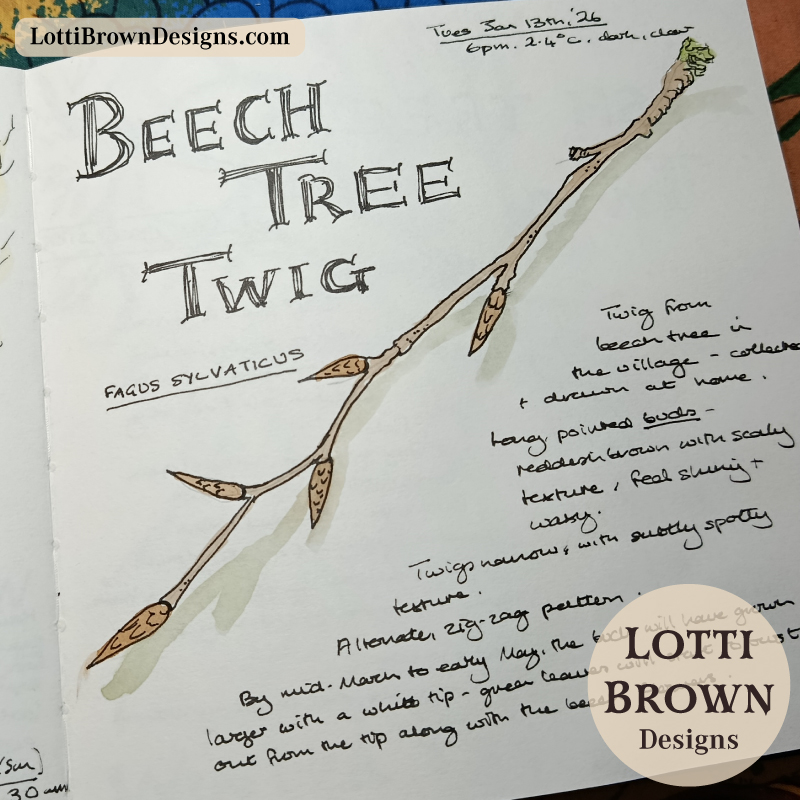 Winter trees - beech tree twig with long pointy buds - in my nature journal
I was surprised, even at the start of January, to see so many buds already in place – and even the bright beautiful catkins of the hazel, already bouncing like the little ‘lambs tails’ of their common name – a real sign that Spring is truly not that far away.
 Hazel catkins drawn in my January nature journal
Life in the Margins – Winter Survival in Fields and Gardens
In the January stillness, birds and plants survive, thriving where protection remains…
Out in the fields, a tall bulrush standing stately in the waters of a beck sets its seed, sending up candyfloss clouds of fluffy seeds that will feed the reed buntings and corn buntings that have made their home nearby.
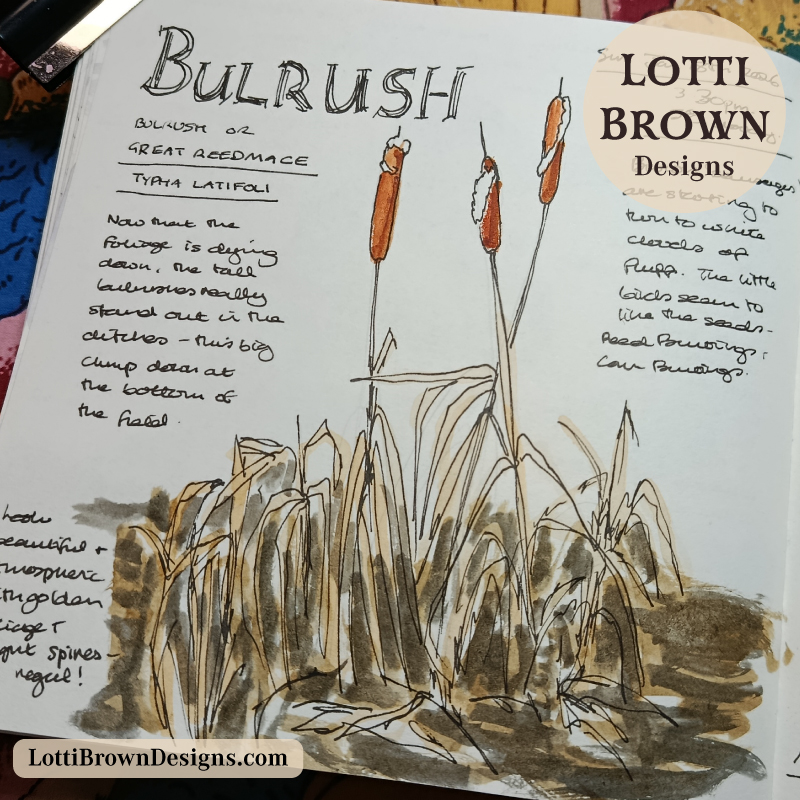 Winter bulrush standing stately in the beck - like a beacon in the flat fields!
In our garden, a Christmas tree planted after the festivities a few years ago provides an evergreen refuge that attracts tiny goldcrests, Britain’s smallest bird.
Due to their tiny size, these gorgeous little birds, weighing just the same as a 20p piece, are vulnerable to cold weather. It’s when the weather is coldest that we see them in our courtyard garden, hopping through the branches of the fir and pecking amongst the buds to find tiny morsels of sustenance.
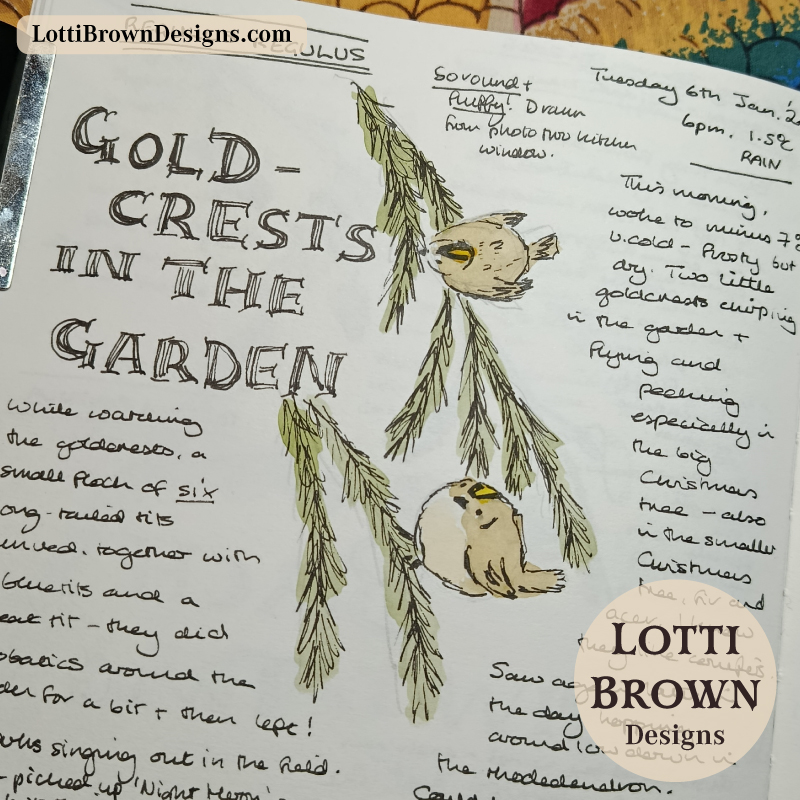 January goldcrests in my garden
Whether in the open fields or close to the house, life in January seems to gather wherever shelter remains – a quiet life of simple survival and protection, life stripped to its core essentials.
The Slow Return of Light – Signs of Spring in January
From the depths of darkness at the start of the month, the light returns slowly, a few minutes each day – but within a couple of weeks, the difference is discernible, the sun rises a little earlier each morning and the darkness falls later and later…
It’s not a dramatic return - just enough to notice, and enough to hope...
And nature responds, sensing the change – the first snowdrops appear, gentle buds swelling quietly, not yet bursting into bloom, but noticeable now, as a promise of Spring. The tiny white flowerheads a symbol of hope quietly emerging.
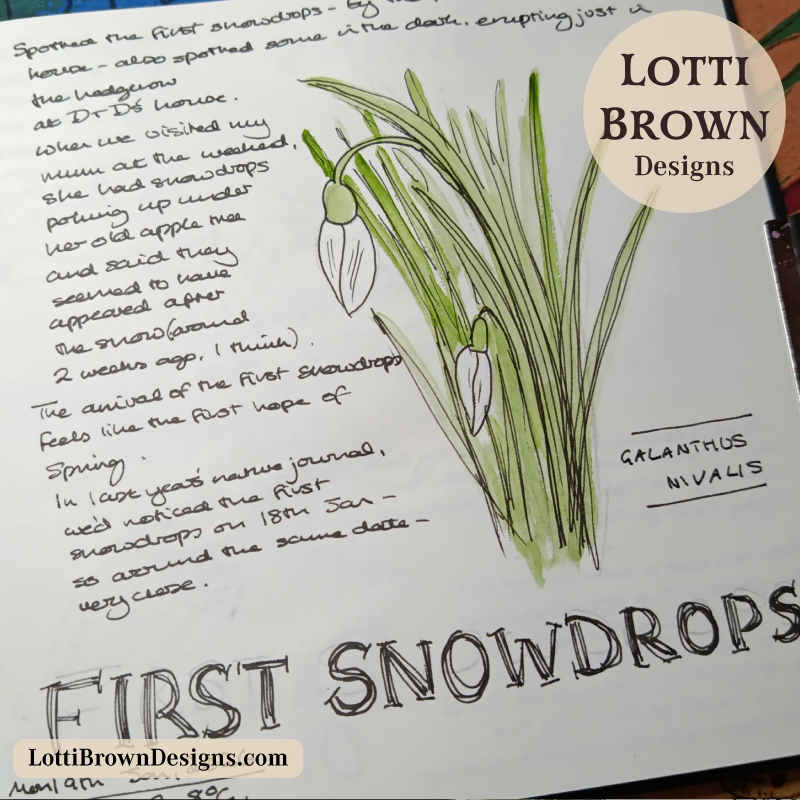 The first snowdrops of January recorded in my nature journal
Wide Skies and Winter Movement
Out in the fields, under the big skies, birds gather in flocks, seeking community in the cold of winter.
A beautiful starling murmuration as the sun rises – three separate flocks of starlings lift and dance in the sky – joining together and separating, before joining together as one large undulating serpent swimming across the horizon, and then pulling away again, repeating and rejoining multiple times…
 A dawn starling murmuration against the colours of sunrise
A quiet moment of reflection – a moment of awe that pulls you fully into the present, as nature creates a living, breathing spectacle that stretches across the skies – all from a community of small winter birds.
Rooks too, travel in huge flocks, crossing above my house at dawn and dusk each day to reach the fields or return to their roosts – their cawing has become part of the rhythm of my day at this time of year. They, too, seek safety in community - and their flocks feeding in the fields show life remains in the seemingly empty countryside.
 The sound and rhythm of winter days - rooks
And two swans fly overhead, their slender necks outstretched, guiding the way as their huge wings swoosh giving strength to their flight...
Dawn and Dusk – The Hunt and the Hush
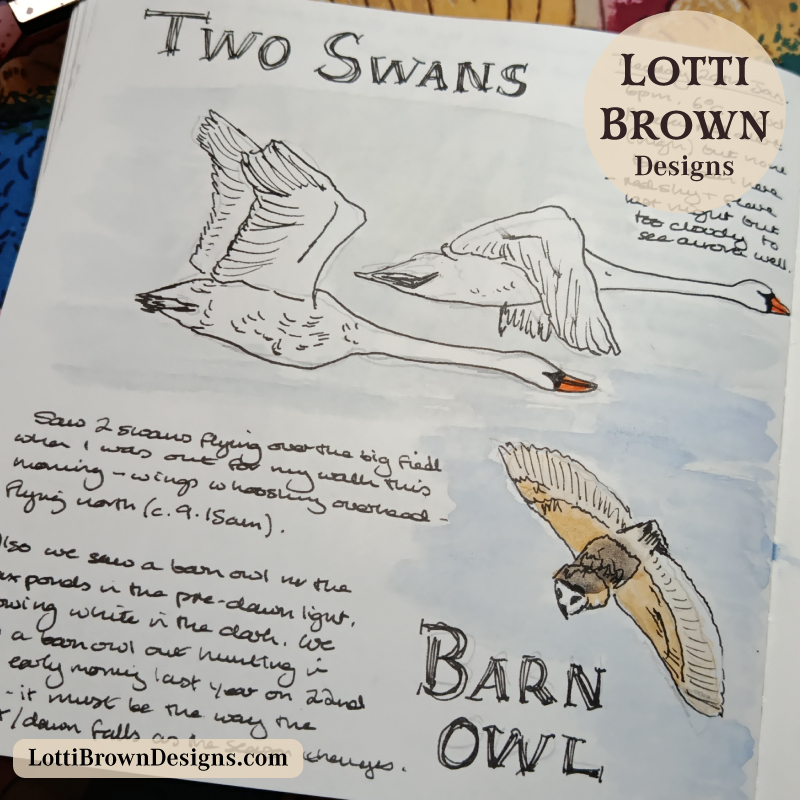 Wings of winter - swans fly overhead and barnowls hunt in the dark of the predawn
In the soft grey-blue of pre-dawn, we see the white of barn owls glide past – their wings look almost translucent in the half-light, giving them a ghostly appearance. They hunt in silence in this most silent part of the day – hovering like angels as they notice a small creature in the grass before swooping down to conclude their hunt, not always successfully.
They fly in lines across the fields as they search for their prey – a matter of life and death for the owl and not just for the mouse. Nature in balance - beautiful, uncompromising, and whole.
January seems to be the time of year when we see them in these moments between night and day, dark and light – the world belonging to nature, at its most elemental.
January Nature Lessons
The stillness of January is natural – it’s not forced or contrived, it’s the natural order of things.
The quiet and still allows us to notice the structure and core strength of the natural world in our winter nature journaling and in our own lives. Stillness is not just nothingness – it’s a season that reminds us that we don’t have to be visible to be growing…
It’s a time of holding on, of waiting, of protecting our own seeds of Spring until the time is right to bring them out into the world.
We don’t need to hurry Spring along, the stillness is enough for now – it’s a time to watch and wait, not to push to be active. It’s a time to notice and see what has held strong for us in our quiet and dark times.
January Nature Journal Prompts
If you’d like some ideas for your own nature journaling in winter you could try some of these January nature journaling prompts:
- Draw a twig, notice its symmetry – no need to try and identify it unless you want to
- Notice a winter sound – allow yourself to sit with it for a few minutes and note how it makes you feel
- Notice something that is waiting
- Sketch the shape of a bare tree against the sky
January doesn’t ask us to do more - only to notice what’s quietly holding us through...
If you’d like more January nature journal prompts, I have some more in my Weekly Nature Journal Prompts page…
You can also peek into my January nature journal from last year, here for more winter nature journal ideas…
More Winter nature journaling:
I started exploring using watercolours in my nature journal this January, after receiving a lovely little travel watercolour kit as a Christmas gift - I share my findings about trying the tiny kit here...
If you’d like to explore nature journaling, start here… I also have a free guide to getting started with nature journaling, which you can find here – and a gentle self-paced course with 20 exercises to help you discover your own nature journaling style and deepen your connection to the natural world…
You might also enjoy my guide to getting started with mindfulness in nature here…
Deepen Your Nature Journaling Practice
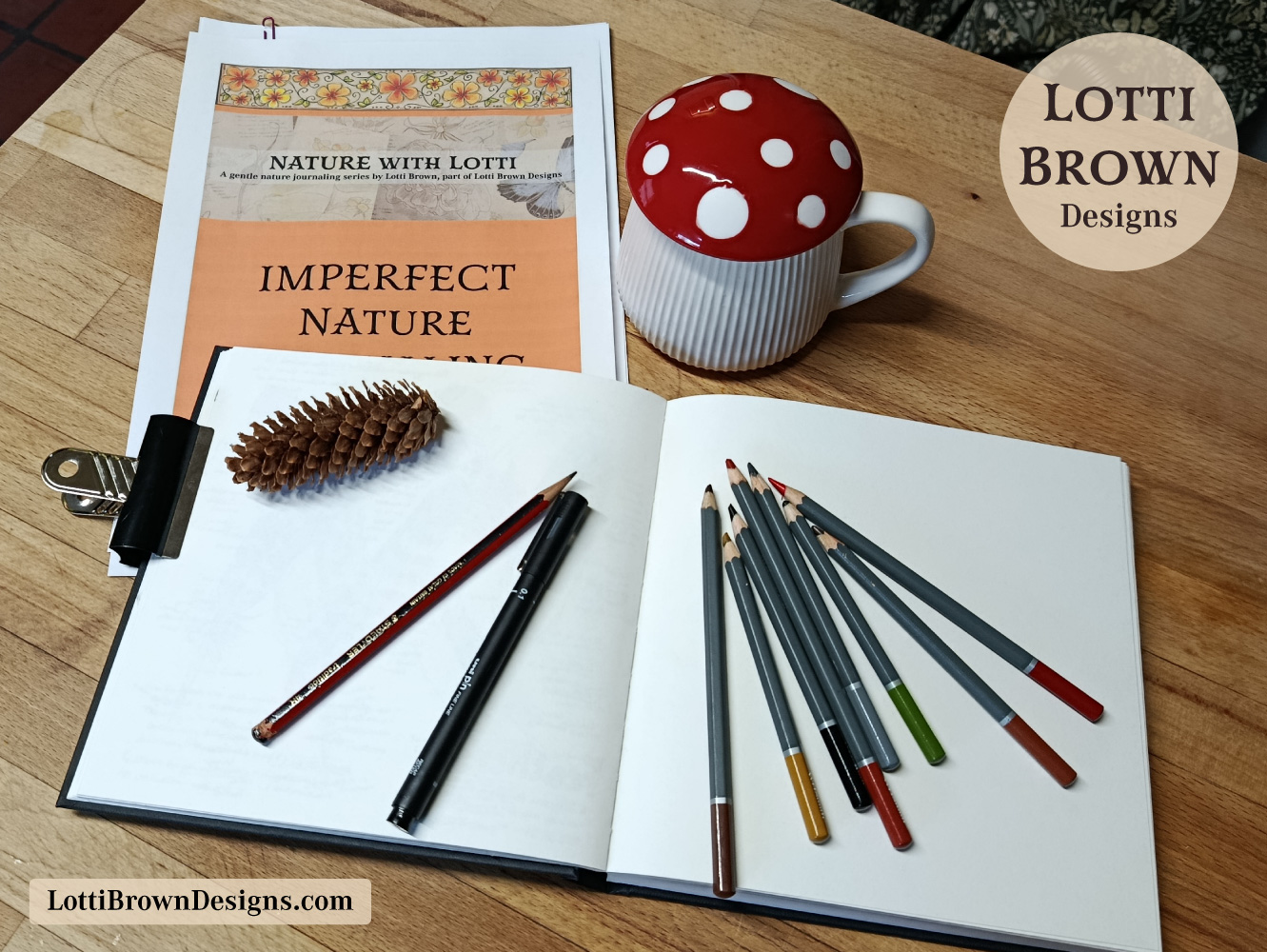 Deepen your nature journaling practice with me...
If you’ve enjoyed my nature journaling reflections, you might also like my 20-lesson course, Imperfect Nature Journaling.
It’s a gently structured, self-paced journey designed to help you:
• Slow down and notice more deeply
• Build confidence in drawing and observing
• Create a calming journaling ritual you can return to
• Feel more connected to the seasons and the natural world
No perfection required. Just curiosity and a notebook.
You can explore the course here whenever you’re ready...
P.S. If you’re just beginning - or would like something quieter and more simple to start with - you might first like to get started with my free 'Getting Started' guide or gain momentum with my 'Gentle Introduction' guide to help you through your first few pages - here...

Shall we stay in touch..?
Each month, I share stories from my own nature journal, new art from my studio, and simple seasonal inspiration to help you feel more connected with the turning year - if you'd like to stay updated, please sign up with your email address below...
Recent Articles


-
Magpie Folklore and Meaning - Symbolism & Superstitions - Magpie Art
Oct 06, 26 05:02 AM
 Discover magpie folklore, symbolism, and superstitions from around the world. Explore the meaning of this intelligent and mysterious bird.
 -
Nature Journal Prompts
Oct 05, 26 04:42 AM
 Easy nature journal prompts to inspire and encourage you - one per week...
 -
Meaning and Symbolism of Ivy in the Celtic Tree Calendar
Sep 29, 26 05:05 AM
 Explore the meaning and symbolism of ivy as part of the Celtic Tree Calendar...
Shop My Current Artwork Collections

My art is available as sustainable art prints, notebooks, greetings cards, tote bags and clothing in my Teemill shop.
Find my stockists for all my earlier artworks here...

Lotti Brown is a self-taught nature artist and nature journaling educator whose hand-drawn work is inspired by wildlife, folklore, and close observation. With 18 years in creative fields and 10 years creating nature art, she brings deep practical experience to her work. Trained by the Wild Wonder Foundation, she shares nature journaling courses and guides online. Her artwork has been licensed internationally and exhibited at Goole Museum and Bridlington Spa in the East Riding of Yorkshire, UK.
Follow me:
Share this page: