
- Home
- Nature Journaling
- Seasonal Nature Journaling
- February Nature Journaling

February Nature Journaling
Month of Mud, Milk and Returning Light
By Lotti Brown
Reflective February nature journaling exploring Solmōnaþ, Imbolc, snowdrops, birdsong, and the quiet return of light in the UK countryside.
This February has been a month of rain. On my walks, the paths are blocked with huge puddles, impassable in places - the fields are saturated, and my boots sink deep into the mud as I step along the muddy pathways.
The rain never seems to stop. My face and glasses feel permanently wet when I’m outside, and even at midday the days seem dark, as though the clouds have forgotten how to lift.
So my February nature journal has been shaped by rain, mud, and the slow return of light...
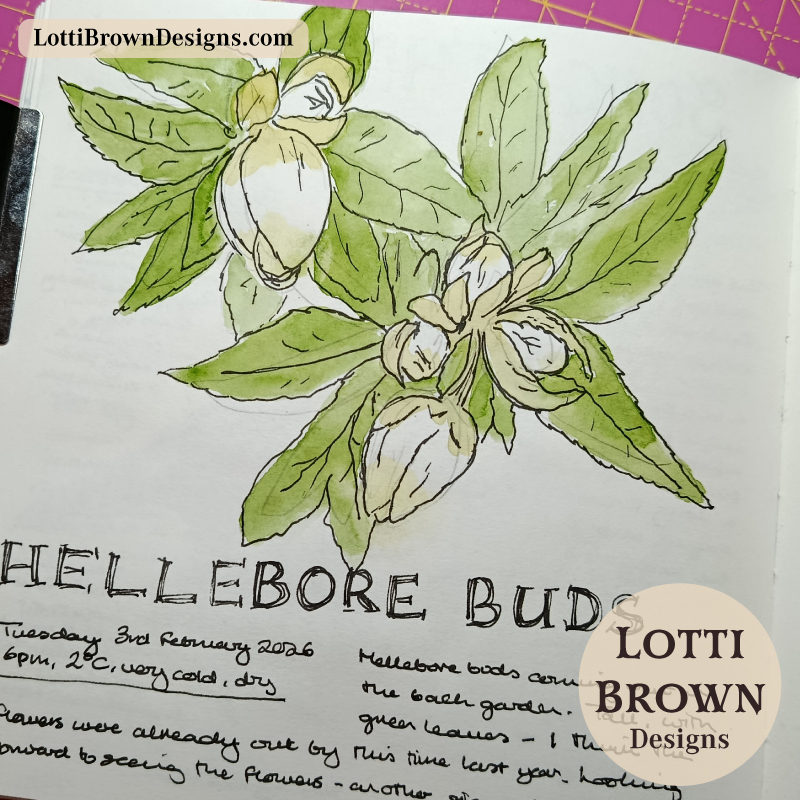 Bright buds of hope in a sea of mud!
Month of Mud
February was once known as Solmōnaþ - in Old English, the 'month of mud' (an alternative translation is 'month of cakes') - a name that feels especially fitting in this February nature journal.
In Somerset’s Quantock Hills, they are celebrating this ancient name with a modern Month of Mud festival - muddy hikes, art created from natural mud pigments, and a renewed appreciation for how mud supports insects, birds, and plant life.
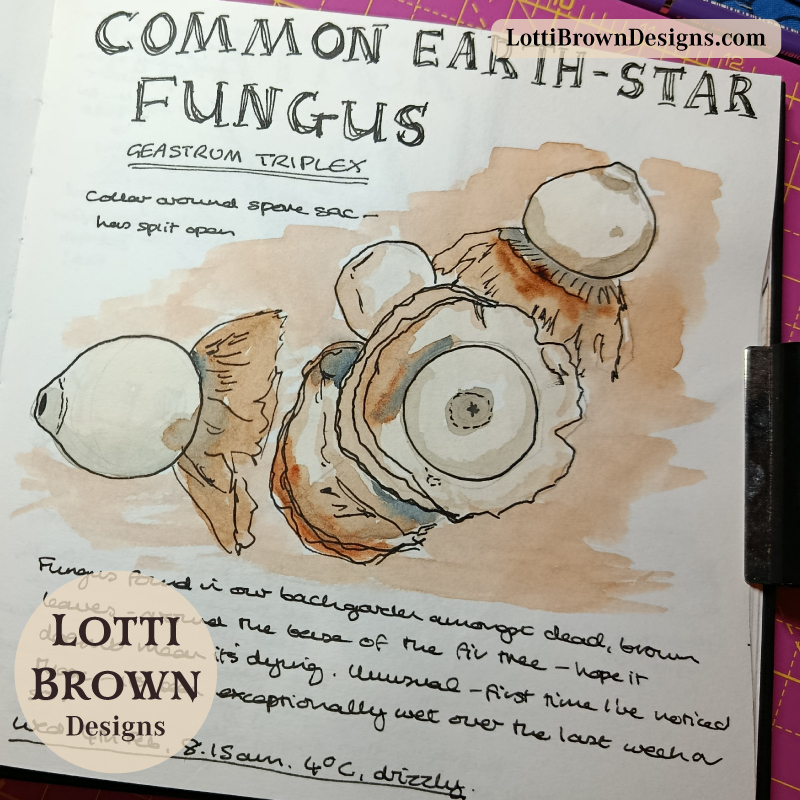 Star of hope emerging from the mud!
At home, in my garden, I find small brown globes nestled low in the soil - the Common Earth Star fungus. It feels like the perfect emblem for this sodden season - as if the ground itself is quietly turning towards the light, a small star rising from the mud. A reminder that even in the heaviest earth, something luminous is unfolding.
Turning Towards Light – Imbolc, Candlemas and St Brigid
And yet February is not only mud. It is a threshold month - poised between winter and spring - as the light begins its slow return.
At the very beginning of the month we have:
- The Celtic festival of Imbolc - a celebration of early spring and fertility, traditionally associated with ewe’s milk
- St Brigid’s Day - honouring the Irish saint whose earlier namesake Brigid was a goddess of fertility, protection, light and fire
- Candlemas - marking the strengthening of the returning sun
There is something tender in these observances - milk, flame, renewal.
These early spring festivals mark the turning point between winter and the first stirrings of the growing year.
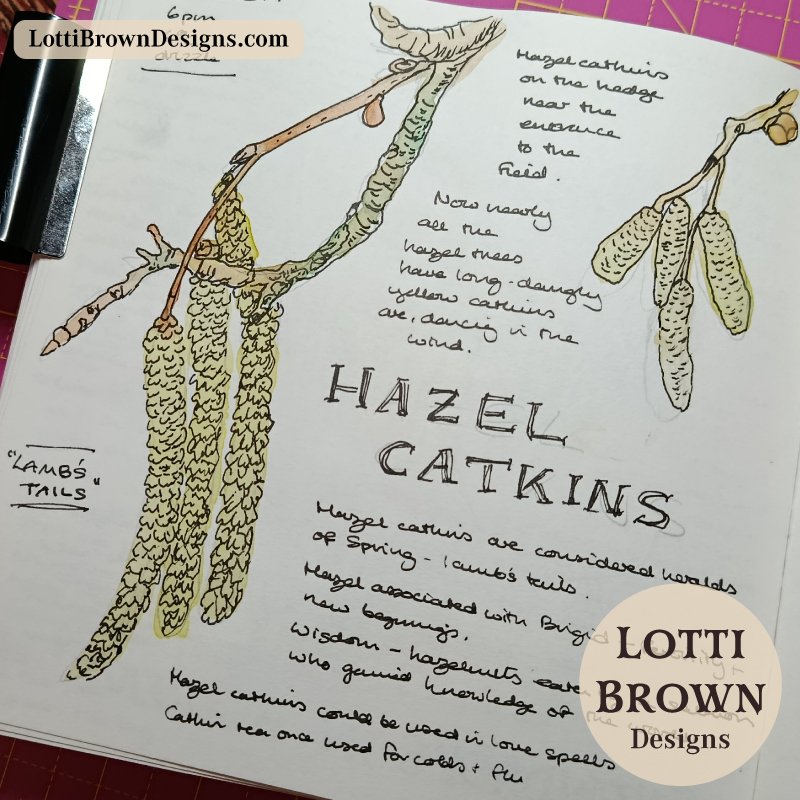 'Lamb's Tails'
We feel echoes of Imbolc in the hazel trees, their catkins - so often called 'lamb’s tails' - bouncing softly in the damp air.
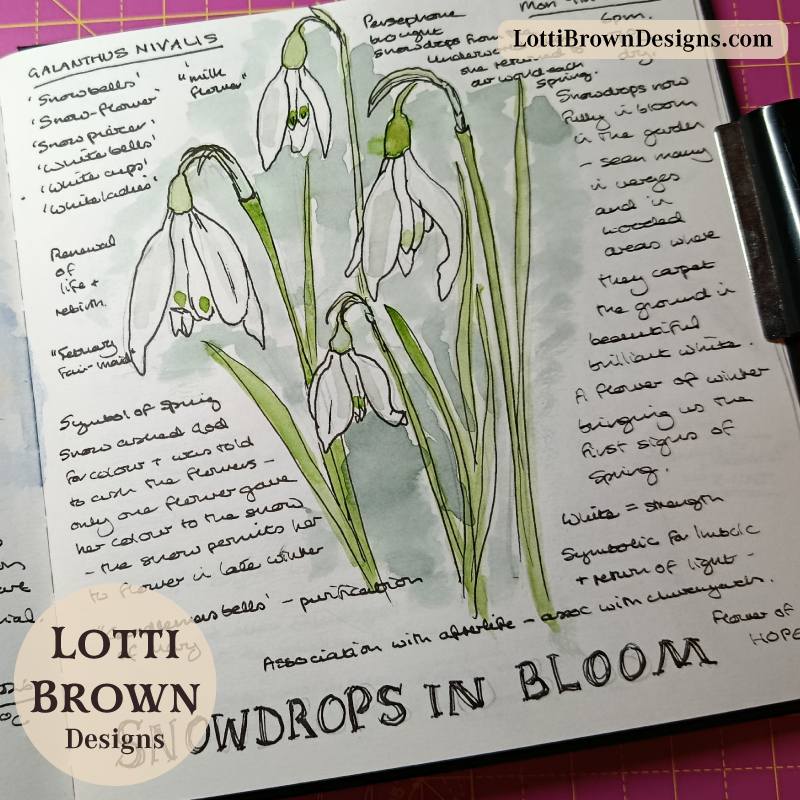 Snowdrops - one of their common names in 'Milk Flower' echoing the 'ewe's milk' of Imbolc
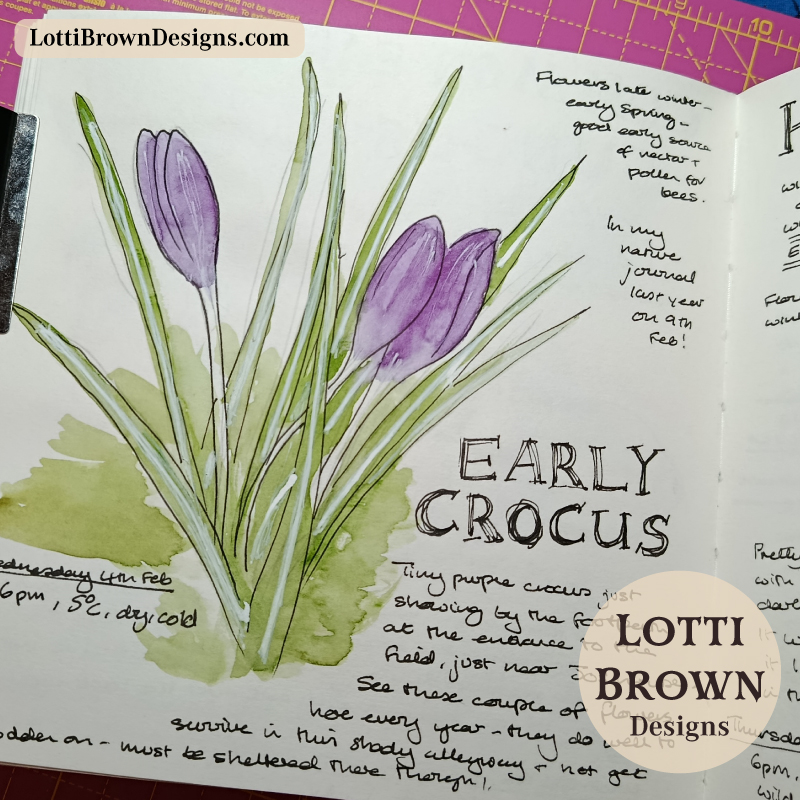 Early Crocus
Snowdrops, sometimes known as 'milk flowers', push bravely through the soaked soil. Crocus follow close behind. Hellebores bow their heads like quiet lanterns in the rain - the Lenten Rose, flowering in the weeks before Easter.
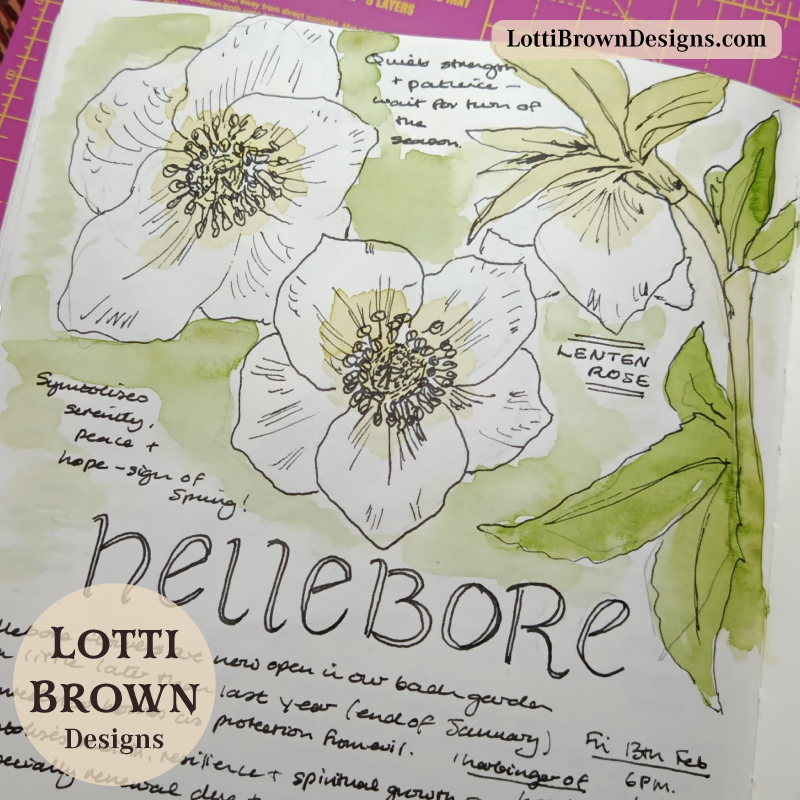 Hellebore flowers - the 'Lenten Rose'
These early spring flowers in the UK countryside feel like small promises against the mud-dark ground.
Even in the mud, milk-white petals and early gold are appearing.
Early Green & Quiet Growth
As the month progresses, colour begins to shift almost imperceptibly - from brown to green.
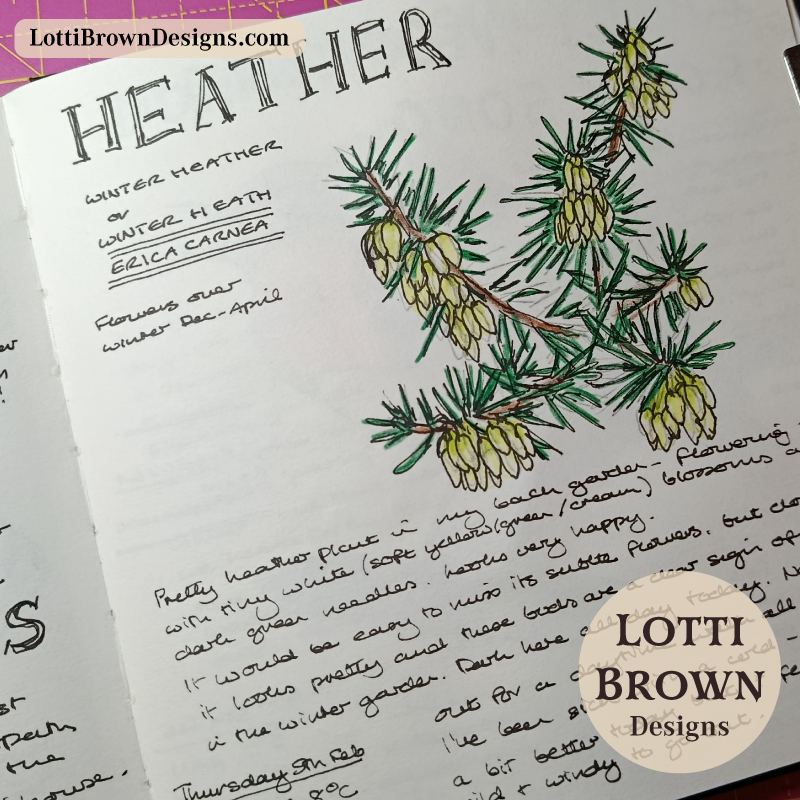 Heather
In the garden, the heather flowers - gentle cream blooms standing out against the deep green of her tiny leaves.
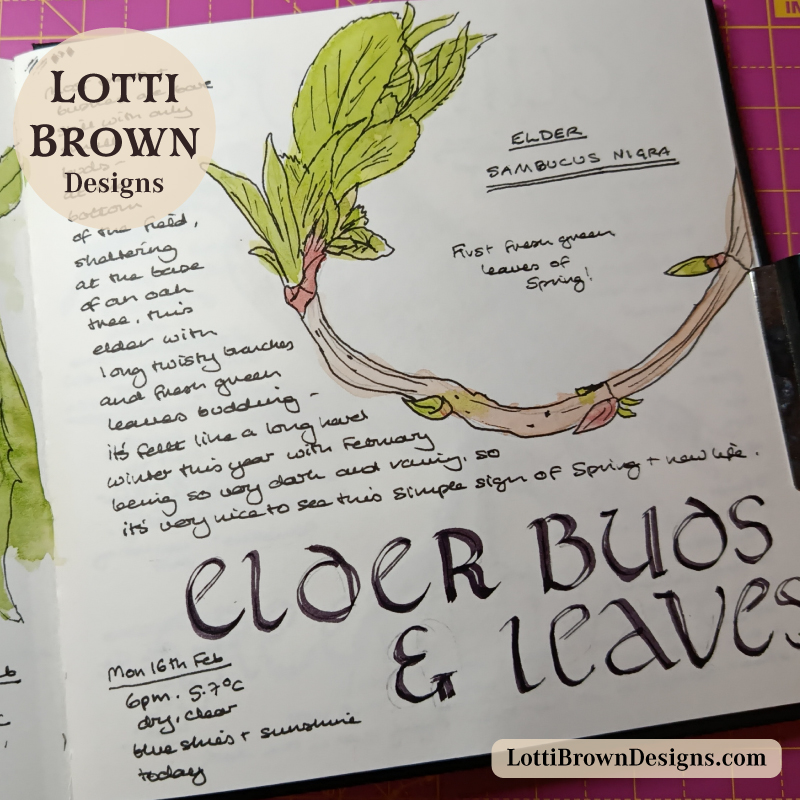 Fresh green elder leaves
In the hedgerows, I notice the fresh green leaves of elder budding courageously in the shelter of an old oak. These small, almost secret signs of growth bring hope - proof that warmth and light are already stirring, even when they still feel invisible.
February Birdsong - Early Signs of Spring
One of my favourite February nature journaling practices is recording the return of birdsong.
Though the land remains muddy, the lengthening light awakens another kind of change. The hedgerows have begun to rehearse for spring…
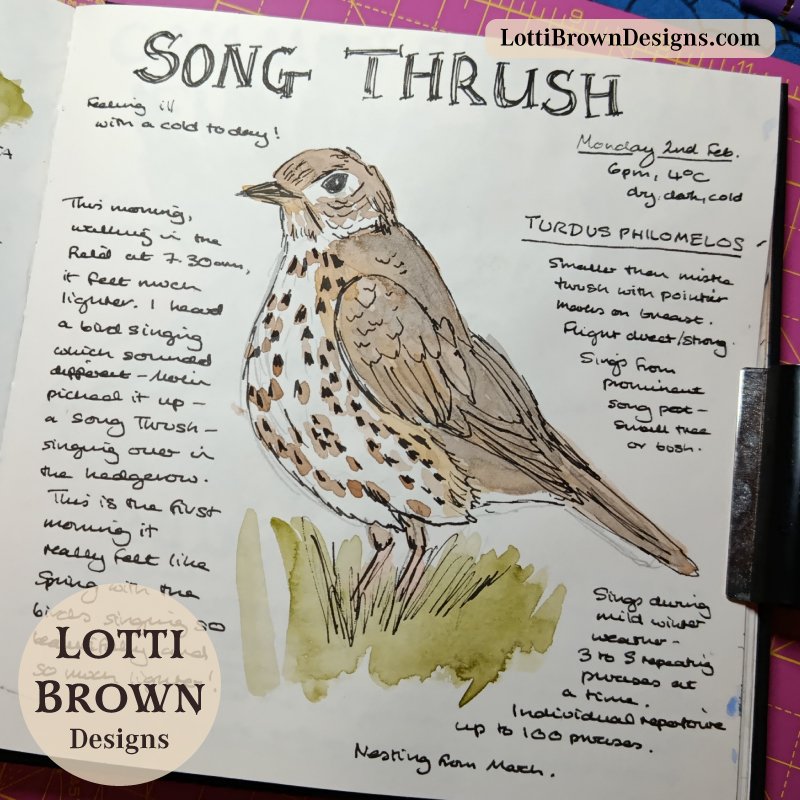 The Song Thrush is singing
A song thrush calls from the top of a tall hawthorn in the early mornings, repeating his clear, measured phrases.
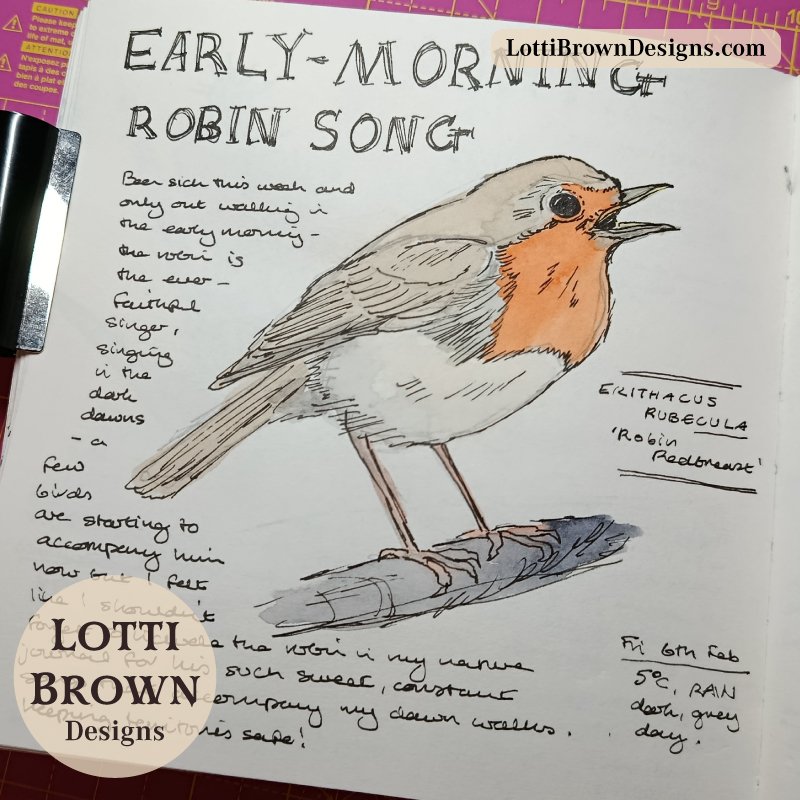 Robin
Robin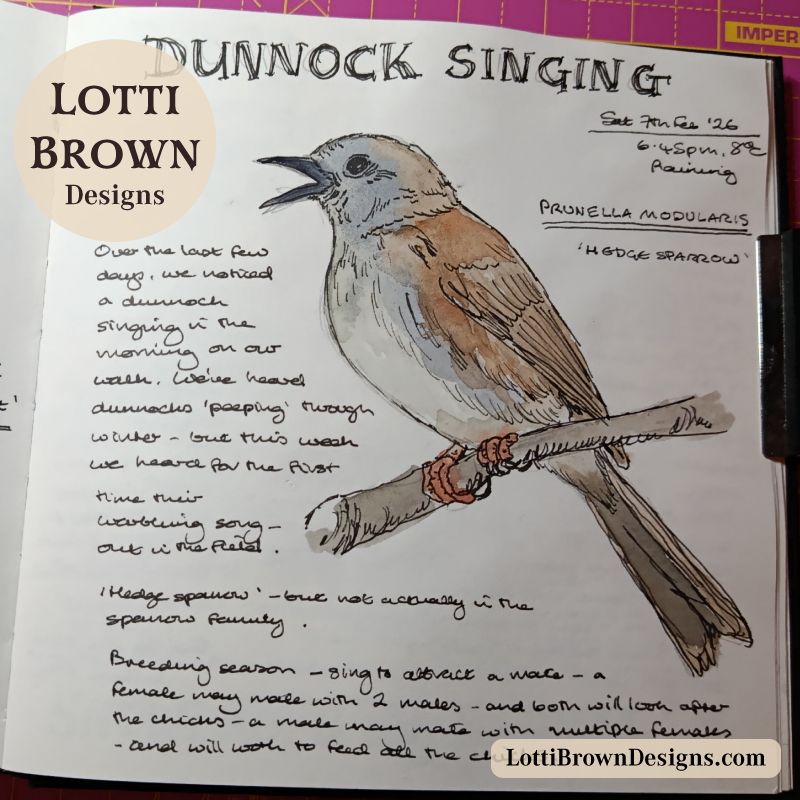 Dunnock
The dunnock sings sweetly, accompanied by the robin - our garden robins already paired and preparing for the breeding season.
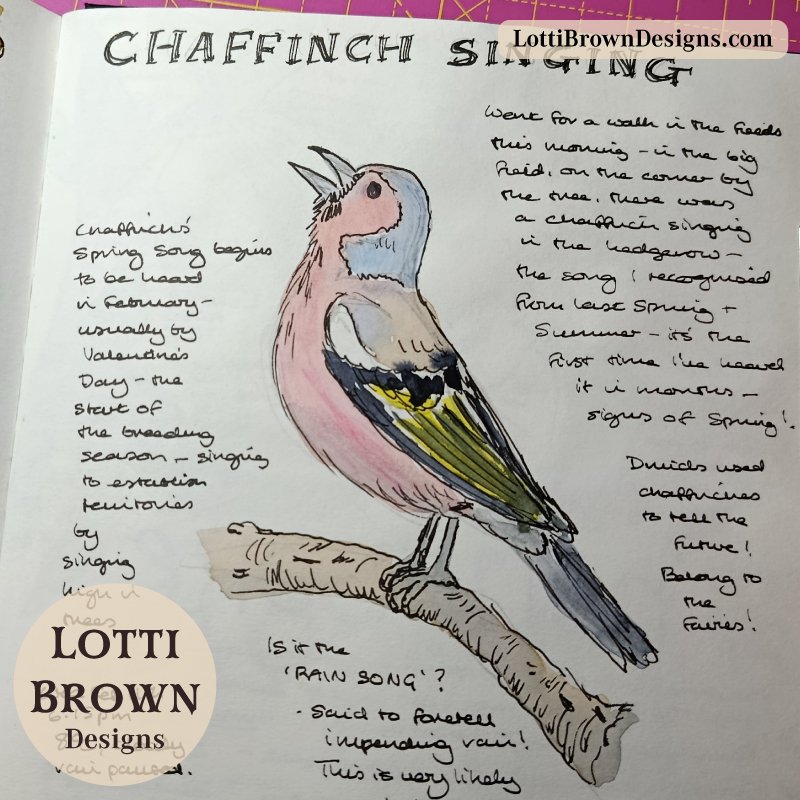 Chaffinch in song!
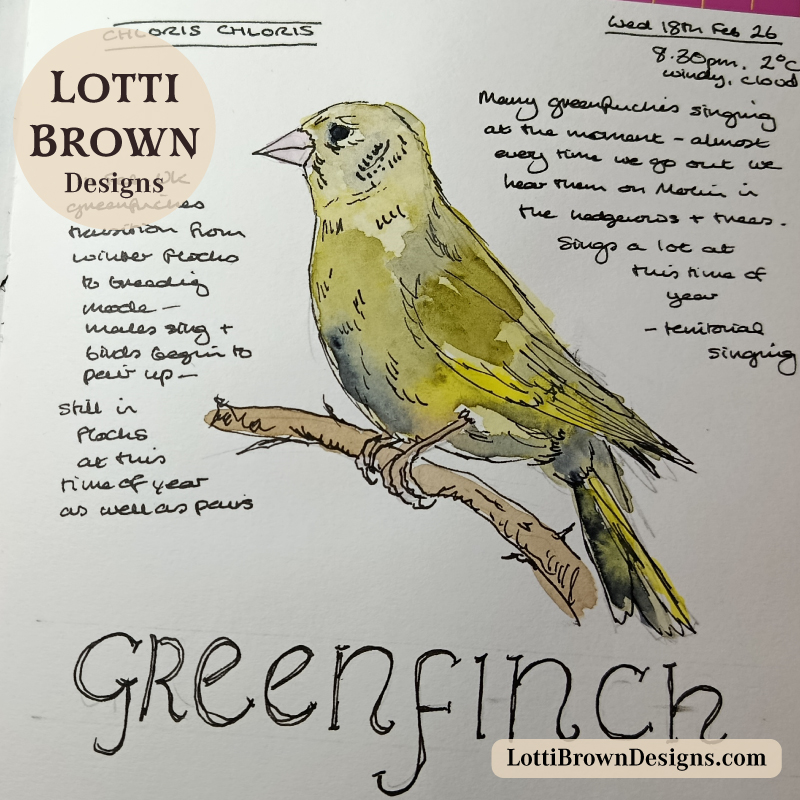 Greenfinches are chattering in the hedgerows
For the first time in months, I hear the chaffinch’s song again, while dozens of greenfinches chatter busily in the hedgerows.
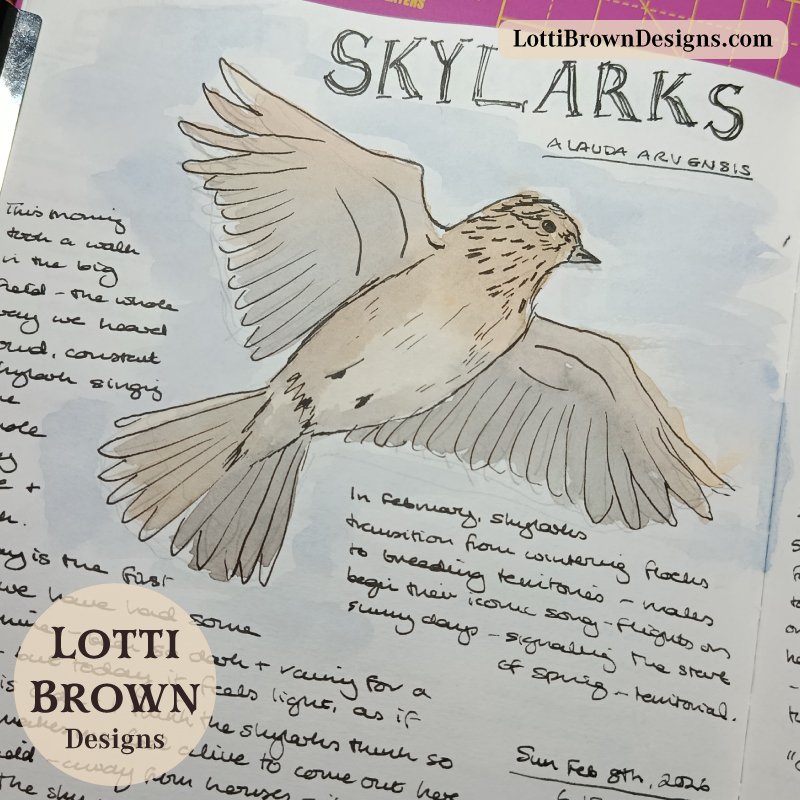 Skylarks flying high with their bubbling song
Out in the fields, skylarks rise impossibly high, their bubbling song often the soundtrack to my entire walk.
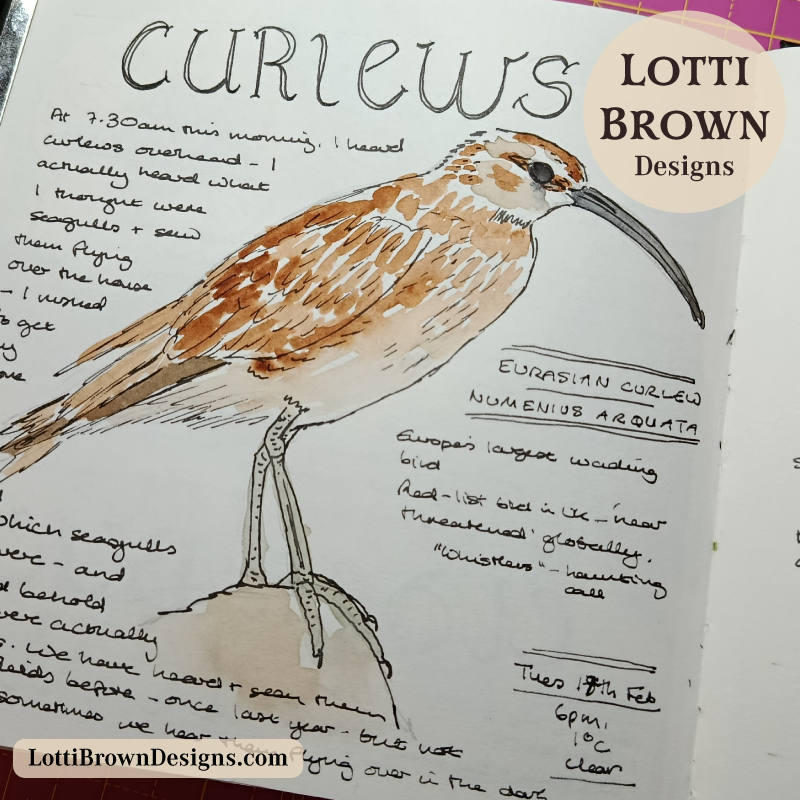 Curlews calling overhead
Above my cottage, I hear the distinctive, haunting call of the curlew. Looking up, I see a small flock wheeling across the sky. I find myself wondering where they are travelling.
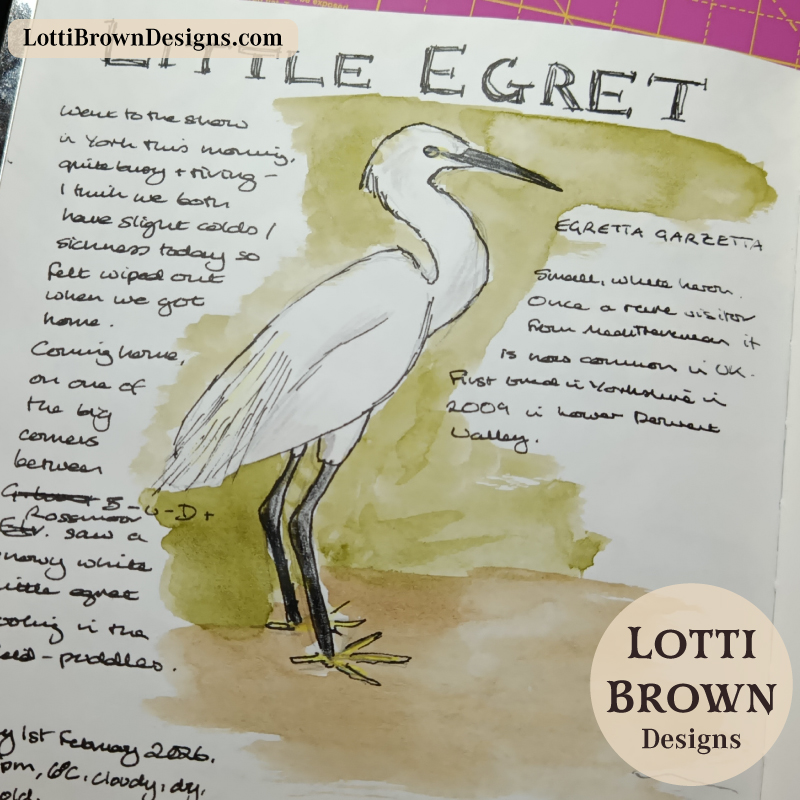 Little Egret in a flooded field - nature journaling in February
And in a flooded field, a Little Egret stands still and pale - a quiet figure against the dark water.
The mud says winter...
The birds say otherwise.
(My year of birdsong - learn about listening to birdsong here...)
February Nature Journaling - Mud & Milk
February is a month of mud - darkness concealing hidden growth.
It is a month of milk - nourishment, fertility, promise.
It is a month of light - the steady return of the sun as we cross the threshold into spring.
And it is a month of song - as birds announce what the earth already knows.
Perhaps February is not a contradiction of dark and light at all, but a conversation between mud and milk.
If your days feel heavy right now, you are in good company with the fields and hedgerows.
Beneath the mud, things are stirring... Beneath the grey, the light is lengthening.
February is not late winter... It is early 'becoming'...
A Few February Noticings
If you’re keeping a nature journal this month, you might like to explore:
- Where do you see 'mud' in your landscape right now - physically or metaphorically? What might be quietly growing beneath it?
- Can you find a small 'earth star' moment - something light-filled rising from heaviness?
- Which early flowers are appearing near you? How would you describe their colour against the winter ground?
- What birds are singing now that were silent a few weeks ago?
- Where can you notice the return of light - in the sky, in the hedgerows, in yourself?
You don’t need to answer all of them. Just choose one...
Step outside - or look out of your window - and begin.
If my February nature journaling in this month of mud and milk has inspired you to notice more closely, you might enjoy exploring my Nature Journaling section, where I share seasonal reflections and pages from my own journal.
If you’re just beginning, you’re warmly welcome to download my free guide, Getting Started with Your First Nature Journal - a gentle introduction to help you begin without pressure.
And if you’d like more structure and step-by-step inspiration, my 20-lesson course Imperfect Nature Journaling is there whenever you’re ready to go deeper.
If you've enjoyed the folklore elements of this page, you might enjoy exploring my Folklore Hub.
More February? If you'd like to explore more February nature journaling, you can take a peek inside last year's February nature journal, here...
More Winter nature journaling:
Or move onto my March nature journal here...
Deepen Your Nature Journaling Practice
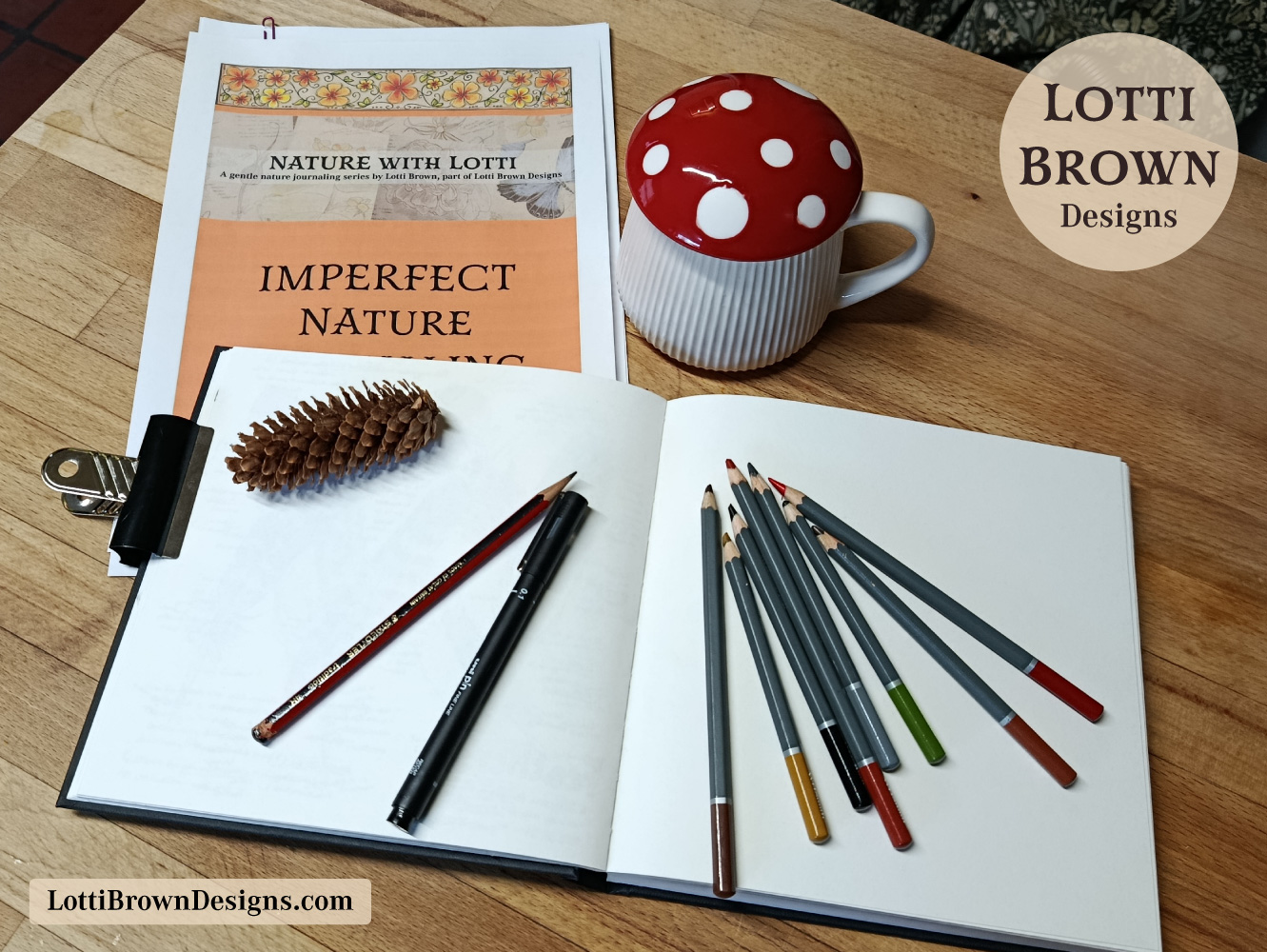 Deepen your nature journaling practice with me...
If you’ve enjoyed my nature journaling reflections, you might also like my 20-lesson course, Imperfect Nature Journaling.
It’s a gently structured, self-paced journey designed to help you:
• Slow down and notice more deeply
• Build confidence in drawing and observing
• Create a calming journaling ritual you can return to
• Feel more connected to the seasons and the natural world
No perfection required. Just curiosity and a notebook.
You can explore the course here whenever you’re ready...
P.S. If you’re just beginning - or would like something quieter and more simple to start with - you might first like to get started with my free 'Getting Started' guide or gain momentum with my 'Gentle Introduction' guide to help you through your first few pages - here...

Shall we stay in touch..?
Each month, I share stories from my own nature journal, new art from my studio, and simple seasonal inspiration to help you feel more connected with the turning year - if you'd like to stay updated, please sign up with your email address below...
Recent Articles


-
Barn Owl Folklore & Meaning - Symbolism of the Barn Owl
Sep 15, 26 03:34 AM
 Explore barn owl folklore, symbolism and meaning, from ancient myths to British traditions. Discover the quiet wisdom and mystery of this ghostly bird.
 -
Bramble Meaning, Myth & Symbolism - Celtic Tree Calendar Art
Sep 02, 26 11:32 AM
 A look at bramble meaning, myth and symbolism as I share my bramble Celtic Tree Calendar art for the month of 'Vine'...
 -
Nature Journal Prompts
Aug 26, 26 04:05 AM
 Easy nature journal prompts to inspire and encourage you - one per week...
Shop My Current Artwork Collections

My art is available as sustainable art prints, notebooks, greetings cards, tote bags and clothing in my Teemill shop.
Find my stockists for all my earlier artworks here...

Lotti Brown is a self-taught nature artist and nature journaling educator whose hand-drawn work is inspired by wildlife, folklore, and close observation. With 18 years in creative fields and 10 years creating nature art, she brings deep practical experience to her work. Trained by the Wild Wonder Foundation, she shares nature journaling courses and guides online. Her artwork has been licensed internationally and exhibited at Goole Museum and Bridlington Spa in the East Riding of Yorkshire, UK.
Follow me:
Share this page: