
- Home
- Nature Journaling
- Seasonal Nature Journaling
- December Berries

December Berries Folklore in Britain
By Lotti Brown
Explore December berries folklore with me as I nature journal the cold winter days of December in Yorkshire, Britain...
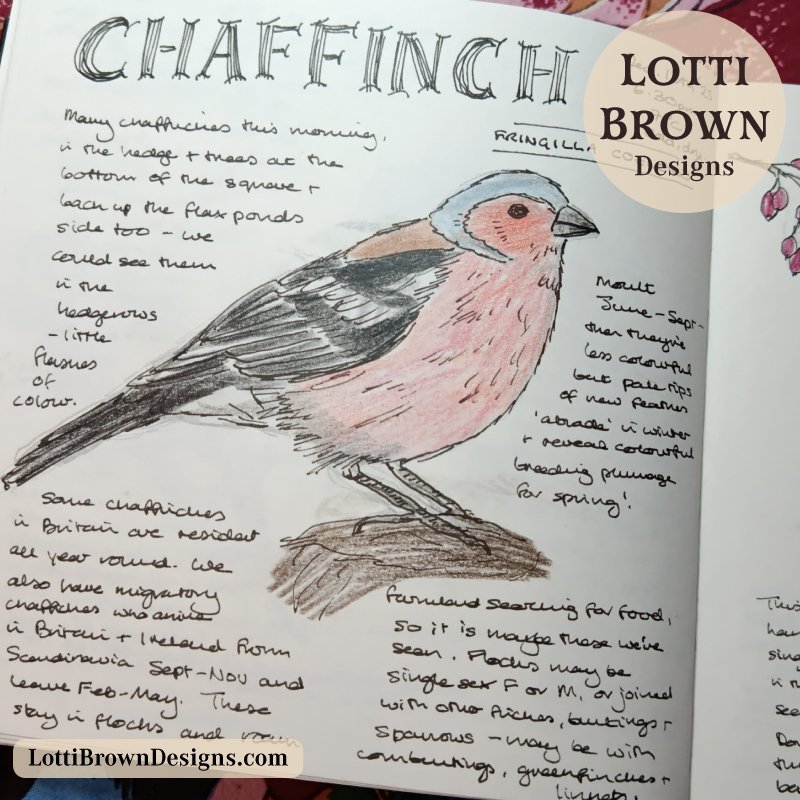 Many chaffinches in the hedgerows this December
As the days shorten and get busy with festive cheer, outside the landscape is still, now - and rain feels like a constant companion, quietening even the birds.
On the rare clear days, the sun lifts the mood and illuminates the sparkles of frost on grass and hedgerow turning the empty fields into a beautiful winter wonderland.
The trees and hedges have lost their leaves now - branches bare, apart from clusters of tiny berries that seem to glow red and purple, like miniature clarion calls for the birds…
December berries show that winter can still carry nourishment, hope and old magic - a theme deeply rooted in British winter folklore - even when everything else feels quiet, bare, or paused…
Winter berries are a vitally important source of nourishment for the birds and wildlife out in the fields, hedgerows and gardens…
Winter birds like thrushes, blackbirds, redwings, and fieldfares love the berries - they also attract the smaller birds too, flocks of linnets, chaffinches, and greenfinches who gather in huge numbers in the treetops and hedgerows on our daily walks, chattering constantly as they continue their search for food.
Larger birds still appreciate the winter berries as well - I’ve even seen a glossy black crow perched surprisingly delicately in the top of a hawthorn hedge, picking the berries carefully into his mouth.
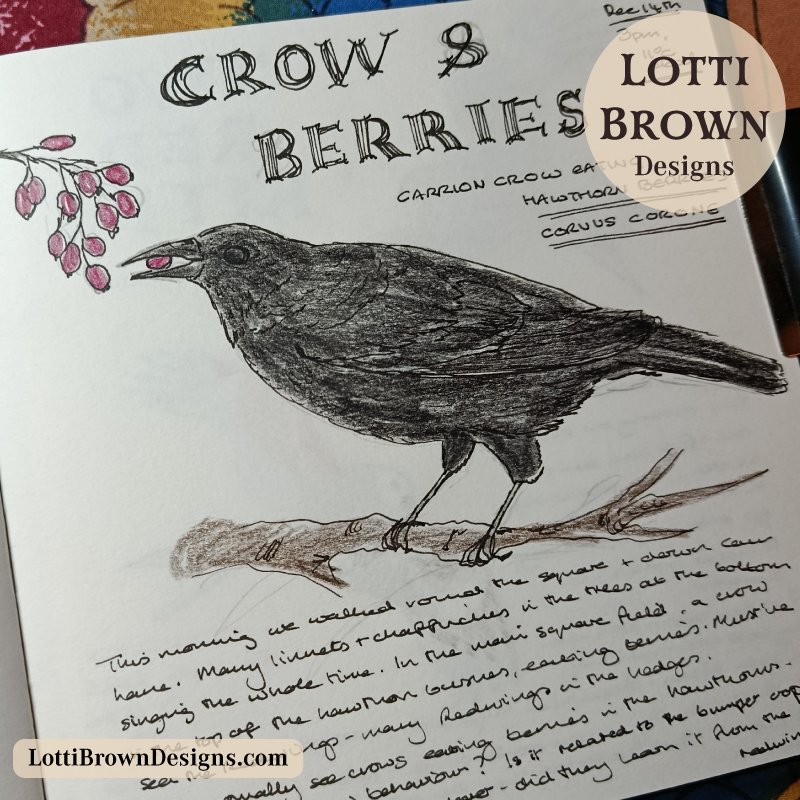 Crow eating winter hawthorn berries
This year, it’s been a bumper year for berries in the hedgerows (see my November nature journal post here) - it’s said that when berries are plentiful like this, that we can expect a harsh winter - if this is true, we can look forward to a real blast of winter soon!

Rose-hips – Childhood Pranks, Protection, and Winter Folklore
In our fieldside hedgerows and along the rail trail walks, we see big red rose-hips, reminders of the beautiful, delicate wild rose flowers of summer. Now the long oval rosehips soften and darken, ready to share their bounty with nature…
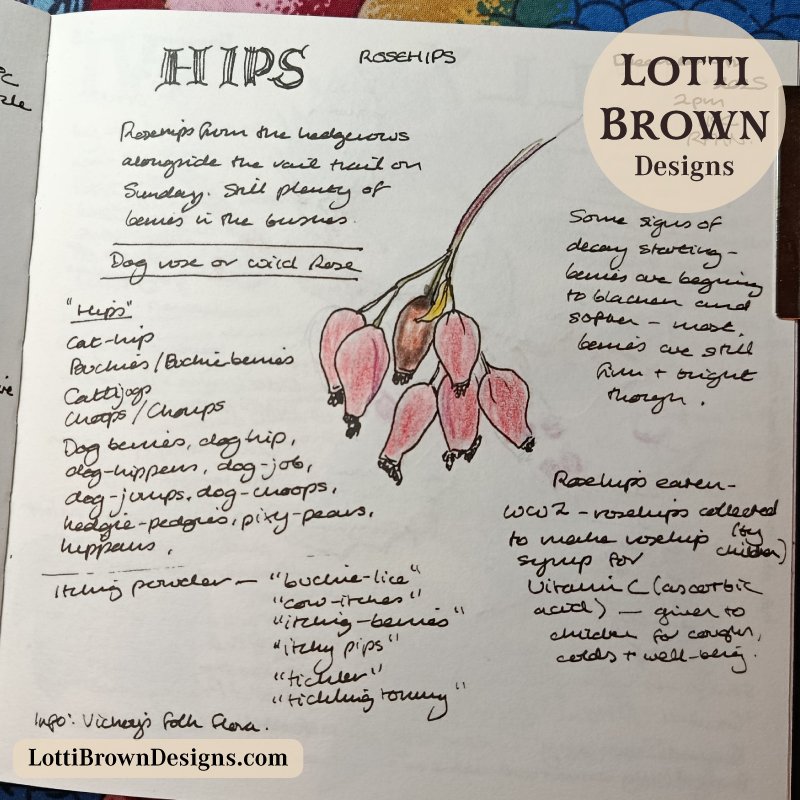 Rosehips
Rose-hips - often known as just ‘hips’ or ‘dog-hips’, ‘cat-hips’, ‘buckies’, ‘hedgie-pedgies’ or ‘pixy-pears’ - were once a staple of the pantry, made into teas and syrups used to protect against winter coughs and colds due to the high levels of Vitamin C (ascorbic acid).
In Britain, during World War II, children would collect rosehips from the hedgerows to sell so that rose-hip syrup could be manufactured for the nation’s health in wartime. The practice continued from the 1940s into the 1960s or 1970s, and schools became collection points with school children going ‘hipping’, and often appointing a ‘Queen Hip’ or ‘King Hip’ to oversee proceedings.
Children also loved rose-hips for the ‘itching powder’ inside – something I remember from my own school days where the playgrounds were edged with rose hedges – the itching powder hips known as ‘buckie-lice’, ‘itchy pips’, ‘itching-berries’, or ‘ticklers’.
In British folklore, rose-hips were also said to be able to protect against witchcraft – and were believed to be able to help mend a broken heart, too.
Rose-hips feel like quiet helpers - modest, practical, and generous - offering comfort exactly when it’s needed most.
So rose-hips can help us in our darkest days, being of service to us during winter, wartime, and in days of sorrow.
Hawthorn Haws – Healing, Heart & Winter Strength
This year, our hawthorn hedges are positively laden down with hawthorn berries, the red colour brightening up the winter fields…
Along with rose-hips, hawthorn berries, or ‘haws’, were often made into jams, chutneys, jellies, wines, gins, and teas – the two berries were often used together in recipes, known as ‘hips and haws’.
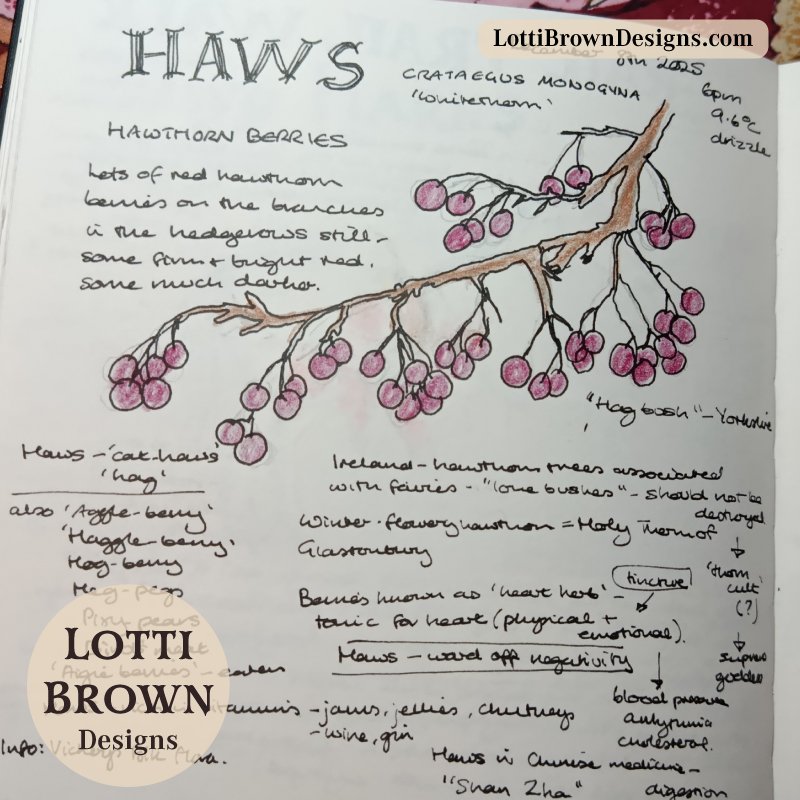 Winter 'haws' - berries of the hawthorn
Like so many winter berries, hawthorn sits at the meeting point of medicine, myth, and magic…
Hawthorn bushes were associated with fairies and seen as portals into the fairy realm. In Ireland, a ‘lone bush’ hawthorn was seen as sacred and should not be destroyed. So, the hawthorn berries belonged to the fairies and were to sustain the little folk through winter.
Hawthorn berries – commonly known as ‘cat-haws’, ‘hags’, ‘haggle-berries’, ‘heg-pegs’, ‘aigie berries’ or ‘birds’ meat’ – were considered as the ‘heart herb’ and a tincture was made with the haws as a tincture for the heart, seen to aid with both physical and emotional ailments of the heart.
Haws were also believed able to ward off negativity – very useful in the dark winter days.
The hawthorn bushes are a real favourite of thrushes and fieldfares.
Read more about the hawthorn in my Celtic Tree Calendar Hawthorn page…
Holly – Evergreen Hope and Winter Solstice Folklore
The seasonal must-have has obliged and filled its branches with brilliant red berries – I love to see the holly growing wild in the hedgerows near here. We actually have such large holly bushes around the village that they have become trees.
While in our front garden we have a beautiful flower-bearing male holly, only the female holly bears the red berries that symbolise magic at Christmas.
In British winter folklore, holly is so closely associated with Christmas that it’s sometimes just known as ‘Christmas’, ‘Christmas tree’, or ‘Prickly Christmas’. Other common names reference the prickly leaves that shine glossy green all winter – ‘Prick bush’, ‘Prick-hollin’, or even ‘Crocodile’ for its sharp teeth!
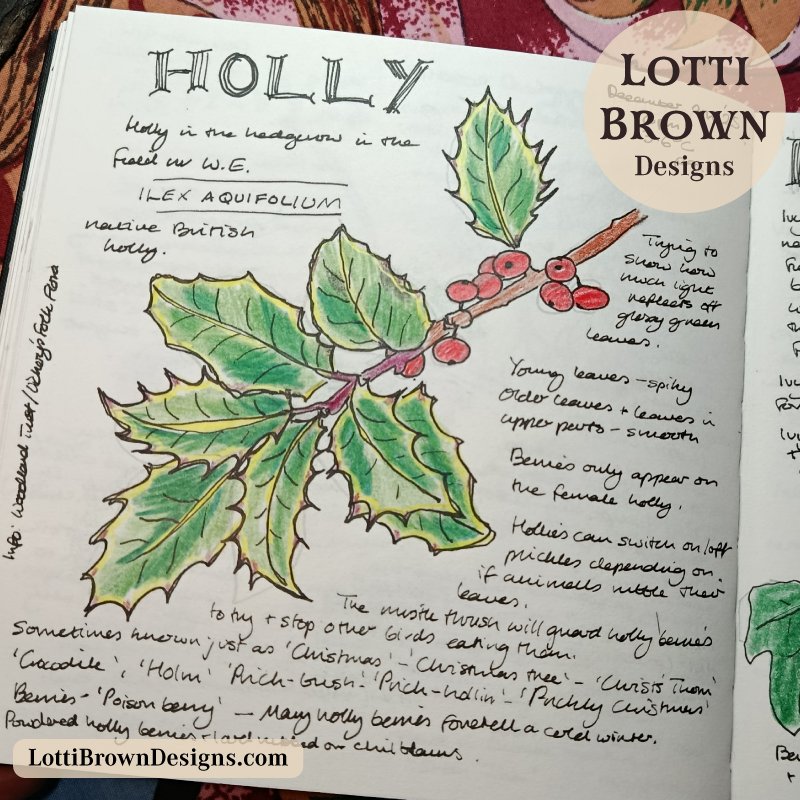 Holly bearing festive red berries - found in a hedge near the village
In parts of Europe, the holly bush is called ‘Christ’s Thorn’ and the berries of the holly represent Christ’s blood.
The holly’s young leaves are the prickly ones, while older leaves and leaves higher up the plant are smoother. Holly bushes are also known to grow prickly leaves where animals have grazed on them.
Holly leaves and berries have been associated with this midwinter period for thousands of years. The Roman feast of Saturnalia, originally celebrated between 17th and 22nd December, (later, between 21st/22nd to 26th) saw much merriment and feasting with gifts being given and holly wreaths worn.
The tradition of bringing holly into the home for Christmas is a long one – it’s said that elves and fairies lived in the holly foliage and it was lucky to have them in your home at this special time - beginning with Christmas Eve and until Imbolc Eve (31st January).
Some say all holly should be removed by Twelfth Night, or risk goblins and misfortune! Twelfth Night was sometimes known as ‘Holly Night’ with celebrations in the street and a burning holly branch.
A Christmas holly branch could be hung outside your home to protect it all year, though.
Perhaps that’s why holly feels so comforting at Christmas - fierce and protective, yet bright with promise, holding its colour when everything else fades.
Ivy – Survival, Mystery and Quiet Companionship
Ivy is, of course, the gentler Christmas companion of the holly, commemorated in our popular carol ‘The Holly and the Ivy’.
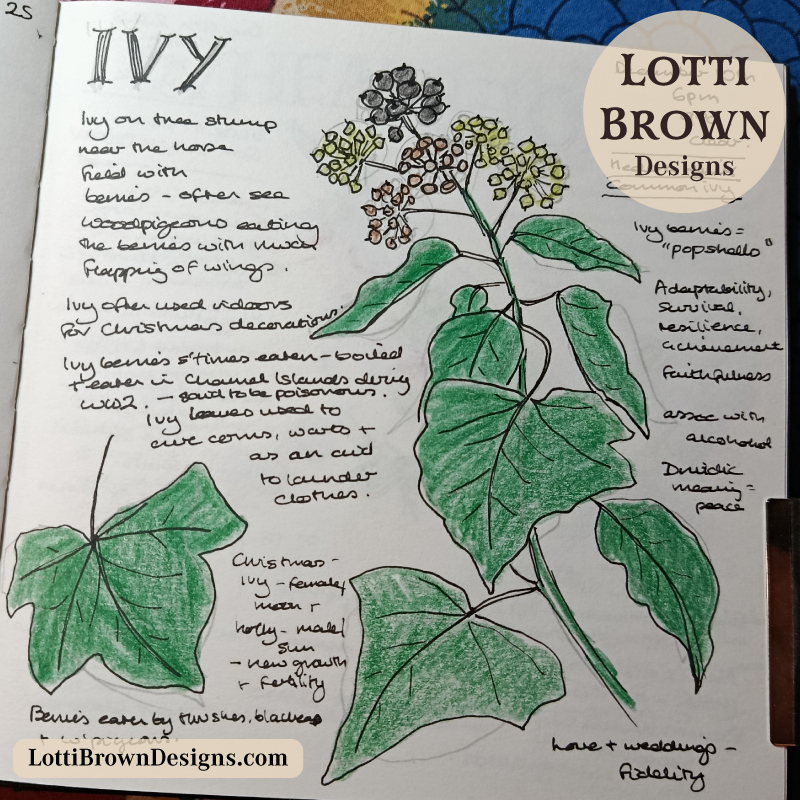 Ivy berries are just ripening now and will continue into the New Year
In medieval times, churches decorated with both holly and ivy at Christmas, with holly representing Jesus while the ivy symbolised the Virgin Mary.
It became common for folk celebrations at this time of year to feature a little boy wearing a holly crown and a little girl with an ivy crown, symbolising the traditions of the Holly King, the masculine, and the sun - and the Ivy representing the feminine archetype, the mother goddess, and the moon.
The ivy berries symbolised fertility and merriment – the berries and/or leaves were often added to alcohol in earlier times (not advised as ivy is poisonous!!)...
And a pole wrapped in ivy became a recognised sign for an ale house.
The ivy berries, sometimes known as ‘popshells’, last late into winter, and are a very useful food source for all kinds of wildlife including thrushes, blackbirds, and woodpigeons. I have often seen huge woodpigeons flapping and contorting themselves into all kinds of weird shapes in order to eat these highly prized berries.
As ivy thrives through winter, it symbolizes resilience and hope in difficult times.
Explore more ivy folklore and meaning in my Celtic Tree Calendar Ivy page here…
Sloes – Winter Potions, Hedge Magic and Blackthorn Folklore
I think this year must be the best year I’ve seen for winter sloe berries, the fruit of the blackthorn. Usually just seen as single globes on the thorny branches, this winter, the berries cluster thick and fat on the branches, deep dusky purple with a soft bloom.
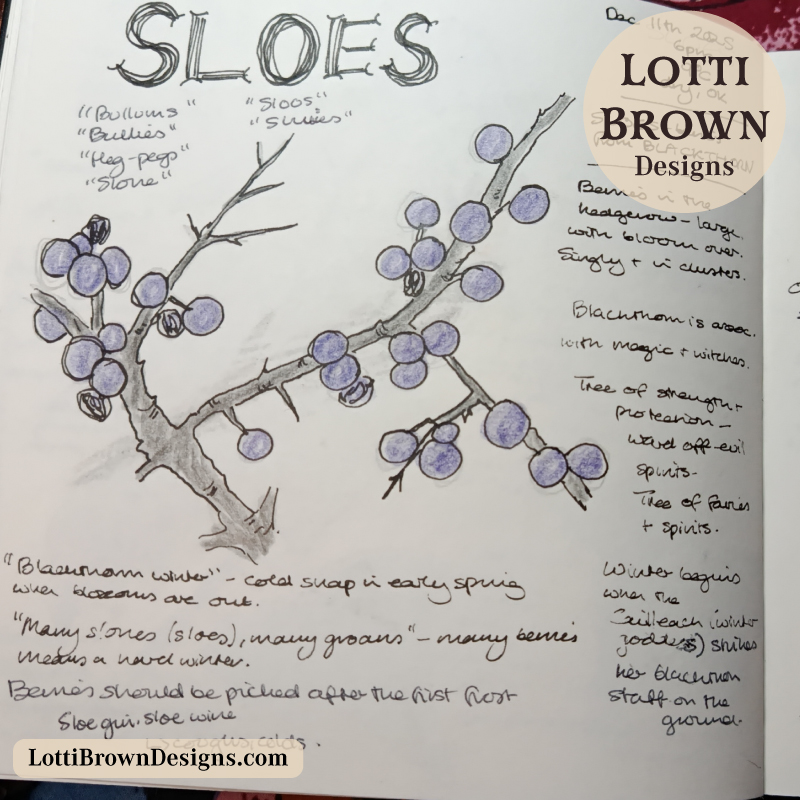 Winter sloes on bare blackthorn branches
It’s recommended to wait until the first hard frost before gathering sloes to use in jams, jellies, wines and gins. A wine, gin, or tincture made of sloes was often used for coughs, colds and winter sniffles.
It’s said that winter begins when the winter goddess, the Cailleach, strikes her blackthorn staff upon the ground. And a winter with many sloe berries (‘slones’) will be a harsh one:
“Many slones, many groans…”
The blackthorn is a magical tree associated with witches, fairies, and spirits – it’s a tree of strength and protection that can ward off evil spirits. In Germany, blackthorn was the ‘wishing thorn’.
We’ve used blackthorn for protection, as hedging, for 4500 years – and it’s thought blackthorn is the world’s oldest hedging.
She's also known as ‘Mother of Woods’, seen as a trailblazer, leading the way where others can follow.
Like all the winter trees, blackthorn is a tree of strength and resilience – it’s a tree of bravery, protection, and healing, that reminds us we sometimes need to take the first steps and guide with courage.
Blackthorn reminds us that strength isn’t always gentle - sometimes it’s thorny, protective, and deeply rooted.
What December Berries Teach Us
With the hedgerows so full of berries this year, it feels like mother nature is passing a little of her generosity to each tiny creature who needs these bright berries as sustenance over these very harsh winter months.
The berries are, indeed, the glorious final result of a whole 12 months of growth, blooming, and ripening. They are the fruits that nature gifts to the world, freely given, but with the hope that the cycle of life can start over.
Each tiny berry contains many seeds that the birds and animals who enjoy the fruit can carry to pastures new - to become part of the life cycle of the hawthorn, and the rosehip, and the holly, and the ivy, and the sloe…
From each tiny seed, a new plant and a new story can grow. And each new beginning starts in this moment of ending – this moment of enjoying the fruits of the year’s labours, these moments we take to be quiet in the darkness - each can lead us onto something new and beautiful.
But for now, this time is for feasting and joy, and for quiet reflection at this solstice time of darkness – a pause, a rest, before the work of growing begins again.
Nature Journal Prompts - Winter Berries
- Find some winter berries to draw
- Draw one berry up close – you could even cut it in half and draw the inside of your berry
- Notice if particular birds seem attracted to particular berry types
- Look for berries in frost, ice or snow – draw them or write about them
If you love the quiet magic of winter as much as I do, you might enjoy exploring more British folklore of nature and seasons in my Folklore Hub and seasonal nature journaling pages…
You can read what I journaled about last December in my nature journal, here...
More Winter nature journaling:
I also have lots more in-depth folklore, myths and meanings of British trees in my Celtic Tree Calendar pages…
And if you’re drawn to these hedgerow stories in a more visual way, you can also explore my hand-drawn British nature art - inspired by the same landscapes, seasons, and small wonders.
Deepen Your Nature Journaling Practice
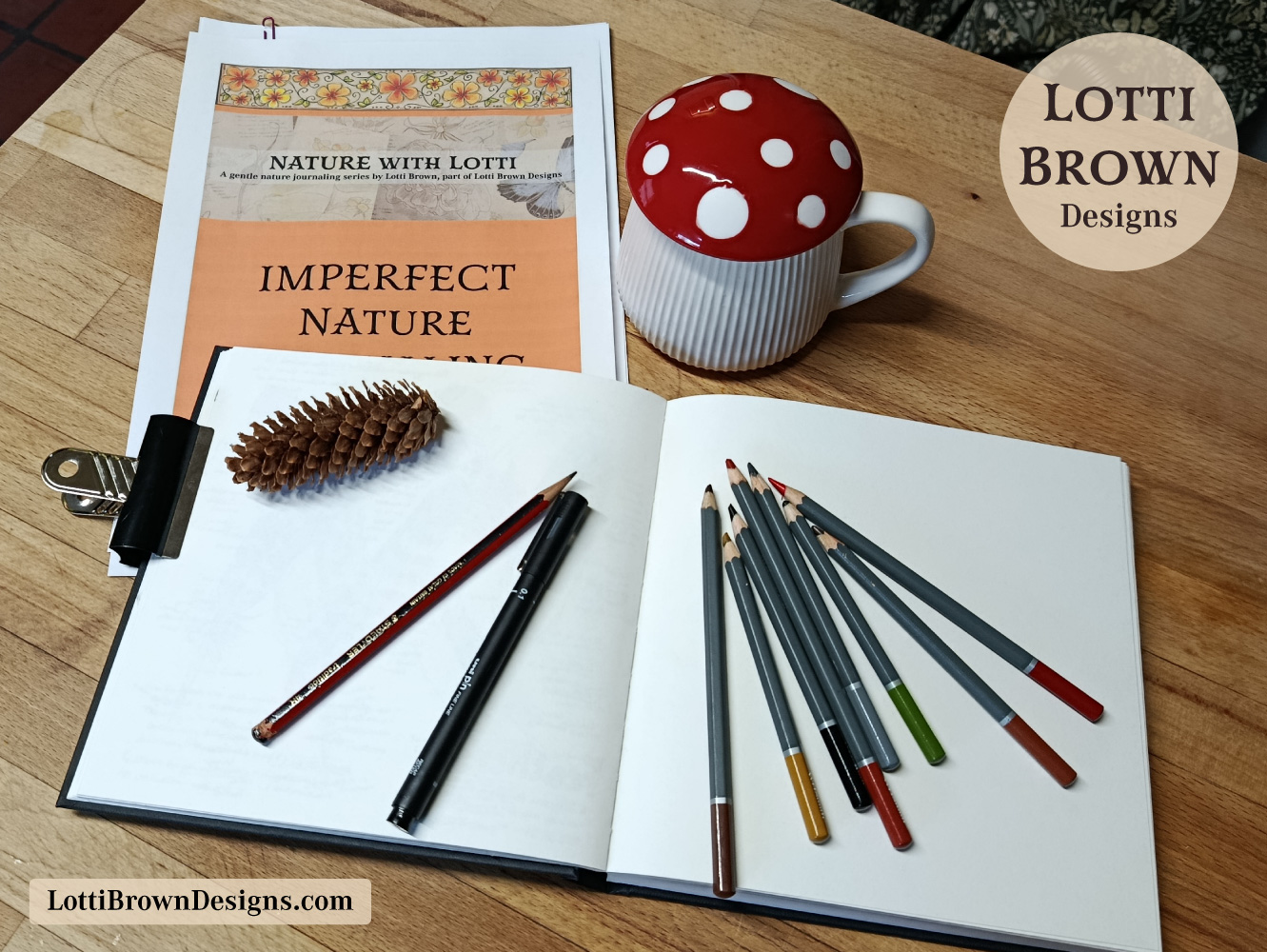 Deepen your nature journaling practice with me...
If you’ve enjoyed my nature journaling reflections, you might also like my 20-lesson course, Imperfect Nature Journaling.
It’s a gently structured, self-paced journey designed to help you:
• Slow down and notice more deeply
• Build confidence in drawing and observing
• Create a calming journaling ritual you can return to
• Feel more connected to the seasons and the natural world
No perfection required. Just curiosity and a notebook.
You can explore the course here whenever you’re ready...
P.S. If you’re just beginning - or would like something quieter and more simple to start with - you might first like to get started with my free 'Getting Started' guide or gain momentum with my 'Gentle Introduction' guide to help you through your first few pages - here...

Shall we stay in touch..?
Each month, I share stories from my own nature journal, new art from my studio, and simple seasonal inspiration to help you feel more connected with the turning year - if you'd like to stay updated, please sign up with your email address below...
Recent Articles


-
Barn Owl Folklore & Meaning - Symbolism of the Barn Owl
Sep 15, 26 03:34 AM
 Explore barn owl folklore, symbolism and meaning, from ancient myths to British traditions. Discover the quiet wisdom and mystery of this ghostly bird.
 -
Bramble Meaning, Myth & Symbolism - Celtic Tree Calendar Art
Sep 02, 26 11:32 AM
 A look at bramble meaning, myth and symbolism as I share my bramble Celtic Tree Calendar art for the month of 'Vine'...
 -
Nature Journal Prompts
Aug 26, 26 04:05 AM
 Easy nature journal prompts to inspire and encourage you - one per week...
Shop My Current Artwork Collections

My art is available as sustainable art prints, notebooks, greetings cards, tote bags and clothing in my Teemill shop.
Find my stockists for all my earlier artworks here...

Lotti Brown is a self-taught nature artist and nature journaling educator whose hand-drawn work is inspired by wildlife, folklore, and close observation. With 18 years in creative fields and 10 years creating nature art, she brings deep practical experience to her work. Trained by the Wild Wonder Foundation, she shares nature journaling courses and guides online. Her artwork has been licensed internationally and exhibited at Goole Museum and Bridlington Spa in the East Riding of Yorkshire, UK.
Follow me:
Share this page: