

From Sketchbook to Print
How my Artwork Comes to Life
By Lotti Brown
Ever wondered how an original piece of wildlife artwork becomes a finished print? From sketchbook sketches and field observations to scanning, colour checking and reproduction, here's a behind-the-scenes look at my creative process...
See how my hand-drawn nature artwork moves from sketchbook to finished artwork collection - thoughtfully created, carefully printed, and ready for your home.
Every finished nature art print begins somewhere much quieter - often as a small pencil sketch in my nature journal, drawn after a walk or a moment of noticing. Nothing begins with a plan to ‘make a product’ - it begins with a feeling I don’t want to lose.
Before it becomes a print, ready for your home, it begins as a memory - a bird glimpsed at dawn, a hare paused in a field, the curve of a twig holding its winter buds.
This page is a little look behind the scenes - not at the technical details, but at the slow unfolding of an artwork from first sketch to the print that might one day live in your home.
What follows isn’t a technical manual, but a quiet glimpse into the journey each piece takes - from first noticing, to the print you might one day unwrap...
A Beginning in the Sketchbook
Most pieces of artwork begin either in my nature journal or sketchbook, or both – feeling inspired by a simple moment of nature noticed, recorded and remembered – perhaps a bird heard singing on my morning walk, marker of a seasonal shift, or a flower or plant seen in my garden or in the hedgerows…
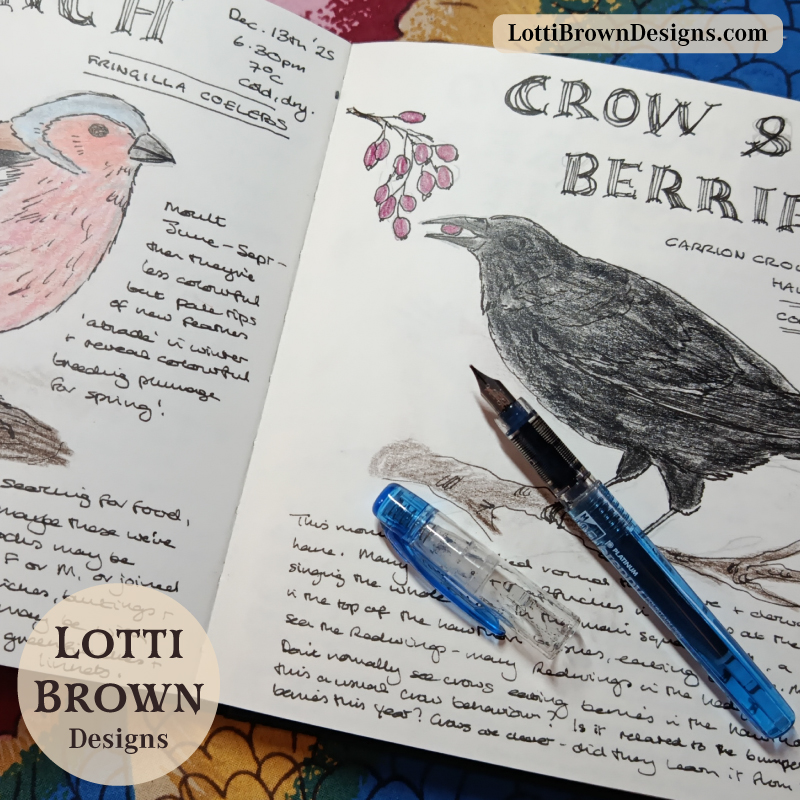 Original British wildlife illustration sketch in my nature journal
My first sketches are always very loose, getting a feel for my subject matter – working by eye, drawing by instinct to feel my way around my subject – only moving to tighter, more controlled drawings are a later stage.
At this stage, nothing is fixed. It’s simply about listening - to the memory, to the subject, to what wants to take shape.
I can work out compositions and ideas at this stage, too – I find it important to have this freedom to record and create without expectation, allowing imperfections as they come, because that’s where the real character of the piece begins to show…
Building the Artwork by Hand
Outline & Composition
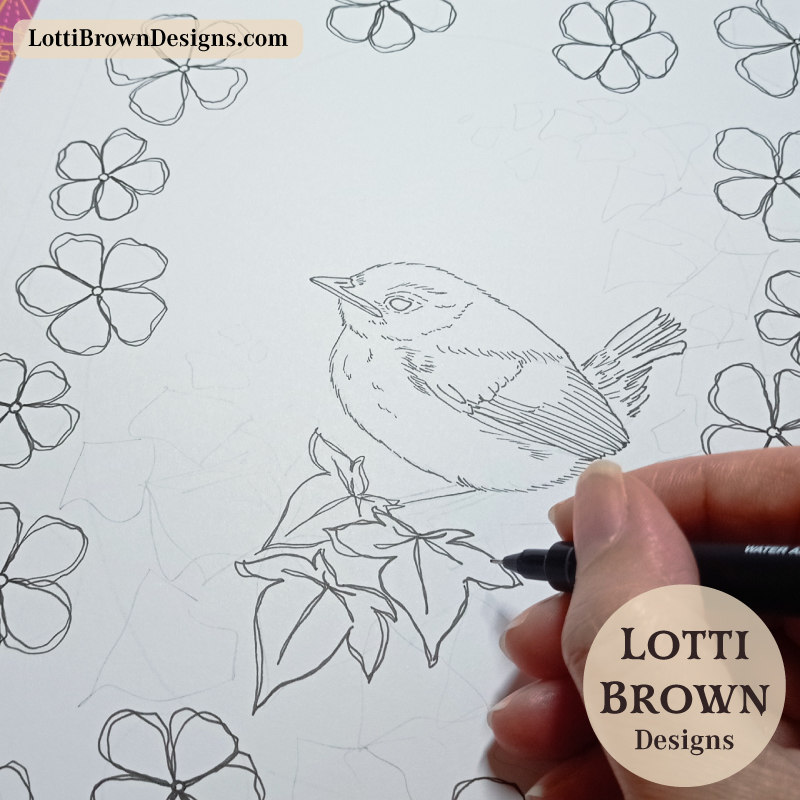 Setting out my drawing and drawing the outline in black fineliner pen
When I have an idea that I think will work for a final artwork I will transfer an outline from my sketches and workings out onto a piece of Bristol board, ready to create the artwork…
From a rough pencil outline, I draw the outlines of my piece out by hand in black fineliner pen – this allows me to see the composition of my artwork and ensure it will work well for the final piece.
I often scan the outline at this stage - partly for safe keeping, and partly because I love the idea that one day these drawings might become something playful, like colouring pages.
Laying Down Colour
From here, I use Winsor & Newton Promarkers to lay down the base colours for the artwork. This allows me to sometimes add different colours into the layers – such as adding blues and purples in this base layer to help create depth of colour in black feathers, like for my corvid collection artworks.
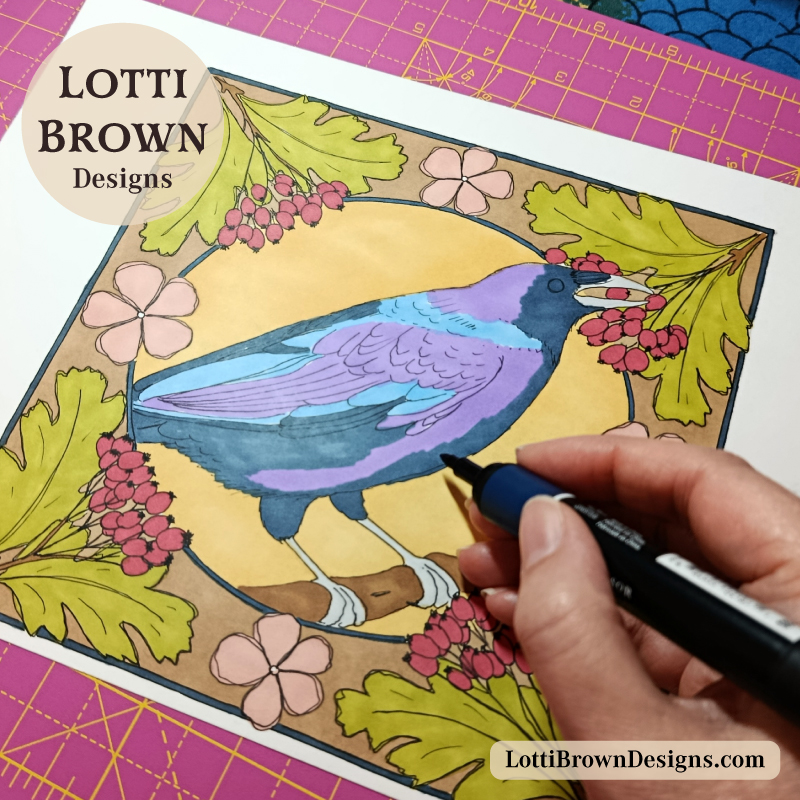 Hand drawn wildlife art in progress
Layering Depth
When I have one or two layers of colour on my paper, I then start adding further layers of colour with my coloured pencils – I use my Faber-Castell set of Polychromos coloured pencils, which I received as a gift from my mum for my 50th birthday.
Coloured pencils, like Promarkers, are slightly translucent, so that allows the lower colours to show through and give more interest and depth of colour to the artwork.
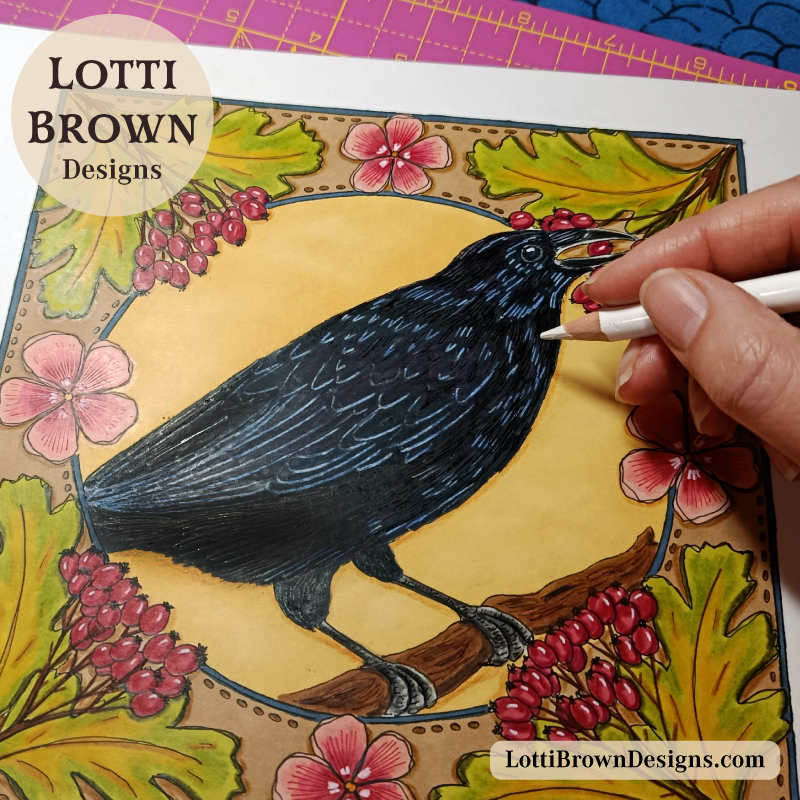 Artist working on nature illustration
Final Details
Final layers are with coloured fineliner pens, adding fine detail. This traditional, hand-drawn process is at the heart of all my British wildlife art prints.
I love working by hand, in a traditional ‘analogue’ way, because it keeps me physically connected - to the paper, to the subject, and to the quiet pace the artwork asks for.
If I’m lucky I can get into that much-talked about ‘flow’ state where the brain and body work perfectly in sync and the artwork seems to just flow from my hand…
Other times, patience is required – and some adaptability, as there’s no undo button – and I just have to make peace with that.
It’s nice, over the hours and days that I work carefully on the artwork, to feel connected with the art and I feel part of it, it feels part of me – and I feel connected to the nature and wildlife I’m portraying.
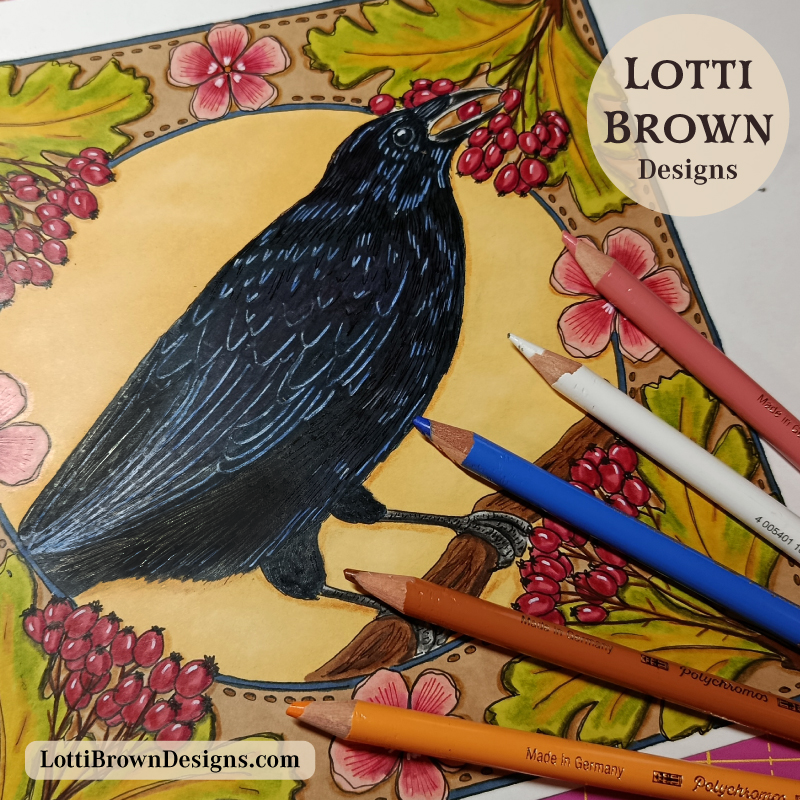 Hand-drawn multi-media art with coloured pencils
Knowing When an Artwork is Finished
As an artist, it can be difficult to know when an artwork is truly finished…
There’s a moment, working on it, when it feels finished – like I can’t do anything more. But still, I sit with my artwork longer – typically, I will display it on the mantelpiece in my living room, or on my art table – and just live with it and look at it for a few days…
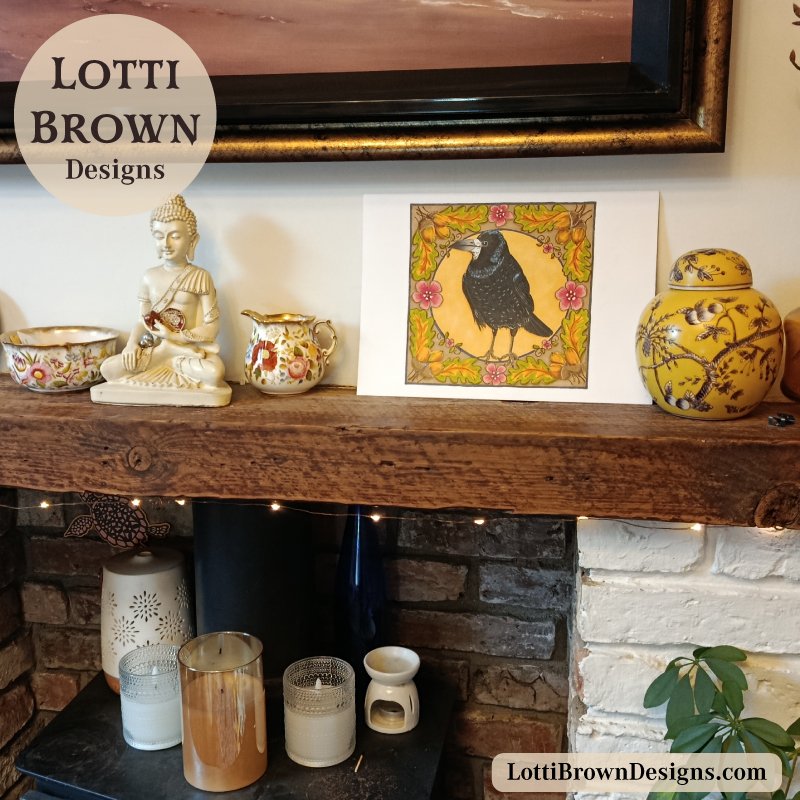 Sitting with the artwork on my mantelpiece
Sometimes, changes are then asked for – and amendments made – and I take the time to sit with the artwork again to trust that it’s settled and complete and nothing further is wanted.
Rushing this part would be easy - but I never do. An artwork leaves my studio only when it feels settled and complete.
There’s always a moment when an artwork feels right – complete, not asking for more – and then it’s done.
I’ve learned to trust that moment - not to rush it, and not to send a piece out into the world until it feels settled and whole.
From Original Artwork to Print
I use my scanner at home to scan my original artwork into the computer, ensuring that the original colours, tones and details are preserved as faithfully as possible.
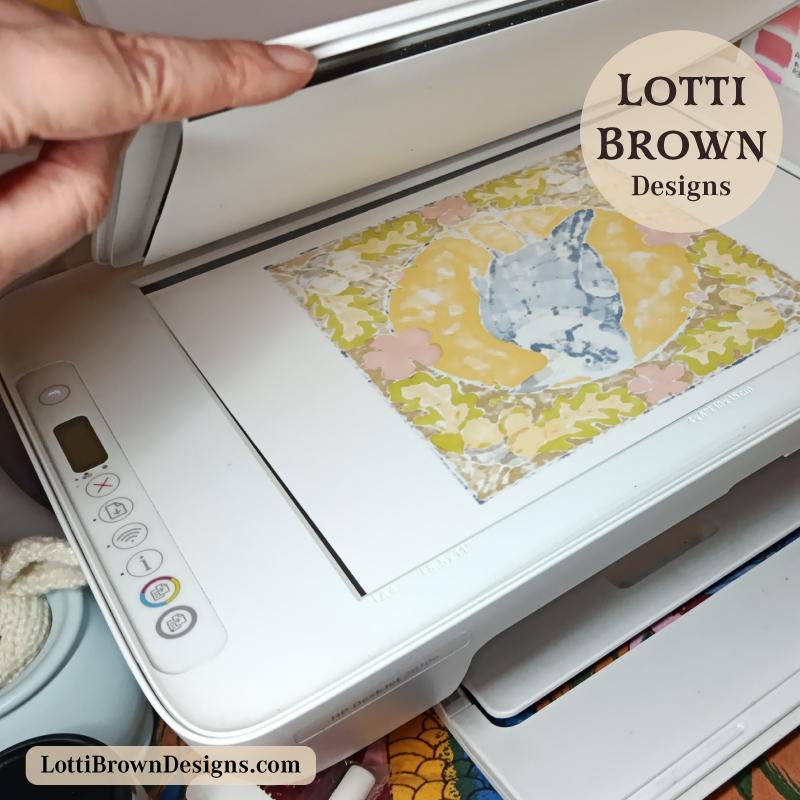 Scanning my artwork at home
I adjust nothing that changes the character of the piece - my aim is always fidelity, not enhancement.
Once I'm happy with the digital version, my artwork is professionally reproduced as high-quality giclée prints, allowing the colours and details of the original drawing to be enjoyed in a range of sizes.
I've chosen to work with Teemill because their values align closely with my own. Their products are made to order, helping to reduce waste, and they place sustainability at the heart of their production process.
My art prints are produced on FSC-certified recyclable paper, chosen to showcase the detail and colour of the original artwork while remaining kinder to the environment.
Before making my artwork available in my shop, I order samples to check the print quality, colour reproduction and overall finish. This helps me ensure that the artwork is reproduced beautifully and remains true to the spirit of the original drawing.
Then, my artwork is ready to go out into the world to find new homes...
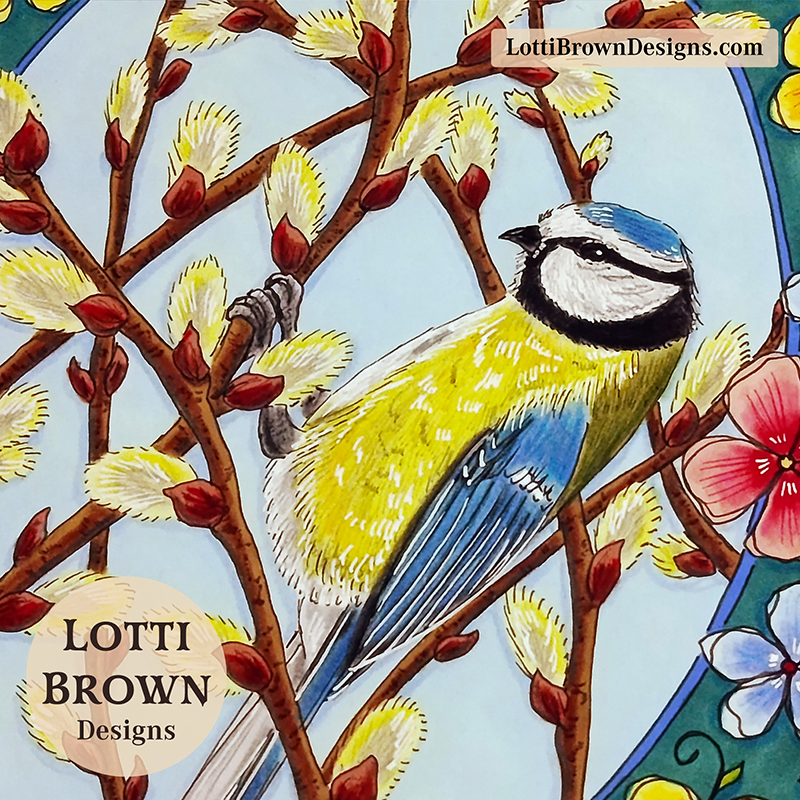 Fine art print on eco-friendly bamboo paper
Every print is:
- Produced from one of my original hand-drawn artworks
- Professionally reproduced as a high-quality giclée print
- Printed on FSC-certified recyclable paper
- Available in a range of sizes
- Made to order, helping to reduce waste
- Designed to feel timeless rather than trend-led
- Created to bring a little nature, folklore and quiet magic into everyday life
Why Art Prints Matter in the Home
I love the idea of my art prints travelling out into the world to become part of someone’s home and life – a quiet presence on a wall that can bring love and joy to someone’s home and life - a quiet presence on a wall that brings steadiness, warmth, and a small reminder of the natural world each day…
I hope my art will bring a little bit of nature to whoever receives it, a daily reminder to pause and notice what’s beautiful in nature and connect with the natural world.
A fine art print allows an original moment - once captured in pencil and colour - to live on in someone’s home.
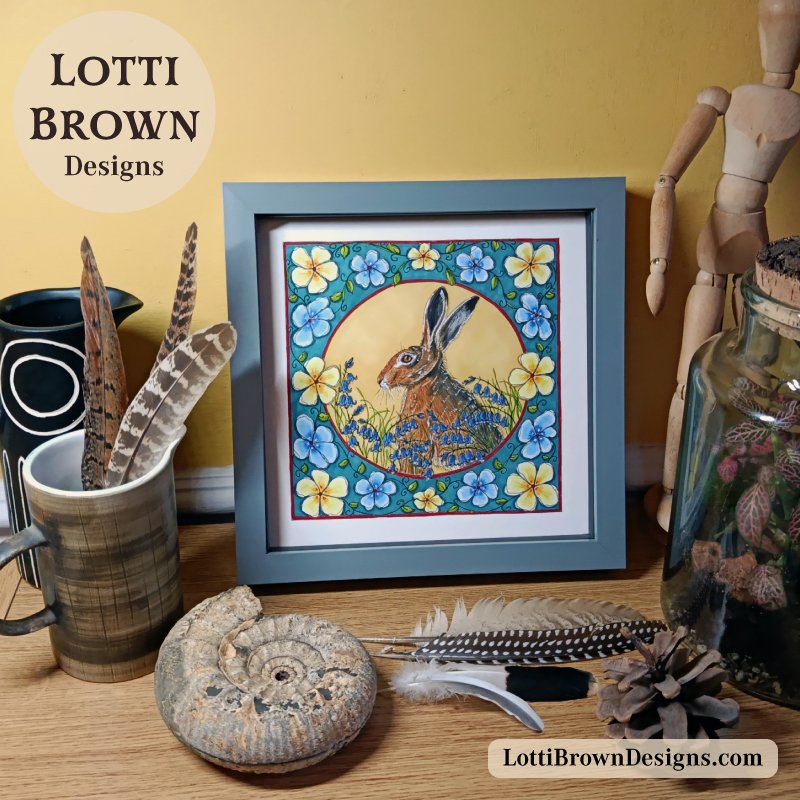 Nature fine art print on display in a country cottage home
A print isn’t just a copy - it’s a way for an original moment of connection to travel further than my studio walls.
What begins as a quiet moment in a field may end as a quiet moment in your home – from a fleeting moment outdoors, to pencil on paper, to careful layers of colour, to a print on your wall. A small thread of nature carried gently from one place to another.
Created with Care
Each print begins as an original piece drawn entirely by hand, and I'm closely involved throughout its journey from sketchbook to finished artwork. I personally scan, prepare and proof each design to ensure that what reaches you remains as faithful as possible to the original drawing.
I've chosen to work with a production partner whose commitment to sustainability reflects my own values. Prints are made to order rather than mass-produced, helping to reduce waste while allowing my artwork to be available in a range of sizes.
These aren't trend-led decorations created to be replaced next season. They're artworks inspired by the birds, animals, folklore and seasonal moments that have captured my attention and imagination - pieces intended to be lived with slowly and enjoyed over time.
If a particular piece has spoken to you - perhaps reminding you of a walk, a season, or a quiet encounter of your own - you can explore my artwork collection here. I'd be honoured for one to find a place in your home.
From Artwork to Everyday Life

While many of my drawings become art prints, some also find their way onto notebooks, greetings cards, tote bags and clothing. I love the idea that a moment once noticed in nature can continue its journey into everyday life, whether that's hanging on a wall, accompanying a nature journal, or heading out on a countryside walk in a favourite tote bag.
Explore my artwork collection in my Teemill store here

Explore my art and discover the folklore connections behind your favourite birds and animals here...
If you’ve enjoyed peeking into my nature journal pages that inspire my art, perhaps you might take a few quiet moments to begin your own...
You don’t need special skills or perfect pages - just a willingness to notice what’s already around you. You can find my free guide to getting started with nature journaling plus lots more ideas and inspiration for your nature journal, all here…

Shall we stay in touch..?
Each month, I share stories from my own nature journal, new art from my studio, and simple seasonal inspiration to help you feel more connected with the turning year - if you'd like to stay updated, please sign up with your email address below...
Recent Articles


-
Barn Owl Folklore & Meaning - Symbolism of the Barn Owl
Sep 15, 26 03:34 AM
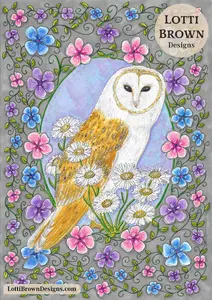 Explore barn owl folklore, symbolism and meaning, from ancient myths to British traditions. Discover the quiet wisdom and mystery of this ghostly bird.
 -
Bramble Meaning, Myth & Symbolism - Celtic Tree Calendar Art
Sep 02, 26 11:32 AM
 A look at bramble meaning, myth and symbolism as I share my bramble Celtic Tree Calendar art for the month of 'Vine'...
 -
Nature Journal Prompts
Aug 26, 26 04:05 AM
 Easy nature journal prompts to inspire and encourage you - one per week...
Shop My Current Artwork Collections
My art is available as sustainable art prints, notebooks, greetings cards, tote bags and clothing in my Teemill shop.
Find my stockists for all my earlier artworks here...
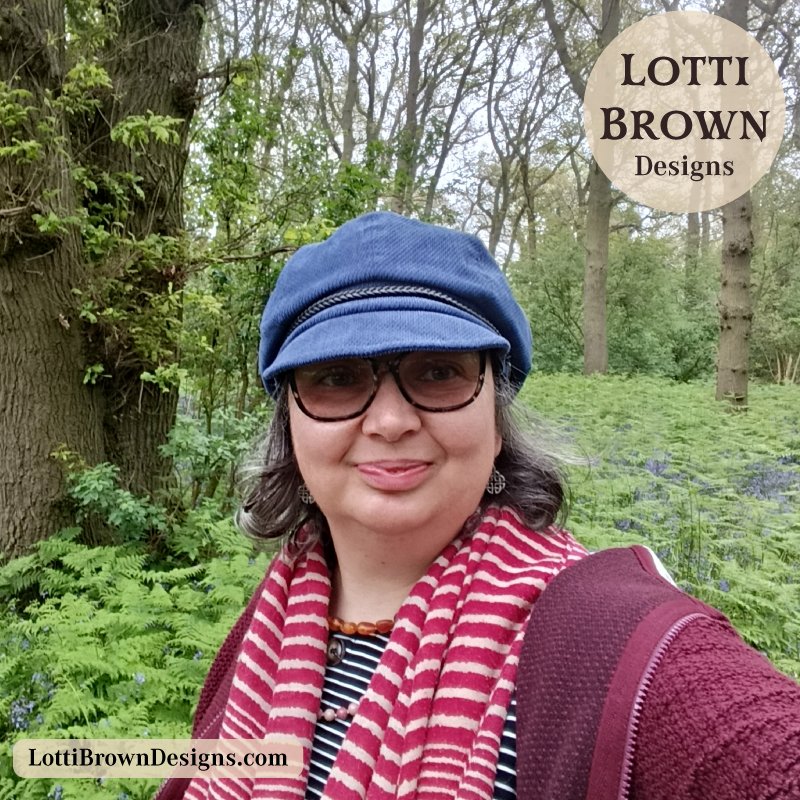
Lotti Brown is a self-taught nature artist and nature journaling educator whose hand-drawn work is inspired by wildlife, folklore, and close observation. With 18 years in creative fields and 10 years creating nature art, she brings deep practical experience to her work. Trained by the Wild Wonder Foundation, she shares nature journaling courses and guides online. Her artwork has been licensed internationally and exhibited at Goole Museum and Bridlington Spa in the East Riding of Yorkshire, UK.
Follow me:
Share this page: